















Summary and conclusion
The aim of today’s analysis was to understand the actual thermal effect of thermal conductive pastes under practical conditions and to show why simple temperature measurements on a CPU are only of limited value. The entire thermal resistance chain was considered, from the silicon source to the cooling medium. The basis was the differentiation between CPU and GPU setups, supplemented by direct die scenarios in which the influence of the paste is particularly pronounced. In all cases, it was taken into account that the paste does not act in isolation in practice, but is embedded in a serial chain of fixed and variable resistances.
While a typical desktop CPU with 65 to 125 watts and a large heatspreader is distributed over an area of around 800 to 900 mm², a modern GPU usually operates with several hundred watts of power dissipation over a few hundred square millimeters. This leads to completely different heat flux densities. A CPU rarely achieves more than 0.5 to 0.7 W/mm², with GPUs the value is often between 1 and 2 W/mm², with overclocking or workstation chips even higher. This increasing heat flux density means that the proportion of paste resistance in the overall chain increases significantly as the surface area decreases. While the paste almost disappears thermally in the noise with CPUs, it becomes a decisive factor with GPUs or direct die cooling.
Comparison between high-quality, mediocre and poor pastes
The measurement results clearly show that the differences between a high-quality and an average paste depend heavily on the specific load situation. On a CPU with a large IHS and a moderate heat load, the temperatures often differ by less than one Kelvin with optimum application. Here, the thermal resistance of the heatspreader and the cooler dominate, so that the influence of the paste remains barely measurable. However, as soon as the heat flux density increases, the differences increase significantly. For GPUs with 250 to 450 watts and chip areas between 250 and 600 mm², the temperature differences between a very good paste such as HY-P17 and a mediocre paste are between three and eight Kelvin, depending on the layer thickness. In extreme cases, such as with direct die cooling or very small dies, the difference can be over 15 Kelvin.

Influence of coating thickness, importance of application, surface reality and mechanical contact problems
The coating thickness (BLT) has the greatest influence on thermal performance in all scenarios. As the BLT decreases, the heat conduction path decreases exponentially, causing the temperature difference between die and cooler to decrease rapidly. A thinly applied mediocre paste can therefore perform better than a very conductive but too thickly applied premium variant. It is crucial that the paste remains both mechanically stable and permanently resilient, as very thin layers can be prone to pump-out effects or drying out under temperature cycles if the chemical matrix is not designed for this.
In practice, the contact surfaces of IHS and radiator floors are rarely ideally flat. They are usually slightly curved or have microscopic unevenness that would lead to air gaps without paste. These microscopic separating layers have an extremely low thermal conductivity and are therefore the real reason why the paste is indispensable. A good thermal paste must therefore not only have high conductivity, but must also be able to completely fill the surface roughness and adapt elastically without losing its structure.
Special case of direct die cooling
Direct contact between the cooler base and the silicon die has its own thermal laws. The contact surface is very small here, but the heat flux density is extremely high – often several watts per square millimeter. As a result, the paste has a direct limiting effect on maximum heat dissipation. Even a layer that is too thick or an air pocket can increase the temperature by double-digit values. At the same time, the layer must not be too thin in order to avoid the risk of mechanical stresses and microcracks in the silicon. The area of application therefore requires pastes with low viscosity, high homogeneity and a demonstrably stable matrix structure.
Conclusion
The thermal evaluation of a paste should never be based solely on its nominal thermal conductivity. The entire resistance chain and its relationship to the occurring heat flux density are decisive. A mediocre paste can perform practically as well as a high-end variant on large CPUs, while it falls massively behind on a GPU or with direct die cooling. The application is just as important: an evenly distributed layer that is as thin as possible is far more effective than a material with a high λ value that has been applied too thickly or unevenly in practice. The “a lot does no harm” is an urban legend that may only work to some extent for CPUs with heat spreaders.
The quality of a thermal compound is not only measured by the number in the data sheet, but also by the interplay of material properties, layer thickness and surface contact. For CPUs with large heatspreaders, the influence is limited, so that even mediocre pastes are sufficient, provided they are applied correctly. With increasing heat flux density, such as with GPUs or direct die cooling, the influence of the paste increases significantly, and high-quality materials can cause temperature differences in the double-digit range. Thin, stable layers are more effective than any nominally high thermal conductivity. The decisive factor therefore remains the physically correct application and understanding of the entire thermal resistance chain and not the belief in laboratory values, which are hardly ever achieved in real construction. That’s exactly why I maintain my database.
| Test Setup and Methods | Material analysis and microscopy | Basic knowledge |
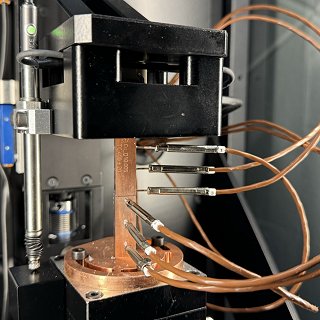 Here you can find out why effective thermal conductivity and bulk thermal conductivity can be completely different in practice, what role the contact resistance between the surfaces and the paste plays and how thermal paste can be measured accurately. There is also a detailed description of the equipment, the methodology and the error tolerances. Here you can find out why effective thermal conductivity and bulk thermal conductivity can be completely different in practice, what role the contact resistance between the surfaces and the paste plays and how thermal paste can be measured accurately. There is also a detailed description of the equipment, the methodology and the error tolerances. |
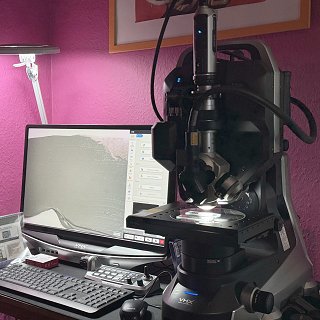 You will learn how laser-induced plasma spectroscopy works and the advantages and limitations of the measurements. There is also high-resolution digital microscopy and analysis of particle sizes. This information is also used to estimate the long-term stability of a paste. You will learn how laser-induced plasma spectroscopy works and the advantages and limitations of the measurements. There is also high-resolution digital microscopy and analysis of particle sizes. This information is also used to estimate the long-term stability of a paste. |
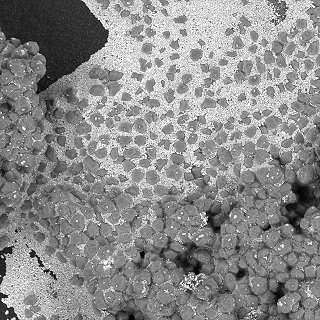 Anyone who has always wanted to know what is or is not in a paste and how these pastes are produced will find what they are looking for here. The basic article provides a better understanding of what is often sold for far too much money and sometimes with adventurous promises. Anyone who has always wanted to know what is or is not in a paste and how these pastes are produced will find what they are looking for here. The basic article provides a better understanding of what is often sold for far too much money and sometimes with adventurous promises. |










47 Antworten
Kommentar
Lade neue Kommentare
Urgestein
1
Urgestein
1
Urgestein
1
Veteran
Urgestein
Urgestein
Veteran
Urgestein
1
1
Veteran
Mitglied
1
1
Urgestein
1
Alle Kommentare lesen unter igor´sLAB Community →