














The battery has been one of the main limitations of modern smartphones in the premium segment for years. Apple has gradually increased the capacity of its Pro Max models over several generations. With the eSIM model of the iPhone 17 Pro Max, the manufacturer exceeded the 5,000 mAh mark for the first time, specifically with a nominal capacity of 5,088 mAh. However, a current modification project shows that even the predecessor model can exceed this threshold if a non-original battery is used.
The starting point for the modification is the iPhone 16 Pro Max, which is supplied with a battery of 4,685 mAh as standard. By replacing it with a 5,142 mAh battery, the capacity increases by 457 mAh, which corresponds to an increase of around 9.76 percent. This puts the modified device mathematically above the iPhone 17 Pro Max. According to the information available, the larger battery and the original do not differ in length, width or thickness. The weight is also only slightly higher, meaning that installation is possible without any structural changes to the housing.
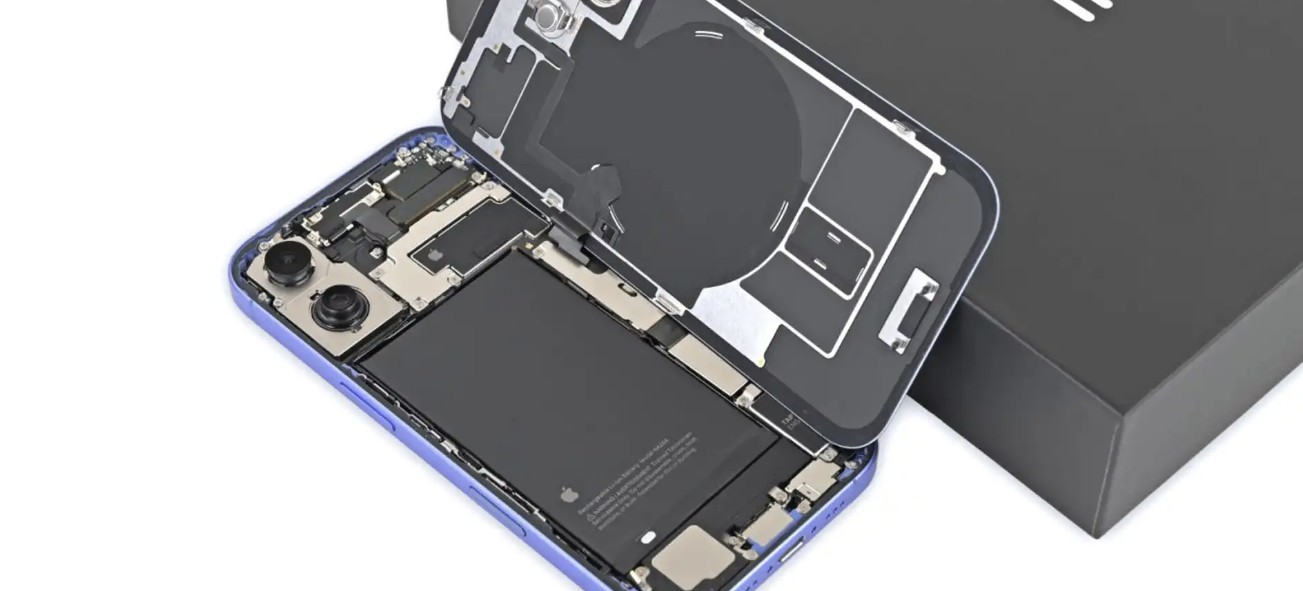
The modification was carried out by YouTuber DirectorFeng, who is known for his detailed repair and modification work on iPhones. To check the actual capacity, the new battery was fully charged and discharged three times. The measured values confirmed the specified capacity of 5,142 mAh. The battery used comes from the manufacturer SEFU, which specializes in lithium-ion cells for smartphones. Statements on the long-term durability, safety or ageing resistance of these batteries cannot be verified on the basis of the information published to date.
After reinstallation, the operating system recognized the battery with a battery status of 100 percent. Despite the previous charging cycles, no deviating health value was displayed. This indicates that there are no obvious compatibility problems between the battery and the system, at least in the short term. Long-term effects on software functions, charging behavior or safety mechanisms remain open.
A market comparison shows that a higher battery capacity does not necessarily lead to significantly longer runtimes. Despite its moderate capacity, the iPhone 17 Pro Max was able to outperform competing devices such as the Galaxy S25 Ultra or the Pixel 10 Pro XL in battery endurance tests. Even smartphones with significantly larger batteries, such as the Xiaomi 17 Pro Max with around 7,500 mAh, only achieved slightly longer runtimes in corresponding tests. These results underline the role of efficiency, software optimization and SoC architecture over pure capacity size.
In parallel to such unofficial modifications, there are indications that Apple itself is testing larger batteries for future device generations. Capacities in the range of around 5,400 to 5,800 mAh are mentioned for a foldable iPhone. There are also reports of a thicker housing for the iPhone 18 Pro Max, which could create additional space for a larger battery. This information cannot be conclusively verified at present.
The battery modification shown makes it clear that the design of older iPhone models offers scope for larger batteries than Apple uses as standard. For technically adept users with the relevant experience and access to suitable spare parts, this can be a way to significantly extend the battery life of an iPhone 16 Pro Max. At the same time, the comparison with current models shows that Apple already achieves competitive runtimes with standard batteries by optimizing efficiency, so that such conversions are particularly relevant for users who like to experiment or owners of older devices.
Conclusion
The presented battery modification of the iPhone 16 Pro Max shows that Apple has left design reserves in the design of earlier device generations. With a compatible replacement battery, the nominal capacity can be increased to a level that is even higher than that of the iPhone 17 Pro Max. However, the procedure requires technical expertise, access to suitable components and a willingness to accept possible risks in terms of long-term stability and safety. At the same time, the comparison with current models makes it clear that a higher capacity alone is not decisive for the runtime, as efficiency and software optimization play a central role. For experienced users of older devices, such a modification may make sense, but for the mass market it remains an exception.
| Source | Key message | Link |
|---|---|---|
| TT Technology | Report on a battery modification of the iPhone 16 Pro Max with replacement to a 5,142 mAh battery, which mathematically exceeds the capacity of the iPhone 17 Pro Max; details on tests and installation | https://www.tttechnology.co.uk/iphone-16-pro-max-battery-upgrade-surpasses-iphone-17-pro-max-capacity-through-modding/(TT Technology) |
| t0nAr1sm | Analysis and summary of the battery modification of the iPhone 16 Pro Max with context and comments on the reliability of such conversions | https://www.apple-hacks.com/entry/iphone16promax-battery-mod-5142mah(apple-hacks.com) |

























3 Antworten
Kommentar
Lade neue Kommentare
Veteran
Urgestein
Veteran
Alle Kommentare lesen unter igor´sLAB Community →