















The SAMA P1000 ATX 3.1 presented today operates in a market segment that has grown particularly strongly in the last two years because new GPU generations generate higher peak loads and at the same time the requirements for efficiency, noise development and electrical robustness have increased. The target group for such a power supply unit consists of users who are planning a system in the upper performance range but do not necessarily want to enter the premium segment. Modern graphics cards, especially models in the higher performance class, can generate extreme load peaks for short periods of time, which is why power supply units with ATX 3.1 certification and the native 12V 2×6 connection are now considered standard. This is exactly where the SAMA P1000 comes in, with its rated output of 1000 W providing a practical sweet spot for gaming-oriented systems, workstations with high CPU loads and also for users who want to plan reserves for future hardware.
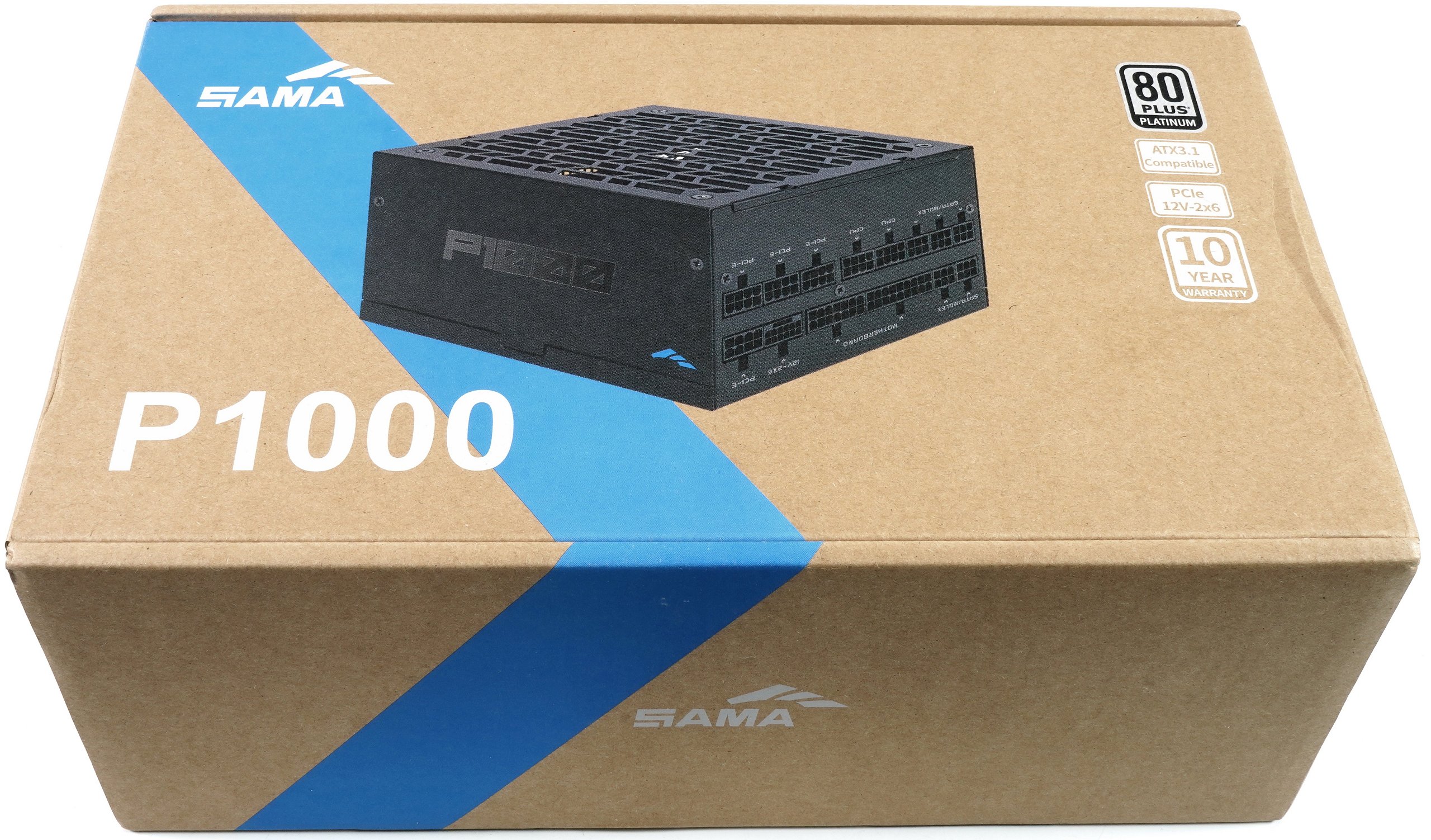
In terms of price, the P1000 is well below the established high-end models from manufacturers such as Corsair, Seasonic or ASUS, which offer particularly long warranty periods, very sophisticated platforms and excellent quality control, but are correspondingly more expensive. In many cases, the SAMA model is priced more in line with comparably equipped mid-range power supplies from brands such as Thermaltake or MSI, which also offer ATX 3.1, but which remain closer to the mainstream in terms of price. This upward gap ensures that the P1000 is of interest to users who expect the latest technology and solid performance, but are not prepared to pay the significant premium for the absolute top class. This price-performance ratio can be an attractive option for systems that are mainly used in the gaming environment or as a workstation without continuous full load, because in practice it often depends less on the last bit of premium equipment than on stable, realistic everyday values. And one thing is commendable: SAMA also offers a 10-year guarantee!
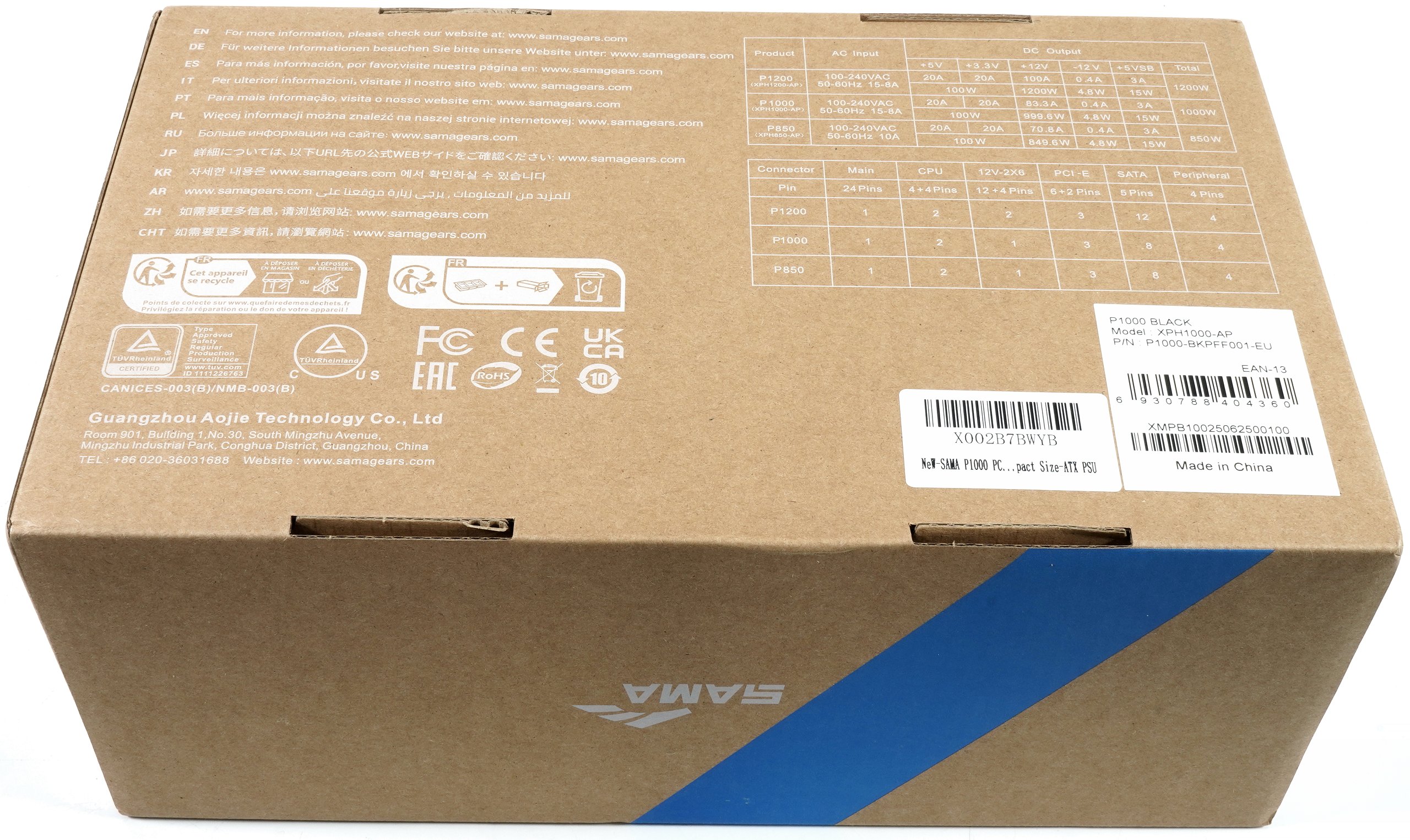
In order to fully understand the positioning of the power supply unit, it is important to understand who SAMA actually is. The SAMA brand belongs to a Chinese manufacturer that has been present on the Asian market for many years, where it mainly offers cases and peripherals in addition to power supplies. SAMA is less well known in the Western market, but has become increasingly popular since the demand for cost-efficient ATX 3.1 models has increased. In contrast to the major international brands, SAMA does not have a globally established brand history and acts more as a manufacturer that combines price appeal with a solid technical basis. The platforms usually come from OEM partners such as RSY, a manufacturer that has been used more frequently in the mid-range performance segment and whose products are technically reliable but not necessarily premium-oriented. This background explains why the P1000 can be offered at a significantly lower price than models with a higher brand claim, despite good technical features such as fully modular cabling, ATX 3.1 conformity and contemporary EMI and protection circuitry.
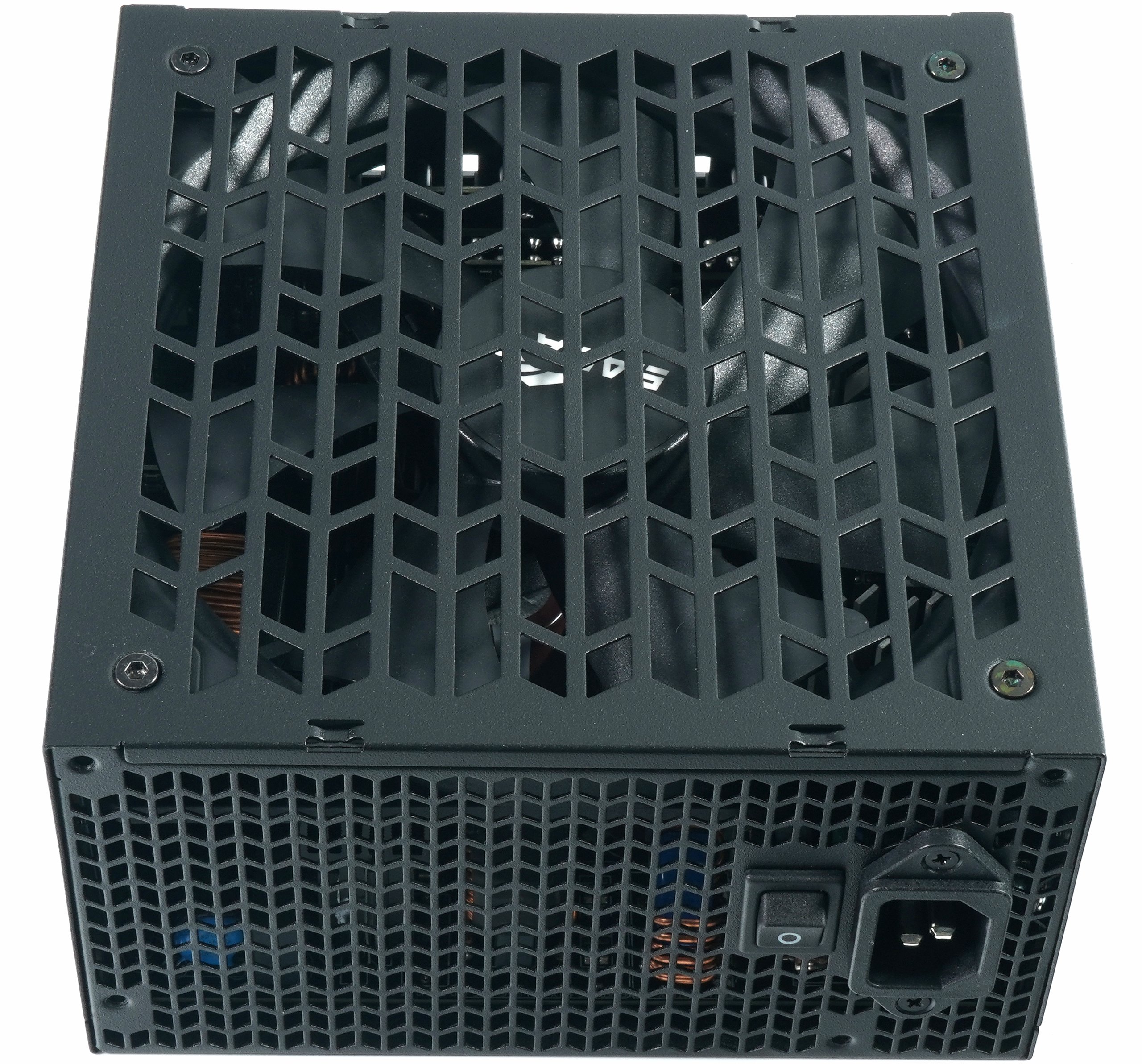
For the potential target group, this means that the SAMA P1000 is particularly worthwhile if you want to operate a modern system with a high load reserve and expect a technically clean implementation, but without attaching importance to the sometimes very high warranty promises and the brand reputation of premium manufacturers that has grown over decades. If the focus is on efficiency, volume, protection mechanisms and electrical stability and the price is rational, the P1000 is a solution that covers a wide range of applications and is also easy on the budget. For particularly critical or industrial environments, a premium product is still recommended due to the lack of market establishment, but in ambitious gaming systems or everyday workstations, SAMA can achieve a noticeable price advantage with its pragmatic platform without disappointing the basic expectations of the target group.
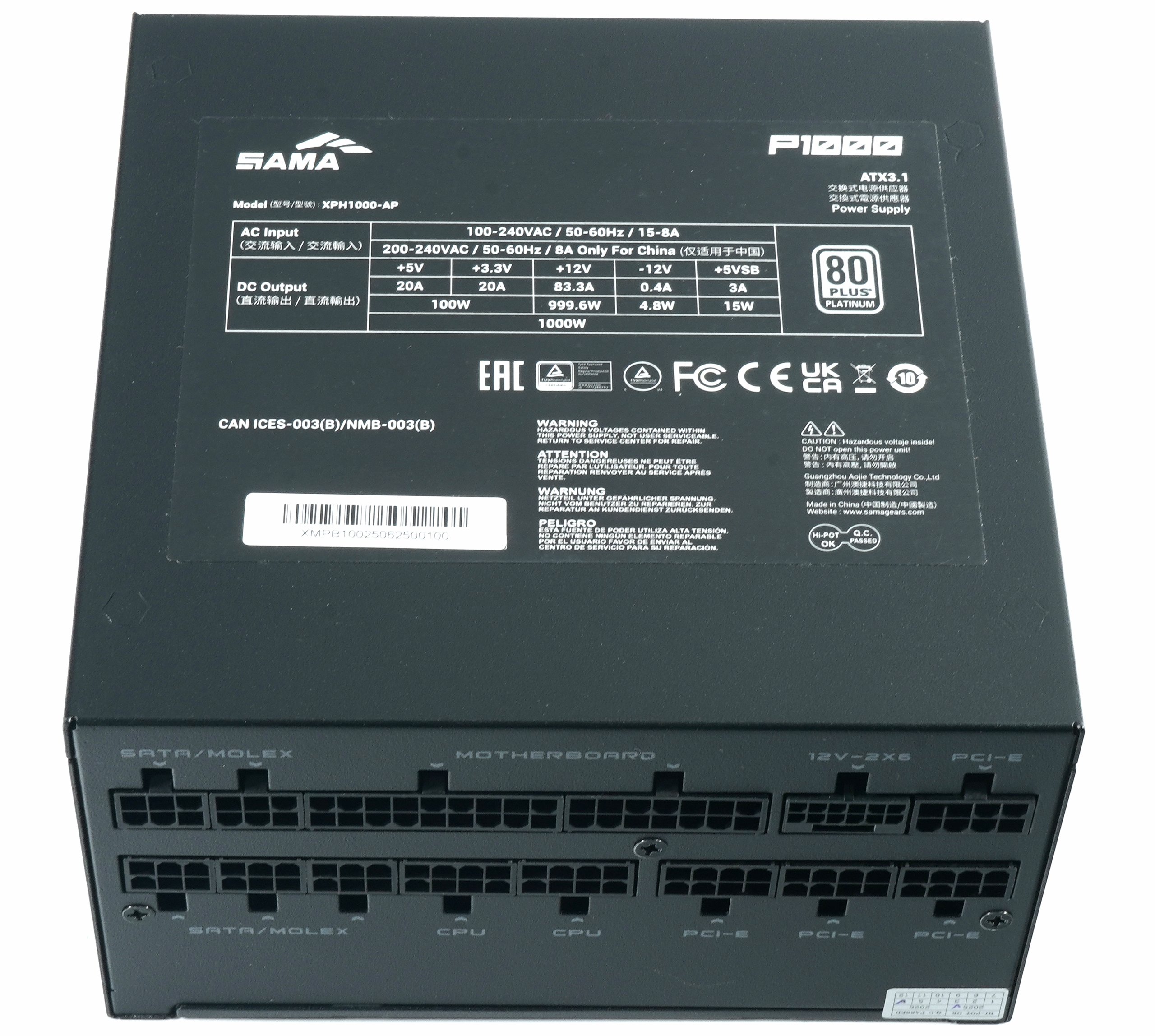
Technical data at a glance
The features of the SAMA P1000 show that RSY provides a technically up-to-date platform that offers a solid basis with LLC resonance converters, DC-DC secondary regulation and high-quality Nippon Chemi-Con bulk capacitors. The use of a 140 mm FDB fan and the complete modularity also meet the expectations of the target group in the upper mid-range segment. The protection circuits are largely complete, so that operation remains reliable even with demanding graphics cards and variable load changes. Only the lack of fan failure protection leaves a small blemish, but this rarely becomes relevant in everyday operation. Overall, the platform provides a convincing technical basis that underpins the product’s price claim well.
| Category | Data |
|---|---|
| OEM | RSY |
| Model designation | XPH1000-AP (SAMA P1000 ATX 3.1) |
| Form factor / standard | ATX12V, ATX 3.1 |
| Rated power | 1000 W |
| Dimensions | 160 mm length, standard ATX format |
| Input voltage | 100-240 V AC |
| Input frequency | 50-60 Hz |
| Maximum input current | 13-6.5 A |
| Fan | 140 mm FDB fan (S1402512HH) |
| Cabling | Fully modular, ATX 24-pin, 2× EPS 4 4-pin, PCIe 6 2-pin, 12V-2×6, SATA, Molex, tinned copper, mixed AWG thicknesses |
| Primary side | EMC filter, MOV surge protection, NTC inrush current limitation, APFC with Maple Semi SLF65R170E7 MOSFETs, two Nippon Chemi-Con KMR 420 V / 390 µF (total 780 µF), LLC resonance conversion |
| Secondary side | Synchronous rectifier for 12 V, DC-DC modules for 5 V and 3.3 V, controller from Silicon Labs / INFSitronix |
| Protection circuits | OCP, OVP, UVP, OPP, OTP, SCP, surge protection, missing fan failure detection |
| Test equipment according to Cybenetics | Chroma load modules, power analyzers, audio measurement systems, EMI test benches |
The performance data of the individual rails clearly show that the power supply unit provides almost all of its rated power from the 12-volt rail, which corresponds to the current state of modern PC systems. Today, processors and graphics cards draw almost all of their power consumption from 12 volts, while the 3.3 and 5 volt rails are mainly used for peripherals, smaller consumers and logic areas and are therefore significantly smaller.
OEM and production
The OEM behind the SAMA P1000 is RSY, a China-based manufacturer that has specialized in the development and production of PC power supplies in the medium and high performance segment for many years. RSY mainly works as an ODM, i.e. the manufacturer develops complete platforms in-house, which are then adopted by various brands in a slightly adapted form. These platforms cover a relatively wide range, from conventional 80 Plus Bronze and Gold models to ATX 3.0 and ATX 3.1 certified units. The company is considered technically solid, albeit less prestigious than the well-known premium OEMs such as CWT or Seasonic, which focus more on high-end products, long warranty periods and premium material standards.
In production, RSY works with a clearly structured setup consisting of automated SMD assembly, semi-automated soldering processes and manual quality controls for critical assemblies. The choice of components follows a pragmatic line in which long-life electrolytic capacitors from established Japanese manufacturers or Asian premium brands are used, as well as mid-range MOSFETs that offer a good balance between efficiency, price and thermal load capacity. The production process is designed to enable consistently high quantities without pushing costs into the premium range. This is one reason why brands such as SAMA can offer attractive price structures without compromising on basic electrical and thermal quality.
RSY is not a newcomer to the industry, even if the name is rarely mentioned in the western market. The manufacturer has been producing for several brands that are mainly active in the Asian and Eastern European markets for years. These include manufacturers such as 1stPlayer and Segotep, which, like SAMA, offer a mixture of low-cost models and technically upgraded mid-range products. In the past, RSY has also manufactured for Aureox and ThunderX3, two brands that position themselves primarily through aggressive price levels and gaming-oriented designs. Some white-label products in the OEM business of European retailers are also manufactured by RSY, although these devices usually appear under private labels that are sold in online stores or system integrators.
The classification of RSY as an OEM is important because it explains why the SAMA P1000 is priced significantly below comparable high-end models despite its modern topology and clean electrical implementation. RSY does not pursue a premium claim, but a functionally oriented philosophy that focuses on reliability, efficiency and mechanical processing without being bound by the high standards of Western premium suppliers, who often invest a significant proportion of their costs in long-term warranties, stricter QC protocols and global support structures. This makes the P1000 a technically comprehensible product based on a real-world industry platform and deliberately positioned in a segment that appeals to price-conscious enthusiasts and system builders who value technical substance over marketing or brand history.
SAMA P Series P1000 1000W ATX 3.1 (P1000-BKPFF001-EU)
SAMA P Series P1000 1000W ATX 3.1 (P1000-WHPFF001-EU)






7 Antworten
Kommentar
Lade neue Kommentare
Urgestein
Veteran
Mitglied
Veteran
Mitglied
Veteran
Urgestein
Alle Kommentare lesen unter igor´sLAB Community →