














AMD is heralding the start of the long-awaited FSR “Redstone” update this afternoon. As a reminder and appetizer, I would like to summarize the information, leaks and speculation circulating in advance, i.e. factually compact and without judgment. This update is considered the biggest leap for AMD’s FidelityFXSuper Resolution to date and will be officially presented later today. A detailed test report will then follow in the afternoon, highlighting the actual results.
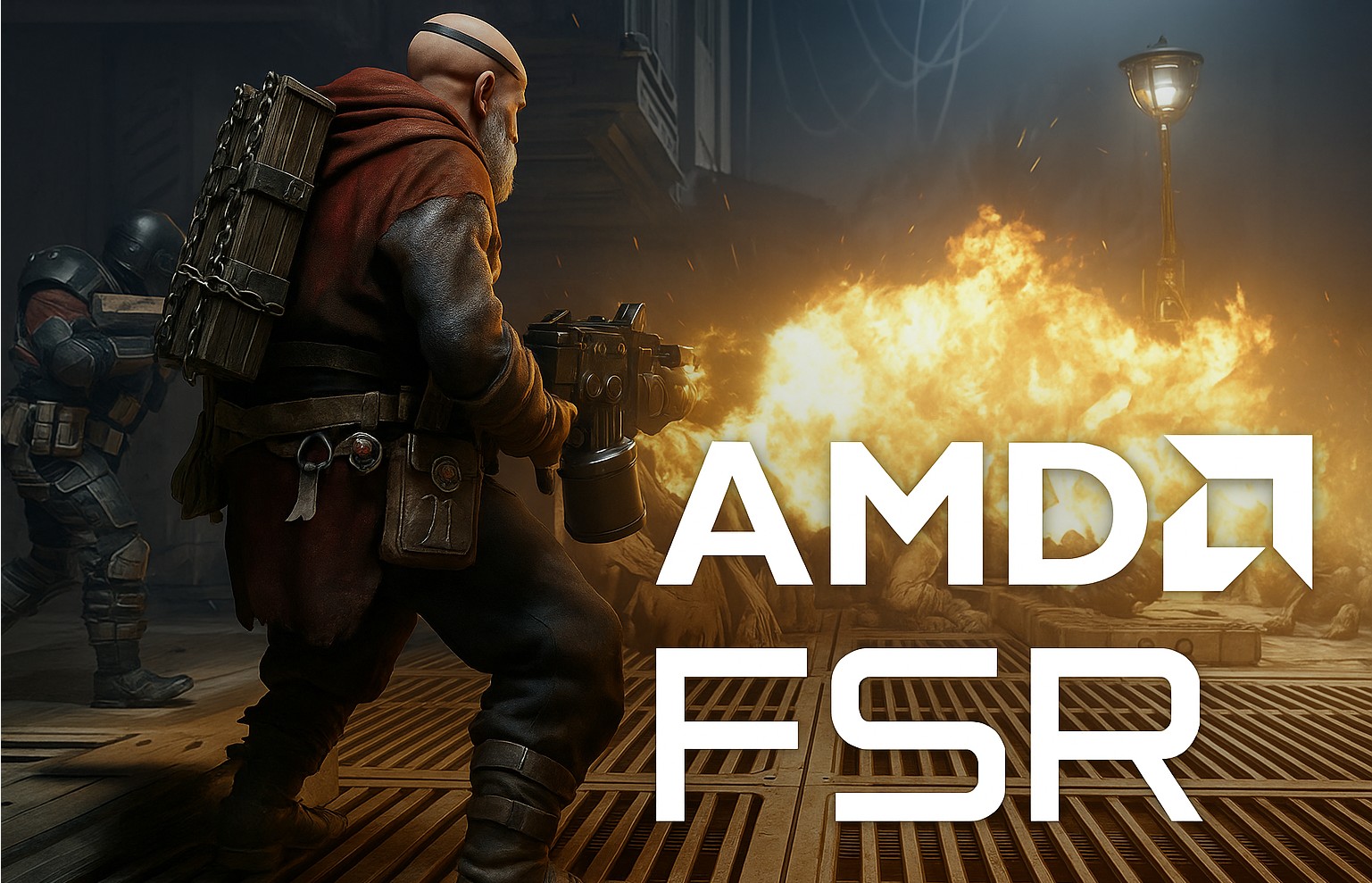
New AI features expected in FSR Redstone
At the center of the expectation are four new, AI-supported graphics functions that AMD is bundling under the code name Redstone. These modules are intended to work as an interlinked pipeline to significantly improve performance and image quality compared to classic rendering. Specifically, these are
-
Neural Radiance Caching: AI-supported global illumination that predicts indirect light using trained models and stores it in a cache. This allows computationally intensive path tracing to be significantly accelerated
-
ML Ray Regeneration: An AI-based ray tracing denoising that reconstructs missing or incompletely calculated rays/pixel details in the image. It serves as a neural replacement for classic denoisers and is intended to restore details lost in reflections, for example
-
ML Super Resolution: Upscaling via machine learning, in which low-resolution frames are upscaled by a trained model. Instead of heuristic filters, Redstone uses AI models to predict a sharper image from fewer pixels. This super resolution process is intended to deliver comparable image quality with significantly higher performance compared to native resolution.
-
ML Frame Generation: Generative frame generation inserts synthetically calculated intermediate images into the process in order to noticeably increase the frame rate. Similar to Nvidia’s DLSS frame generation, the aim is to achieve significantly smoother animations with moderate latency. Redstone relies on an AI-supported frame generation process for the first time, after AMD’s previous solution did not use machine learning.
Expected performance benefits and compatibility
By combining these technologies, AMD expects significant performance gains compared to native rendering. Especially in GPU-intensive scenes with path tracing and ray tracing, Redstone should ensure noticeably higher frame rates without sacrificing visual quality. Initial tests of the Ray Regeneration sub-function in the game Call of Duty: Black Ops 7 confirm this: Activating AMD’s AI denoiser there resulted in almost no FPS loss compared to the standard denoiser. This fuels the expectation that Redstone will work significantly more efficiently in its final form than conventional rendering methods – for example, by combining upscaling and frame generation to multiply the effective frame rate compared to the native 4K resolution.
In terms of compatibility, however, there are signs of a limited launch. According to official information, FSR Redstone will initially be available exclusively for the Radeon RX 9000 series (RDNA 4). Older Radeon GPUs of the RDNA 3 or RDNA 2 generation will be left out for the time being, which AMD is apparently using to put the latest hardware generation in the spotlight. There have been reports in advance about a possible vendor-agnostic focus – Redstone is supposed to be implemented via the shader units and could theoretically also run on Nvidia and Intel graphics cards. So far, however, there has been no confirmation of this. On the contrary, teasers from AMD only emphasize support for the company’s own RX-9000 GPUs. Redstone thus follows the course of FSR 4, which is also officially only released on RDNA 4. (Unofficially, modders have already managed to get FSR 4 to run on older GPUs, but usually with performance issues)
Another factor is the cooperation with the game engines: in order for the new features to take effect, game developers have to integrate them in a targeted manner. Redstone may be ready to go at driver and API level, but implementation in real games is still in its infancy. The first demo for Redstone was delivered by Black Ops 7 – albeit under controlled conditions and with specially optimized code. It remains to be seen whether similar results will be achieved in complex open-world games or less optimized titles:
Support in first games and outlook
Call of Duty: Black Ops 7 is considered a pioneer, as it is the first title to use an element of FSR Redstone: AMD’s Ray Regeneration was recently implemented there via an update. An upcoming game update is also expected to add ML Frame Generation to BO7. Furthermore, observers expect that only very few titles will support Redstone at launch – in addition to CoD, some game projects co-developed by AMD and Sony are mentioned: There is speculation in the rumor mill that AMD’s close collaboration with Sony(keyword “Project Amethyst”) could ensure that Redstone technologies are used early on in upcoming PlayStation titles. Overall, however, it is likely to take some time for the new FSR feature set to become widely established in the gaming landscape. Estimates from the community suggest that it could be over a year before more than 50 games support Redstone.
AMD is expected to reveal all official details about FSR Redstone later today. Our editorial team is already preparing a detailed article, which should be published this afternoon. In it, we will examine the actual performance of Redstone in practice and see to what extent the high expectations of the rumor mill are fulfilled. Until then, this summary provides a concise overview of what tech enthusiasts can expect from AMD’s big AI update.
While expectations for AMD’s FSR Redstone update have been shaped by numerous pre-reports and technical speculation for weeks and even months, the crucial question remains as to how much of this will materialize in practical implementation. A comprehensive analysis that systematically compares all known leaks, performance forecasts and presumed functional features with the real results will therefore have to follow. This comparison will then also show which assumptions can be confirmed, where the official implementations deviate from the information circulated in advance and which aspects of the new ML technologies actually bring the expected progress in practice.
Table of sources and links to the FSR Redstone leaks
| Source | Key statement | Link to |
|---|---|---|
| Tom’s Hardware | Teaser from AMD SVP Jack Huynh, Redstone announced as AI suite for RX-9000, focus on upscaling, ray regeneration and frame generation | https://www.tomshardware.com/news/amd-teases-fsr-redstone |
| WCCFtech | Rumors about ML upscaling, radiance caching, ray regeneration, frame generation and hints at theoretical platform independence | https://wccftech.com/amd-fsr-redstone-next-gen-upscaling-features-dlss-4-competitor |
| WCCFtech | Description of the AI Ray Denoiser and ML-based GI cache, first hints from Black Ops 7 | https://wccftech.com/call-of-duty-black-ops-6-amd-fsr-ray-regeneration |
| OC3D | Discussion about possible RDNA-3 exclusion, community concerns about GPU support and dependency on game integration | https://overclock3d.net/news/software/amd-fsr-redstone-compatibility-rdna3 |
| TweakTown | Early reports on Redstone as part of AMD’s AI strategy including optimizations by Sony and engine collaborations | https://tweaktown.com/news/amd-redstone-upscaling-sony-collaboration |
| The Verge | Reports on Black Ops 7 as the first title with FSR Ray Regeneration and AMD’s close integration in the production process | https://www.theverge.com/2025/11/amd-cod-black-ops-fsr-ray-regeneration |
| Windows Central | Notes on roadmap, Redstone as latest module in a growing ML pipeline for gaming | https://www.windowscentral.com/gaming/amd-fsr-redstone-coming-soon |
| Digital Foundry / Eurogamer | Analysis of ray regeneration implementation in Black Ops 7 and early image quality observations | https://www.eurogamer.net/digitalfoundry-black-ops-fsr-ray |
| Reddit / r/Amd | Community reports on FSR-4 mods on RDNA2/3, overhead of ML upscaling and practical tests in games | https://www.reddit.com/r/Amd/comments/fsr4_mod_rdna2 |
| ComputerBase | Report on FSR-4 mod tests with RDNA2, first performance values and image quality analysis | https://www.computerbase.de/2025-09/amd-fsr4-mod-tests |
| Videocardz | Leak reports on presentation slides, features and early game integration | https://videocardz.com/newz/amd-fsr-redstone-slides-leak |
| IGN | Classifying the importance of Redstone for current and upcoming AAA titles | https://www.ign.com/articles/amd-redstone-fsr-upscaling-preview |






















3 Antworten
Kommentar
Lade neue Kommentare
Veteran
Urgestein
Veteran
Alle Kommentare lesen unter igor´sLAB Community →