















Anyone who regularly records streams, prepares scenes, manages cameras or uses external capture hardware in their own video studio with software such as OBS Studio will sooner or later be faced with the question of a suitable technical basis for a dedicated recording computer. It’s not just about raw computing power or maximum features, but above all about a balanced, stable and affordable platform that can be seamlessly integrated into existing workflows. The aim of this article is to define a system basis that is as practical as possible, which is suitable for my specific user profile in studio operation, efficiently reuses existing components such as SSDs, network infrastructure or capture cards and at the same time offers sufficient performance reserves to function reliably even in more demanding setups. The focus here is on questions of energy efficiency, I/O stability, platform compatibility and, last but not least, a realistic price-performance ratio including sustainable “leftover utilization”.
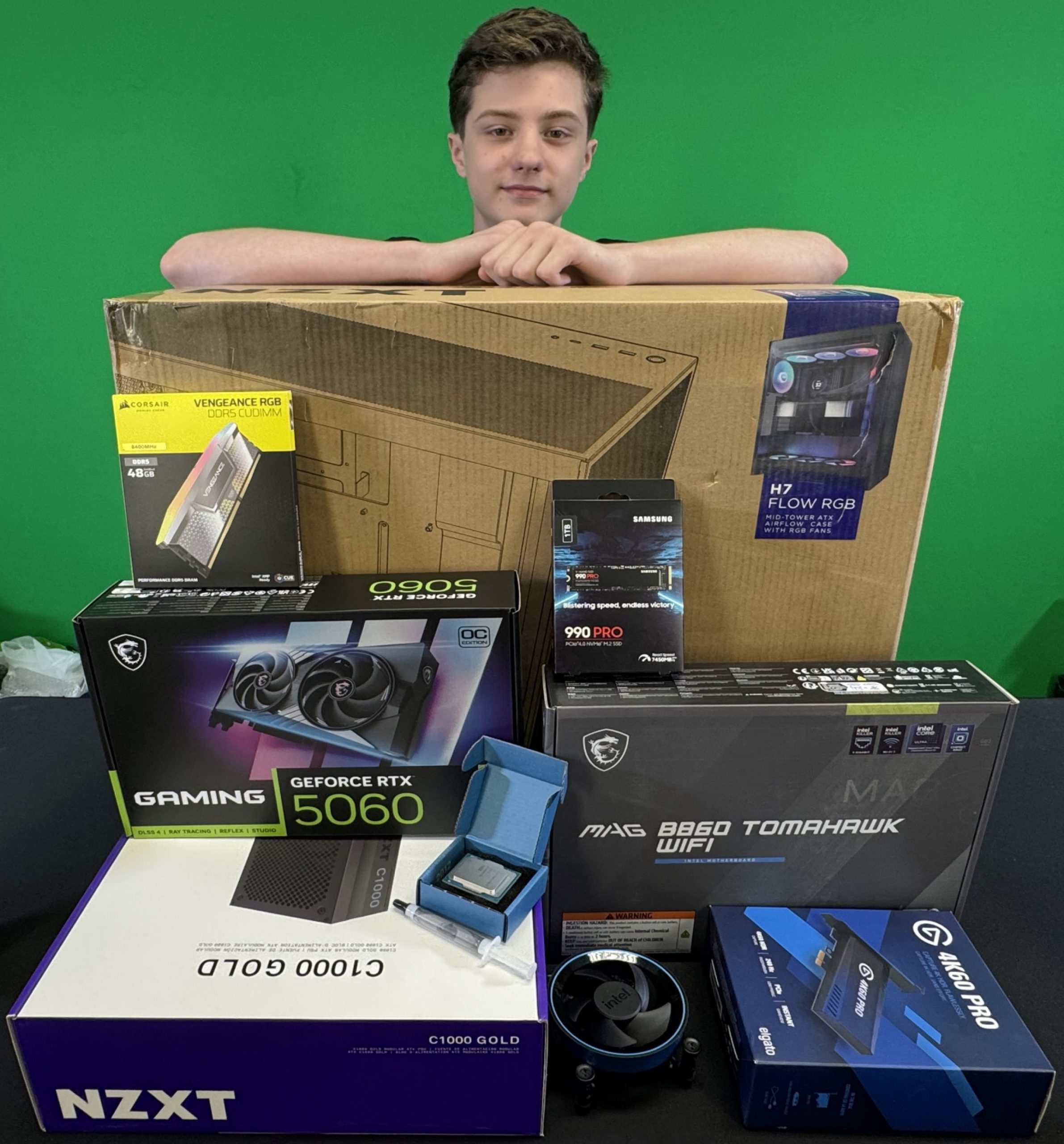
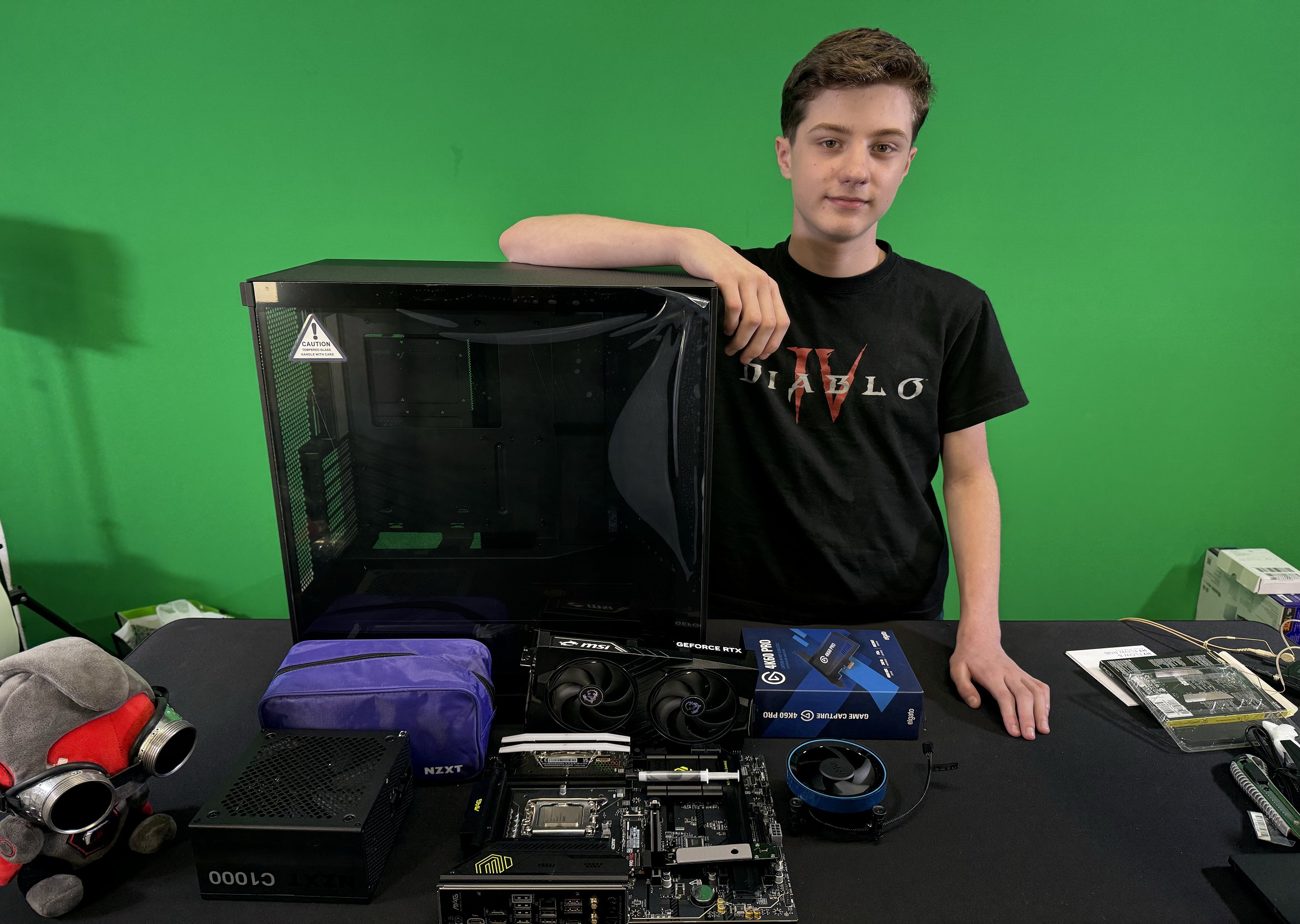
When building the system, it was also particularly important to me to actively involve my son. On the one hand, the technical assembly of such a computer is a good opportunity to teach the basics and promote a deeper understanding of how modern computer technology works. On the other hand, I naturally hope that one day he will continue what I have started – either out of his own interest or as part of a joint project. Especially in the context of a studio, where many components are interlinked, it is important to understand the technical connections at an early stage. And last but not least, it is simply a pleasure to work together on such a system, to lay cables, install heat sinks and in the end experience a functioning setup that not only delivers performance but also represents a piece of shared experience.
Foreword and user profile
If anyone is wondering why I put so much effort into selecting and setting up this system, it’s not just because I’m enthusiastic about technology or have a penchant for optimization, but because of the very specific requirements of my day-to-day work. In my video studio, it’s not just about creating the occasional clip for my YouTube channel. Rather, I document all dismantling, conversions and technical interventions on sometimes very complex laboratory setups during operation. These processes are recorded in real time, often in parallel from several perspectives, supplemented by screen recordings and sometimes also by separate audio tracks. The resulting data volumes are enormous, especially as many of these streams are stored uncompressed or only slightly pre-processed in order to keep subsequent evaluation as flexible as possible.
In addition, this work does not take place in an isolated environment, but in a productive network in which other people are also moving large data packets simultaneously across more than just one floor and where a continuous LAN is not possible. In the past, this has repeatedly led to the available WLAN capacity simply being overwhelmed, even with WiFi 7. Longer recordings were interrupted as a result and there were noticeable data jams, artifacts or errors during transfer to the NAS. I therefore had to switch to a local solution that could initially buffer all raw data directly on site: reliably, at high write speed and independently of the network connection. Only then is the usable content selectively transferred to the central storage or backup system. I now use a system consisting of a RAM disk for the temporary data, a huge NAS hard disk for recording the streams and the network to the NAS for the final backup of the required content.
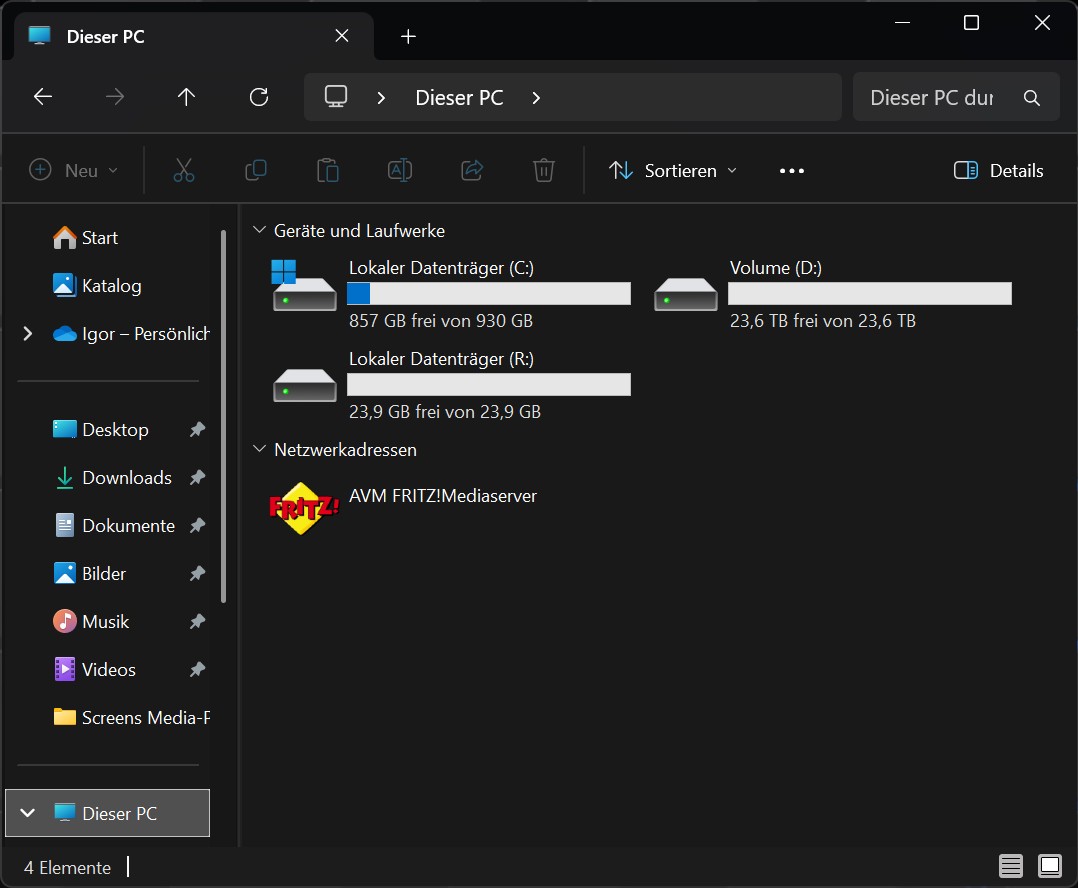
However, these requirements put the local storage system under considerable permanent strain. I have already destroyed three system SSDs through continuous writing, including models with a nominally high TBW, and had to realize that even supposedly robust portable storage media fail sooner or later under the thermal and write conditions. A self-sufficient setup with a clear separation between the system drive, buffer storage and archive solution was therefore not an option, but a necessity. I need a system that is not only fast, but also durable and protected against failures, while at the same time fitting into my existing work structure. The effort I am making here is therefore not an end in itself, but a direct reaction to real technical limits that were repeatedly reached or exceeded in a continuously documenting, data-intensive studio operation.






















45 Antworten
Kommentar
Lade neue Kommentare
Veteran
1
Urgestein
Urgestein
Urgestein
1
Urgestein
Mitglied
Urgestein
Urgestein
1
Urgestein
Urgestein
Urgestein
1
Urgestein
Urgestein
Urgestein
Urgestein
Alle Kommentare lesen unter igor´sLAB Community →