















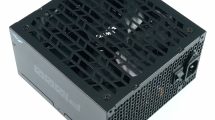
The Endorfy Vero L6 750 Watt is primarily aimed at price-conscious users who are looking for a solid, functional power supply for mainstream or slightly performance-intensive gaming or everyday PCs without making high demands on modular cabling or premium features The 750 W output is sufficient for typical single-GPU systems with current graphics cards, especially if they use a 12V 2×6/12-pin PCIe connector. Considering the low price level of around 70 euros, the Vero L6 appears to be designed as an entry to mid-range power supply that offers ATX 3.1 compatibility and sufficient dimensioning for modern hardware Compared to more expensive, modular power supplies, it is a compromise between cost, features and basic functionality. And that’s exactly where I want to start, because it doesn’t always have to be ultra-expensive high-end from the 1500 watt class.
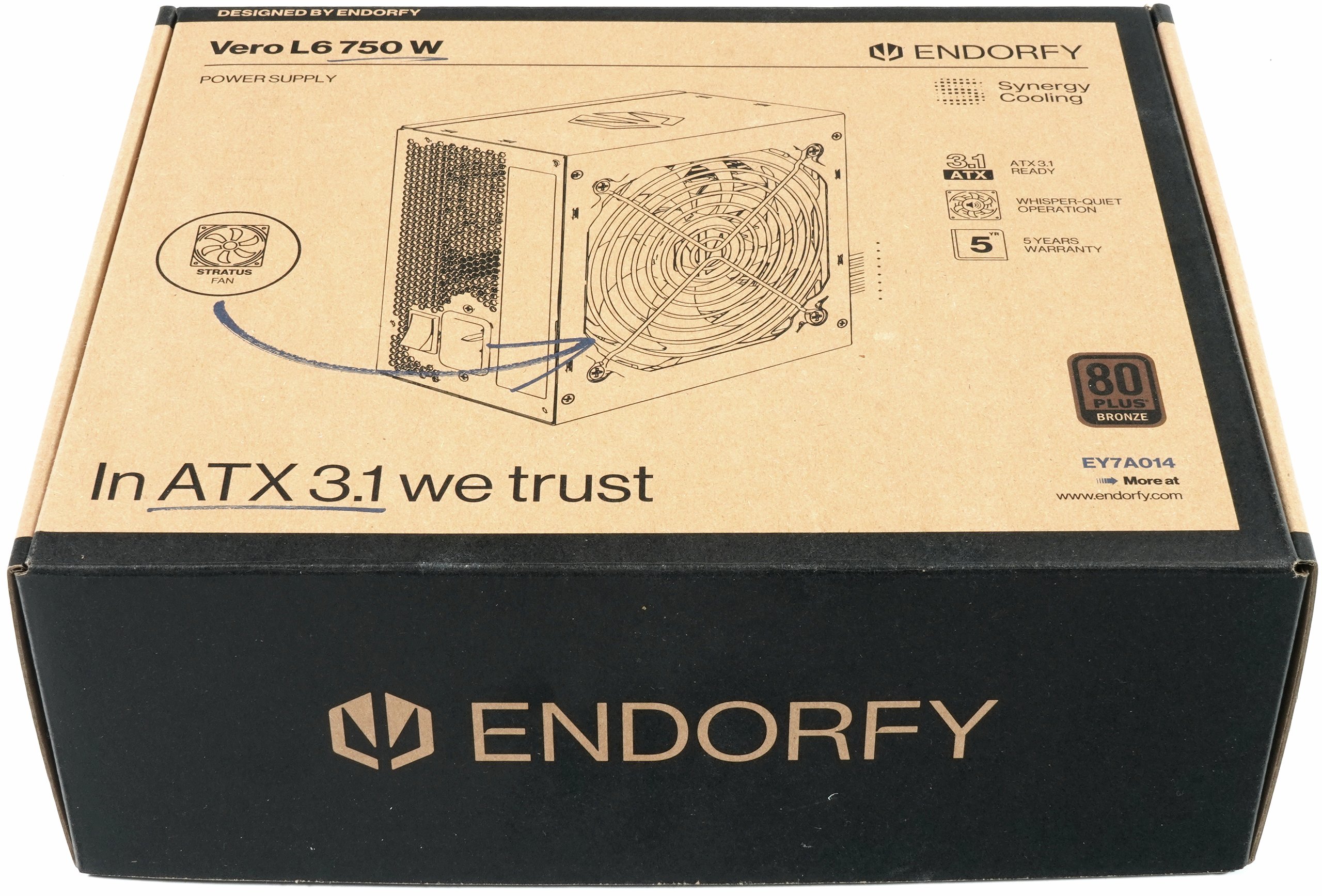
Endorfy is a brand that emerged from the former SilentiumPC and has significantly broadened its portfolio in recent years to position itself as a complete provider in the PC component market. In addition to coolers, fans and cases, the introduction of its own power supply units adds a central system component to the range, which is indispensable for many complete systems and DIY projects. This expansion enables Endorfy to offer attractively priced complete solutions comprising coordinated products and thus pursue a cohesive brand strategy. For the end customer, the result is a coherent offering that is aimed primarily at price-conscious buyers who prefer functional and reliable components from a single source.
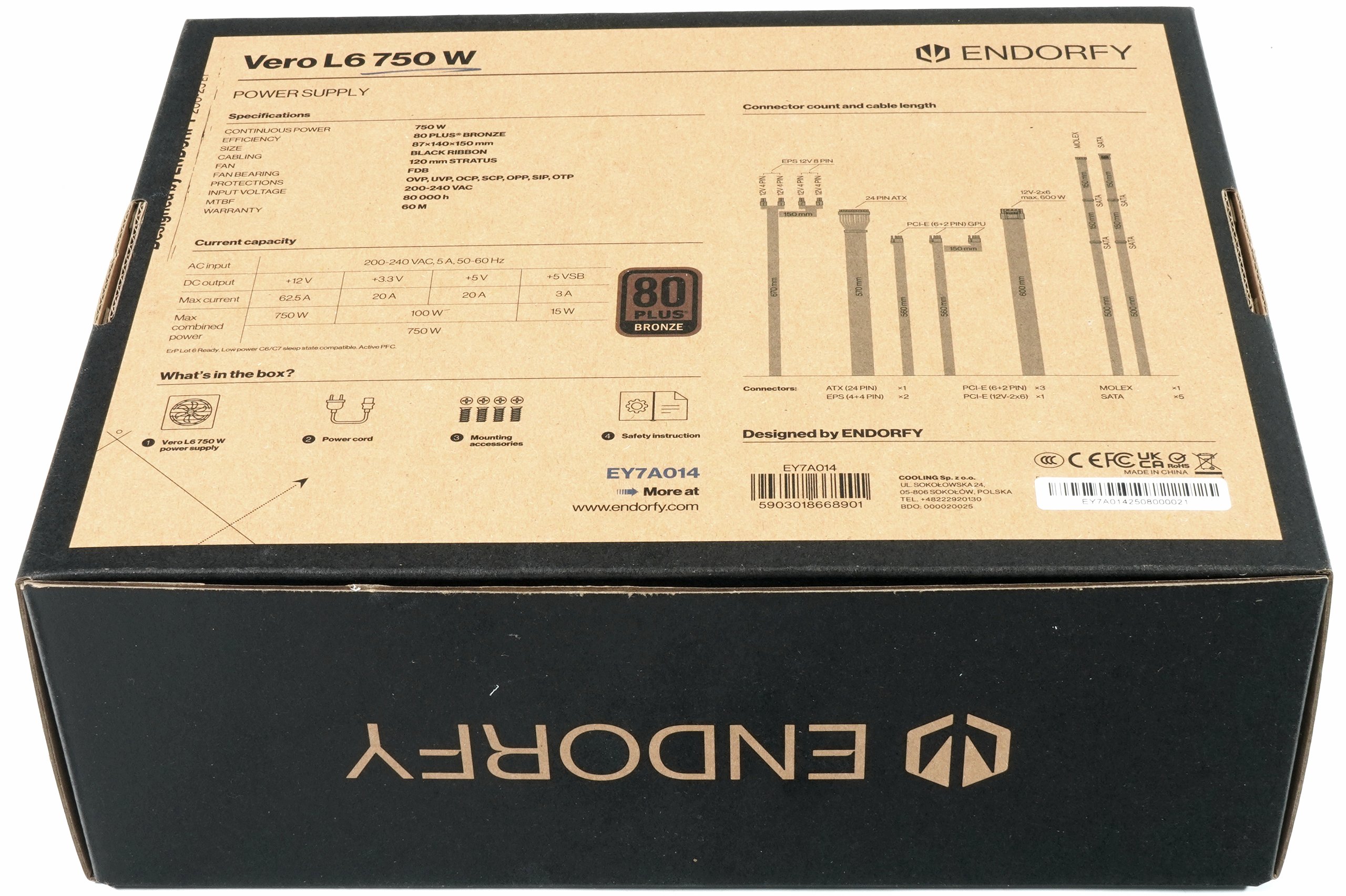
Technical data at a glance
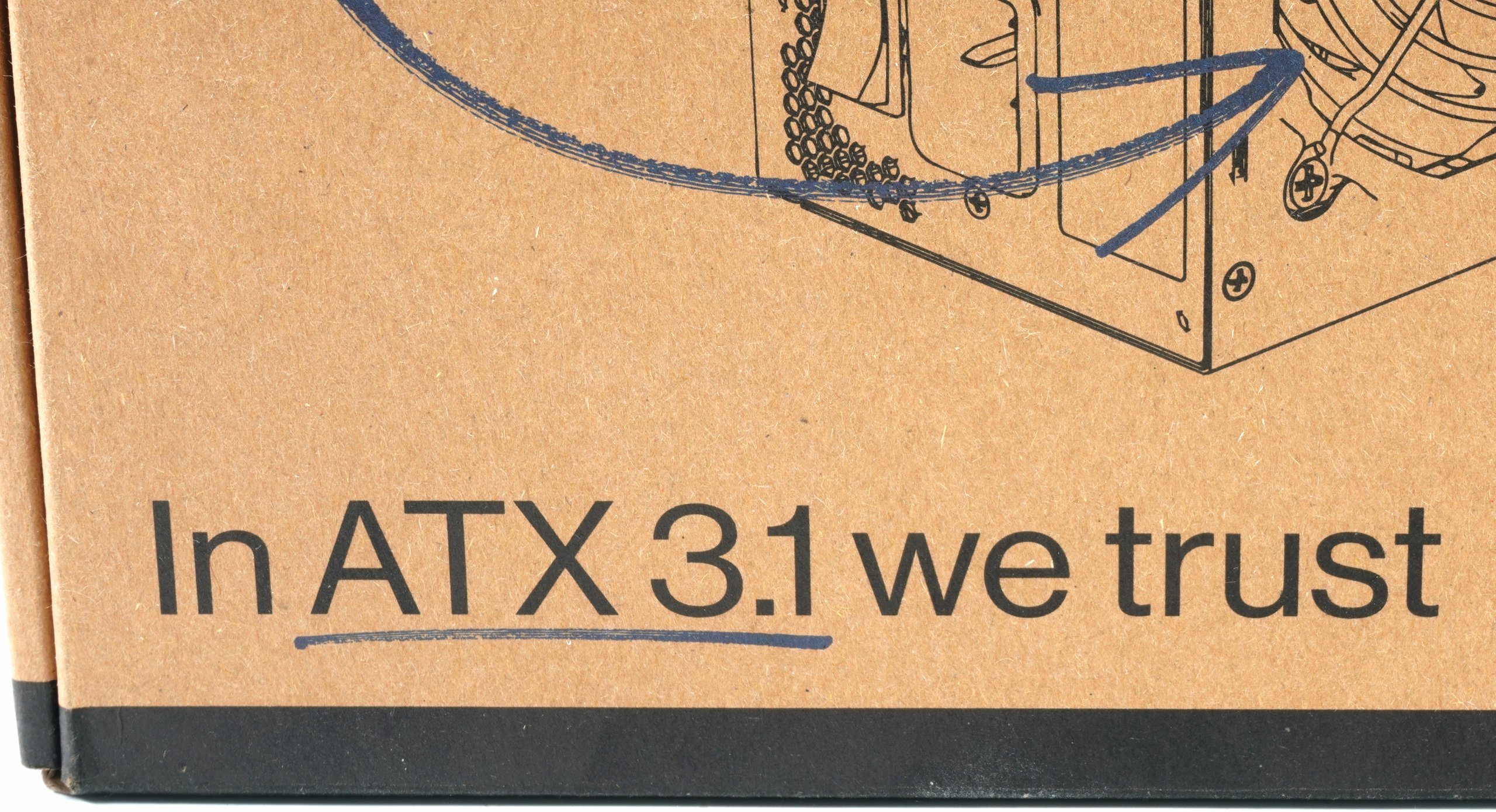
The ATX 3.1 standard defines a series of requirements that modern power supply units must fulfill in order to supply current graphics cards and processor generations with a stable power supply. Key points are clearly specified limit values for so-called power excursions, i.e. short-term load peaks that can occur, especially with powerful GPUs. In addition, ATX 3.1 defines stricter specifications for efficiency, hold-up time, protection mechanisms and the 12V 2×6 connector, which replaces older 12V HPWR variants and has been mechanically and electrically improved. An ATX 3.1 power supply such as the Vero L6 is therefore fundamentally capable of safely absorbing the load changes of modern systems, provided the internal topology is sufficiently dimensioned.
The Vero L6 is technically designed to operate exclusively in the input voltage range of 200 to 240 volts. It therefore does not have an active wide-range input circuit, as is common with internationally marketed or higher-priced power supply units. This restriction has no negative impact on the function in European power grids, but it does limit the target group to regions with a stable 230-volt supply. This creates a cost advantage for manufacturers, as the elimination of components for countries with 115-volt grids can simplify the platform. Users in Europe will not notice this difference during normal operation, as voltage fluctuations in the European grid are reliably intercepted within the permissible range. However, this power supply unit is unsuitable for users outside the 230-volt area, which clearly focuses its market position on European and other 230-volt regions.
| Category | Specification |
|---|---|
| Input voltage (Vrms) | 200-240 |
| Input current (Arms) | 5 |
| Input frequency (Hz) | 50-60 |
| Rated power (W) | 750 |
| Type | ATX12V |
| Dimensions (W × H × D) | 150 × 85 × 140 mm |
| Cooling | 120 mm Fluid Dynamic Bearing fan (Stratus 10-1111, 0.25 A) |
| Semi-passive operation | No |
| Cable design | Fixed cables |
Performance data of the rails
The performance data of the individual rails clearly show that the power supply unit provides almost all of its rated power from the 12-volt rail, which corresponds to the current state of modern PC systems. Today, processors and graphics cards draw almost all of their power consumption from 12 volts, while the 3.3 and 5 volt rails are mainly used for peripherals, smaller consumers and logic areas and are therefore significantly smaller.
The 12-volt rail is specified with 62.5 amps, which corresponds to a maximum output of 750 watts. This is precisely where the official total output of the power supply comes from, as the secondary lines are no longer regarded as independent power reserves in modern ATX designs, but are generated from the main rail via DC-DC converters. The 3.3-volt and 5-volt rails are therefore designed for 20 amps each, which can result in up to 100 watts in mathematical terms, but would never be usable in addition to the full 12-volt output in practical operation because the architecture feeds these secondary lines from the 12-volt rail.
| Rail | 3.3 V | 5 V | 12 V | 5VSB | -12 V |
|---|---|---|---|---|---|
| Max. Current (A) | 20 | 20 | 62,5 | 3 | 0 |
| Max. Power (W) | 100 | – | 750 | 15 | 0 |
The 750 watts of total power specified in the data sheet therefore describes the maximum electrical output power that the power supply can reliably provide on the 12-volt rail, which is crucial for modern hardware. This design follows the standard of current ATX power supplies, in which almost the entire available power is provided centrally via the 12-volt rail, while the smaller rails are merely supplementary supply levels.
OEM and manufacturing
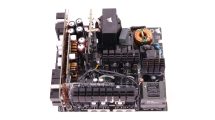
The OEM of the Vero L6 750 Watt is Jiumeng, a contract manufacturer specializing in cost-efficient ATX platforms in the lower and mid-range power segment, relying on proven standard topologies that provide predictable and traceable power characteristics. Jiumeng is one of the lesser internationally known contract manufacturers operating mainly in the low and mid-range price segment, producing for brands seeking a balance between cost and solid base technology. As an OEM, Jiumeng predominantly uses standardized manufacturing processes and topologies based on widely used industrial reference designs. As a result, power supply units such as the Endorfy Vero L6 have a technically comprehensible design because they are based on established concepts that have been used reliably by many manufacturers for years.
The production is therefore carried out with a component selection that relies on solid Taiwanese and Chinese components, which is common in this price range and results in stable operating behavior with appropriate dimensioning. Jiumeng pursues a pragmatic approach that is designed less for maximum reserves and more for reliable everyday usability. This also explains the properties measured in the test, such as the proper voltage regulation, the controlled ripple and an overall coherent thermal design, while more demanding disciplines such as the transient response are visibly characterized by the rather simple control technology. For a power supply in this category, this results in a coherent overall picture that underpins the functional positioning of the Vero L6 and at the same time shows that Jiumeng offers consistent, technically comprehensible manufacturing quality in its segment.
Endorfy Vero L6 750W ATX 3.1 (EY7A014)
| Lagernd, Lieferung 1-2 WerktageStand: 23.12.25 07:21 | 69,89 €*Stand: 23.12.25 07:22 | |
| Auf Lager | 69,90 €*Stand: 23.12.25 07:11 | |
| versandfertig in 3 bis 5 Werktagen | 69,90 €*Stand: 23.12.25 06:34 |
















28 Antworten
Kommentar
Lade neue Kommentare
Urgestein
1
Veteran
1
Urgestein
Neuling
Veteran
Neuling
Veteran
1
1
Urgestein
Neuling
Veteran
Veteran
Mitglied
Mitglied
Neuling
1
Alle Kommentare lesen unter igor´sLAB Community →