















Introduction and unboxing
Today we are testing a great board that combines premium quality with a really fair price. The Qwertykeys Evo 80 is aimed at users who are looking for a compact and high-quality TKL keyboard that can not only be used at the desk via cable, but also flexibly wirelessly. With its tri-mode design consisting of USB-C, 2.4 GHz wireless and Bluetooth, it offers modern connectivity, while the housing, switches and mounting concept are designed to be durable and adaptable at the same time. Thanks to the combination of sophisticated damping elements, high-quality keycaps and precise manufacturing, the Evo 80 aims to deliver a convincing overall package for both typing and gaming.
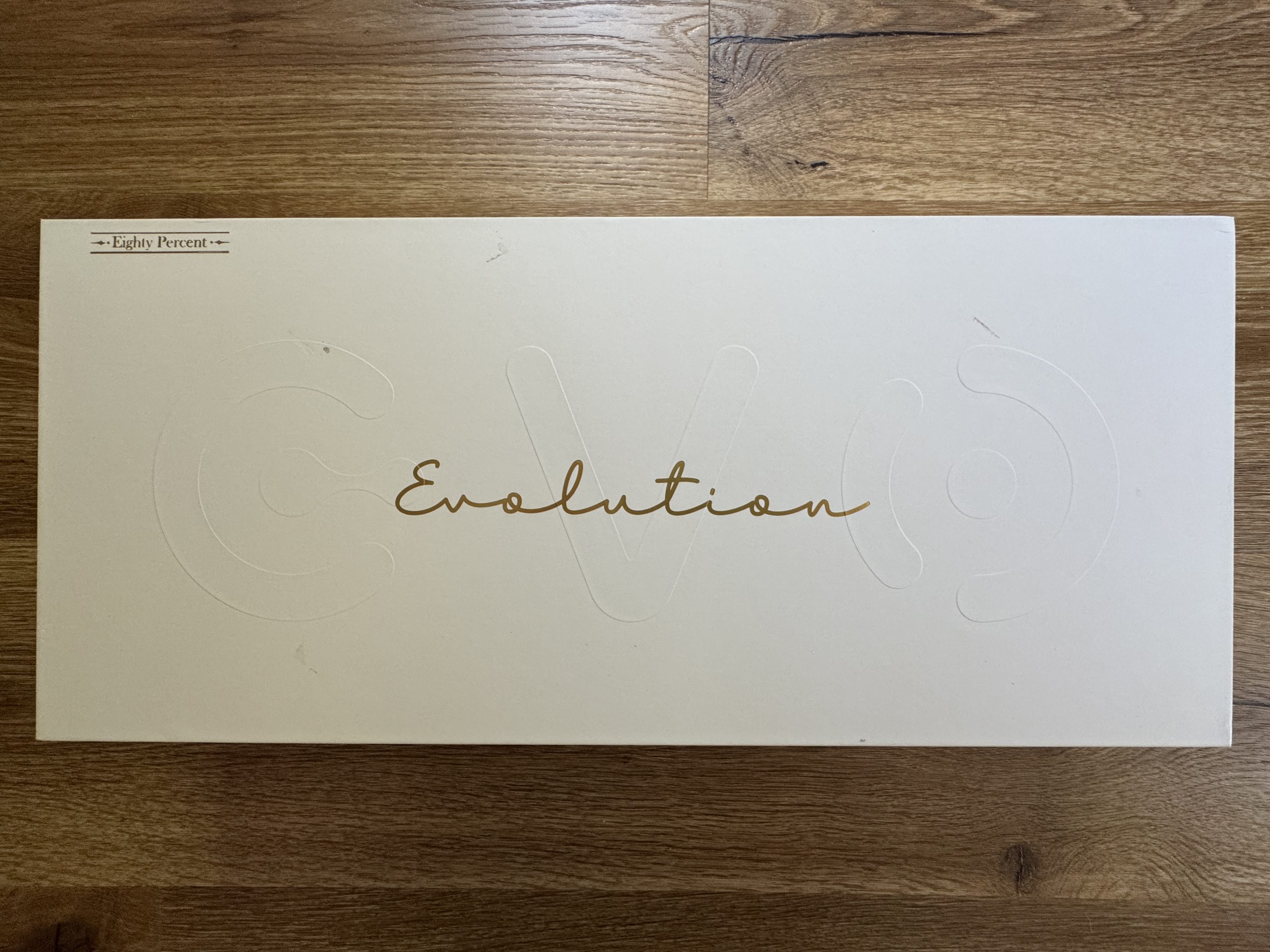
Here you can see the actual product packaging of the Qwertykeys Evo 80. “Evolution” is written in gold on the white box, with the letters “EVO” discreetly embossed in the background. In the top left-hand corner is the inscription “Eighty Percent”, which refers to the 80 percent layout (TKL) of the keyboard.
The picture shows a plain white box with no labeling or logos. This obviously serves as the outer packaging or slipcase for the actual product box of the keyboard. The neutral look is restrained and minimalist. The packaging is high quality and sturdy. Simply beautifully made.
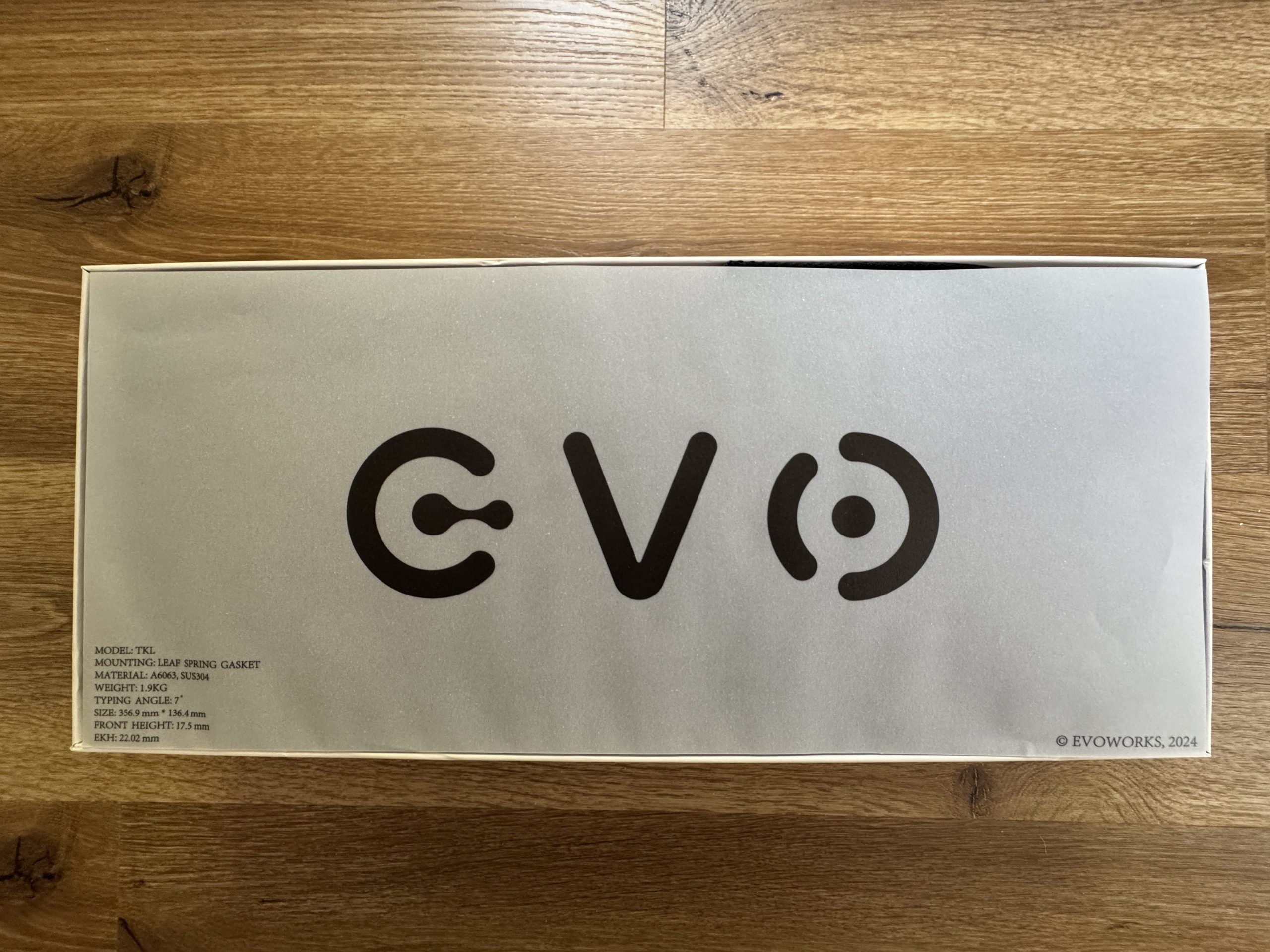
You can see the opened packaging of the Qwertykeys Evo 80. Immediately after opening, there is a white sheet with the large lettering “EVO” printed in black typography on top. The key technical data for the keyboard is printed on the bottom left of this sheet: Model TKL, Mounting Leaf Spring Gasket, material 6063 aluminum and SUS304 steel, weight 1.9 kilograms, typing angle 7 degrees, dimensions 357 × 136.4 millimeters, front height 17.5 millimeters and EKH 22.02 millimeters. The marking “© Evoworks, 2024” can be seen at the bottom right. This insert looks like a specification card that gives the buyer an overview of the board’s most important data the first time they open it.
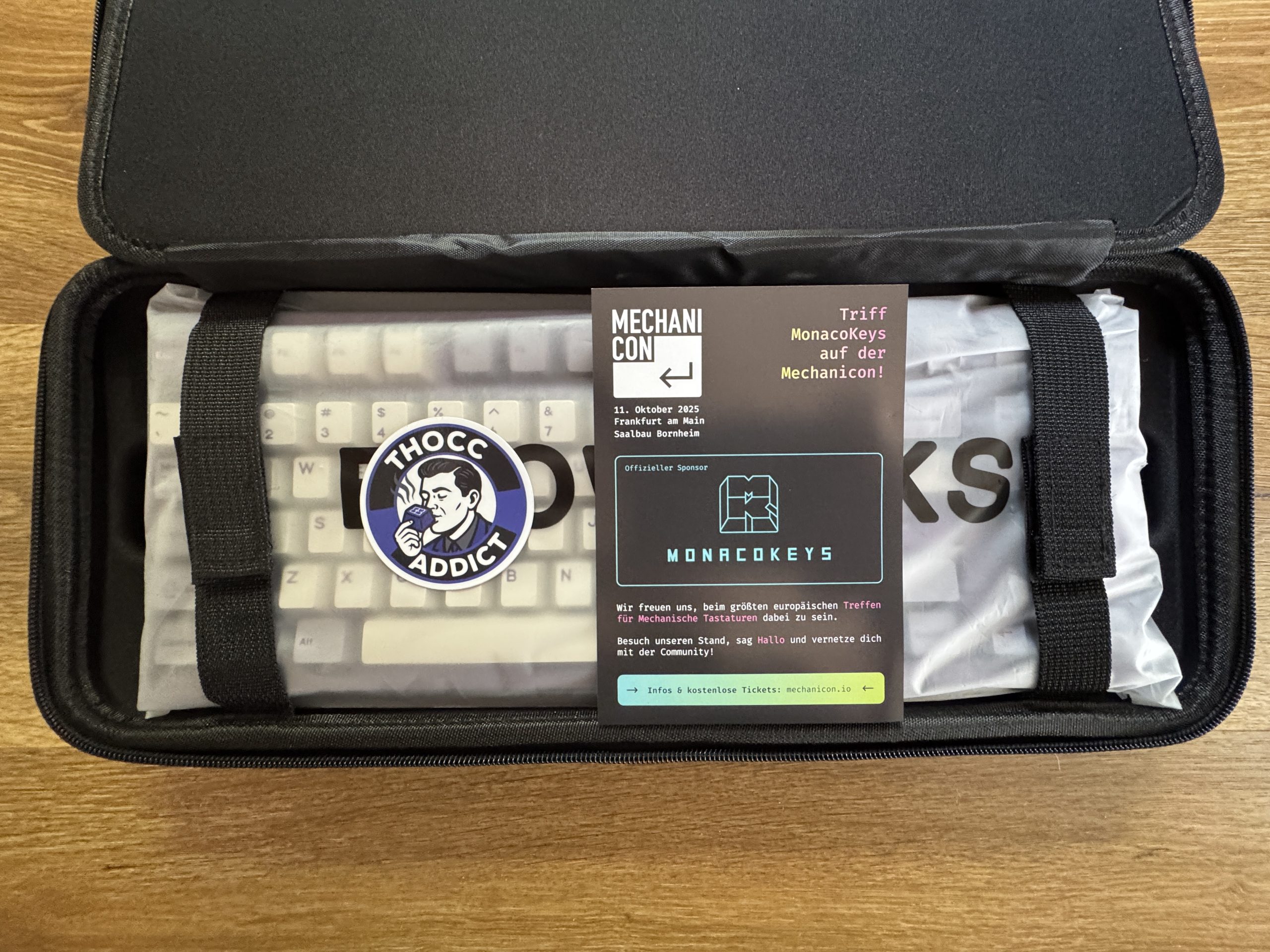
This is a hinged transport or storage case containing the Qwertykeys Evo 80 keyboard. The keyboard itself is still packed in a protective cover and secured with two Velcro straps. There is a round sticker on the keyboard with the inscription “THOCC ADDICT”. Next to it is a flyer for Mechanicon 2025, a trade fair for mechanical keyboards, where Monacokeys is a sponsor. As always, the black case is top quality. Very robust and also very stylish. You should be saying “case” to this one soon.
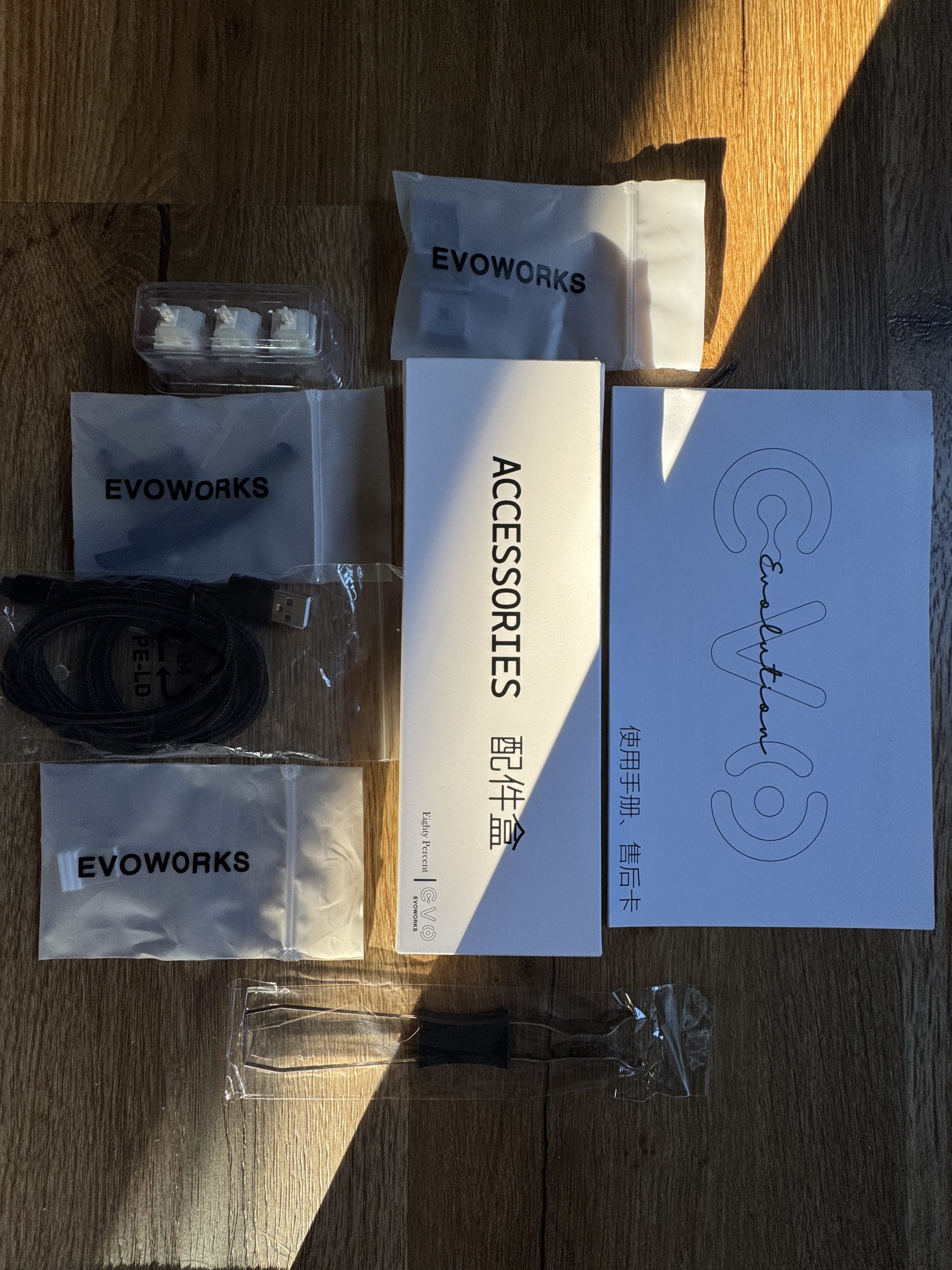
The accessories for the Qwertykeys Evo 80 have been carefully put together and cover all the important points for use and care. Included are three spare switches in a small transparent box, several small bags labeled “EVOWORKS”, which contain additional small parts such as screws or damping elements, as well as a braided USB-C cable for wired operation. There is also a white box labeled “ACCESSORIES”, which contains some of the accessories. And a printed manual including a warranty card with a simple Evo design. The package is rounded off with a black keycap puller, which can be used to safely remove keycaps. Everything you need for spare parts, connectivity, adjustments and the first steps on the new board is therefore included.
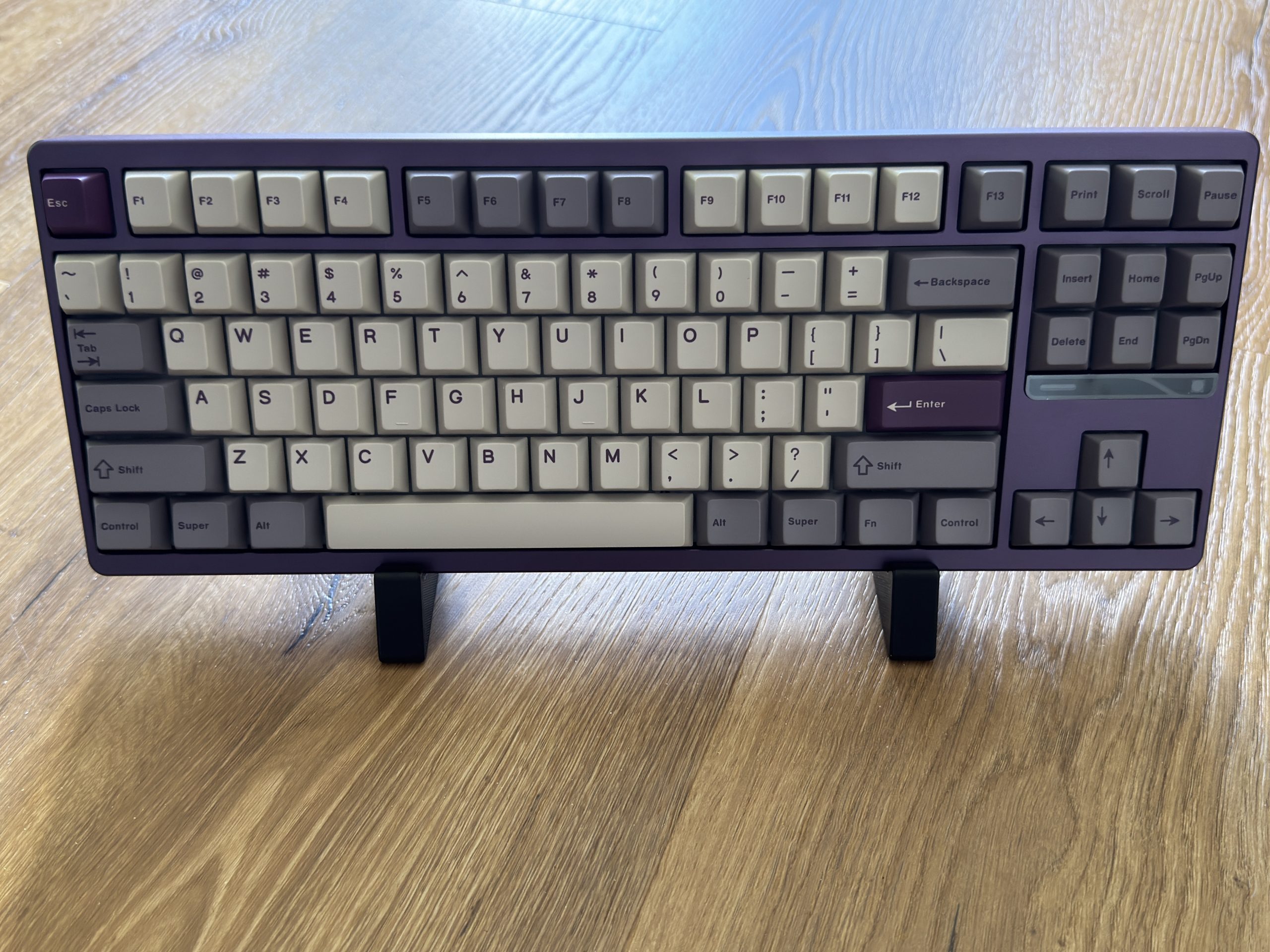
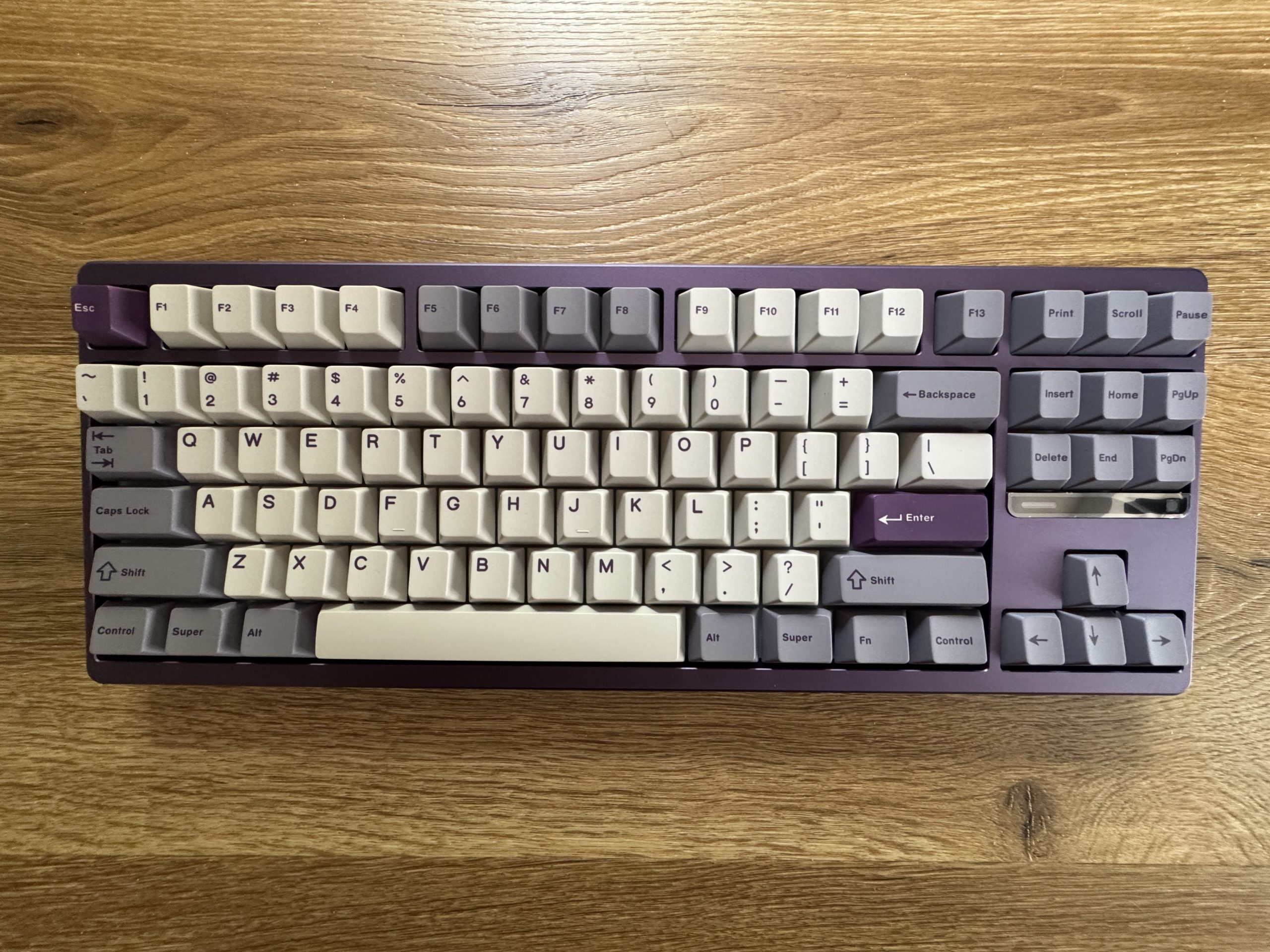
The top of the Qwertykeys Evo 80 in full view. The housing is also in Tyrian and combined with a set of two-tone keycaps in the classic Cherry profile. The keys are designed in a mix of light cream tones and darker shades of gray, creating a restrained but elegant overall impression. Individual keys in Tyrian purple, including the Escape key and the Enter key, provide accents. The layout is a TKL design with a row of function keys and a separate block for navigation keys, but without a numeric keypad. The workmanship is of high quality and the color combination of the housing and keycaps harmonizes well with each other.
The underside of the keyboard in the “Tyrian” color variant, in a rich purple hue. The back consists of a sturdy aluminum housing with a large silver accent plate divided into two diagonal segments. At the bottom center is a small metal emblem embossed with “EVO”. There are black, triangular rubber feet at the four corners to ensure non-slip stability. The interplay between the dark Tyrian shade and the light metal plate gives the back an elegant yet modern look. I would have liked the EVO plate to be engraved. But it’s all good!
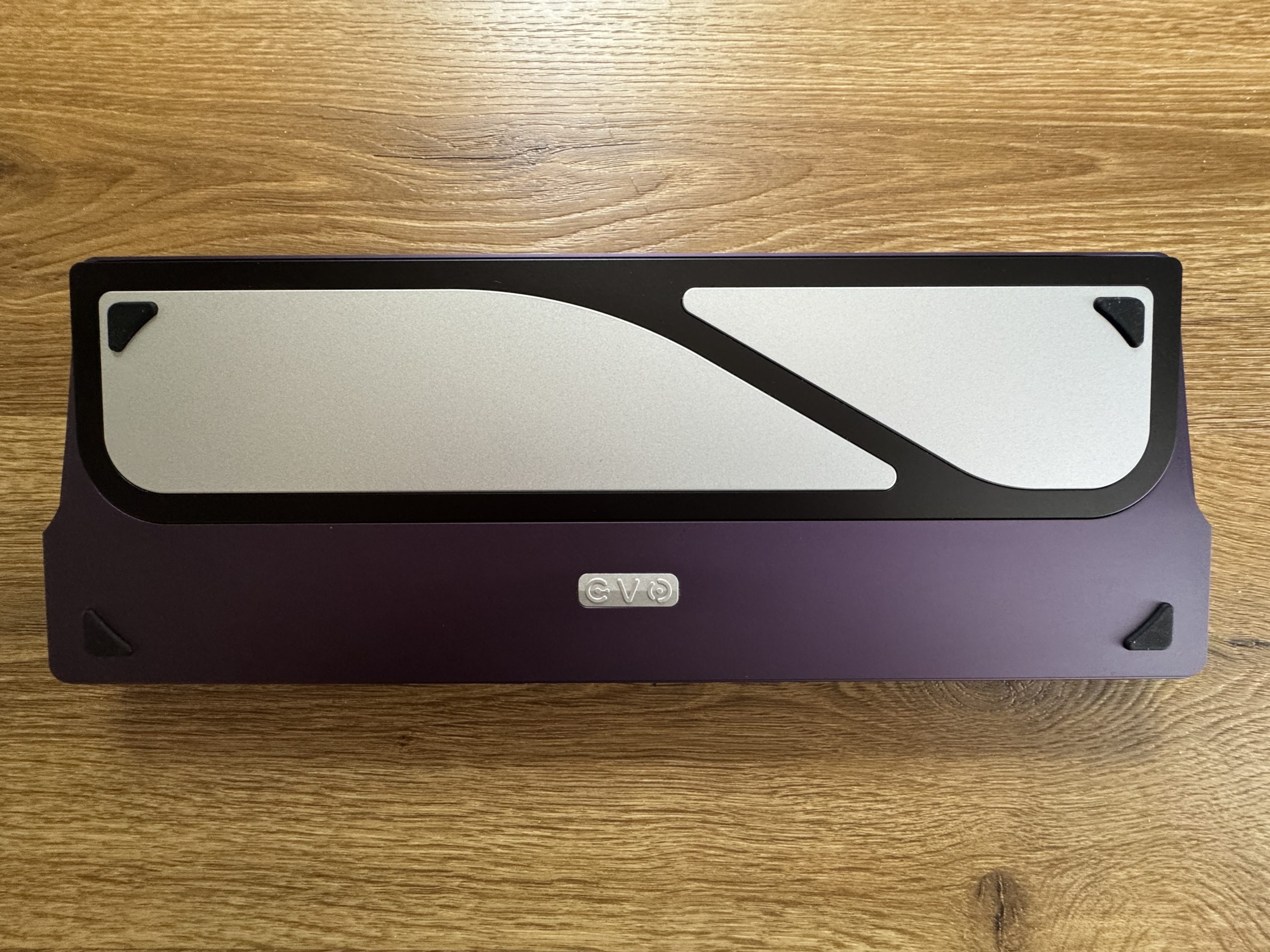
The so-called Golden Ratio Split describes a special design element of the Qwertykeys Evo 80, whereby the weight plate is divided into two sections on the underside, which are proportioned according to the principle of the golden ratio. This concept is intended to symbolically reflect the combination of tradition and innovation within the Evoworks brand. Together with the LED strip on the front, this creates a striking recognition feature that clearly stands out from other keyboards and is one of the most striking design highlights of the Evo 80.
The side profile looks extremely good and, above all, high-quality. I really like that.
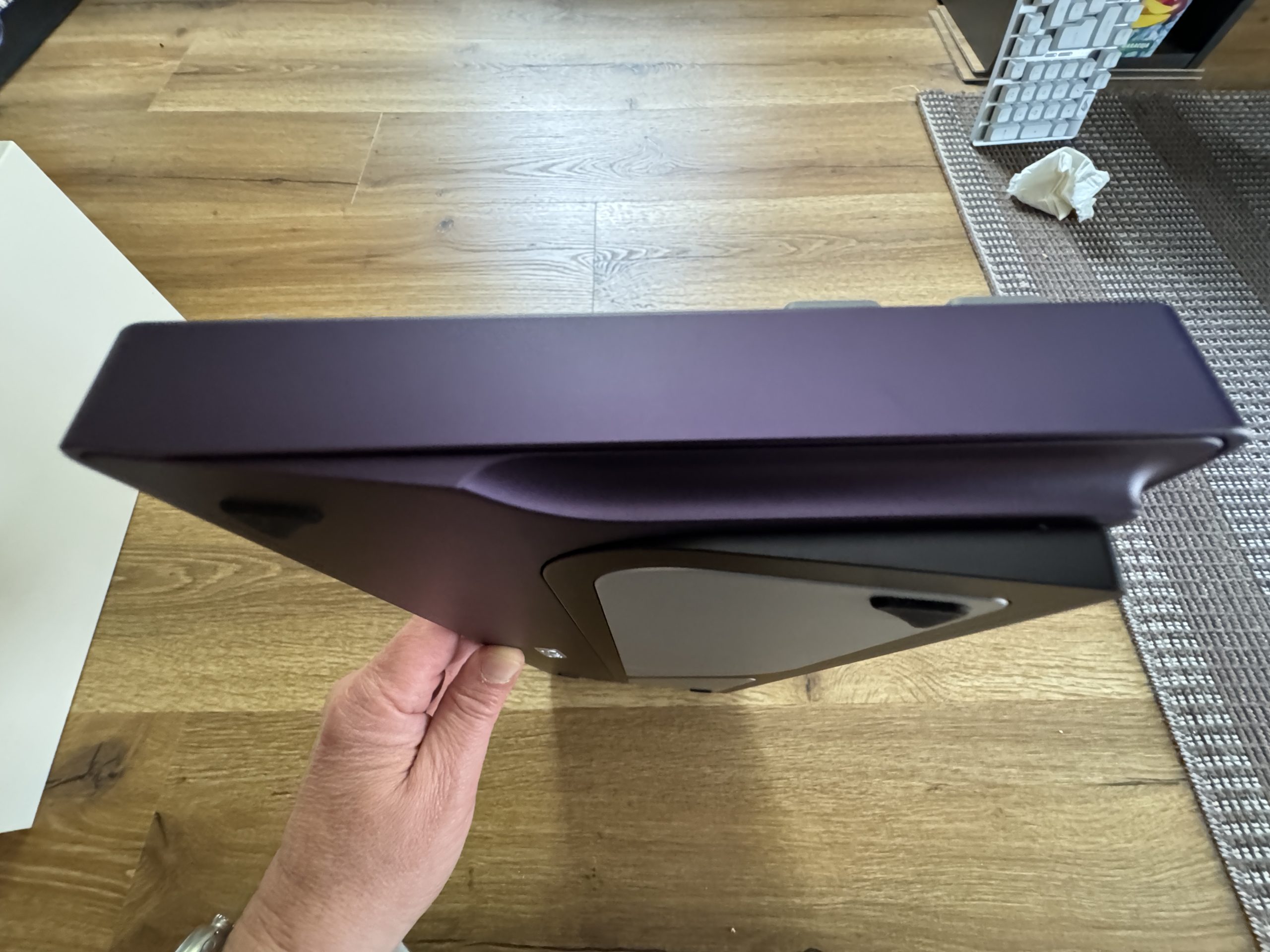
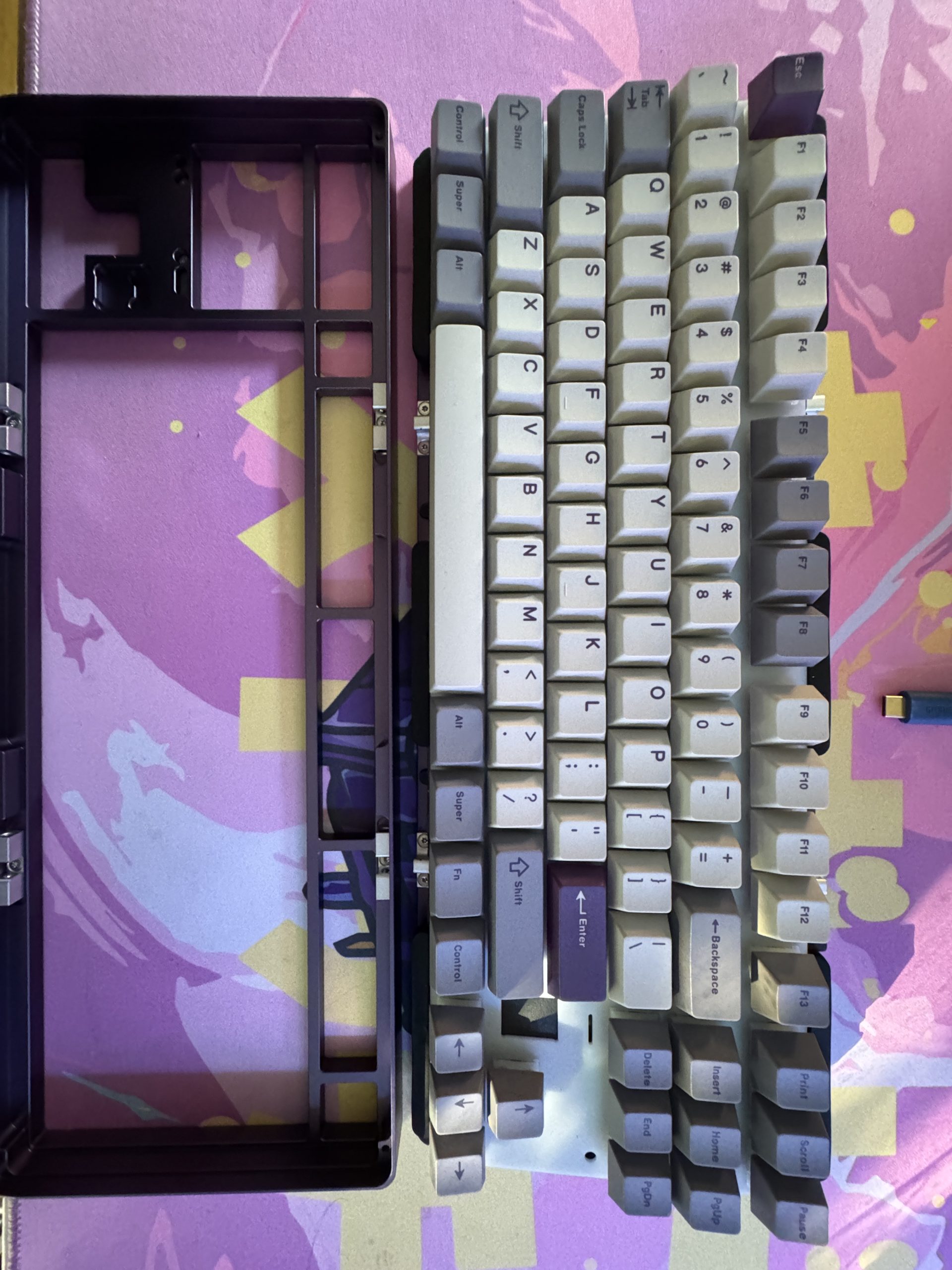
But the best thing about the housing comes now: You don’t need screws here. Instead, Qwertykeys uses a special mechanism that allows the parts to snap together precisely. This system ensures that the board is held together securely, but can also be opened again quickly if required, for example for maintenance or modifications. This creates a practical advantage: users do not have to reach for a screwdriver or tools, but can take the keyboard apart and put it back together again in just a few simple steps. And it is absolutely stable and secure. Furthermore, the PCB with the small circuit board does not need to be linked with a cable. It snaps into place magnetically and automatically. The same system as with Igor’s board. Absolutely brilliant!
Plate, PCB and the included cushioning (foams)
| Layer / Position | Material | Quantity / Remark |
|---|---|---|
| Poron Foams | Poron | 5 layers (main cushioning) |
| Bottom Foam | Cotton | 2 layers (below the PCB) |
| Plate Foam | – | 1 layer (between plate and PCB) |
| Acoustic Sheet | PET | 1 layer (between plate and PCB) |
| Acoustic Sheet | IXPE | 1 layer (between plate and PCB) |
The PP plate is mounted on a 1.2 mm thick Flex-Cut PCB, which gives the entire structure a very high degree of flexibility. This makes the overall typing feel much more agile. The plate-mount stabilizers that are used here are also clearly visible in this context. Surprisingly, they do their job quite well and stand out positively in practical use. If you put the two foams in at the bottom, it becomes a little firmer. Also very pleasant!
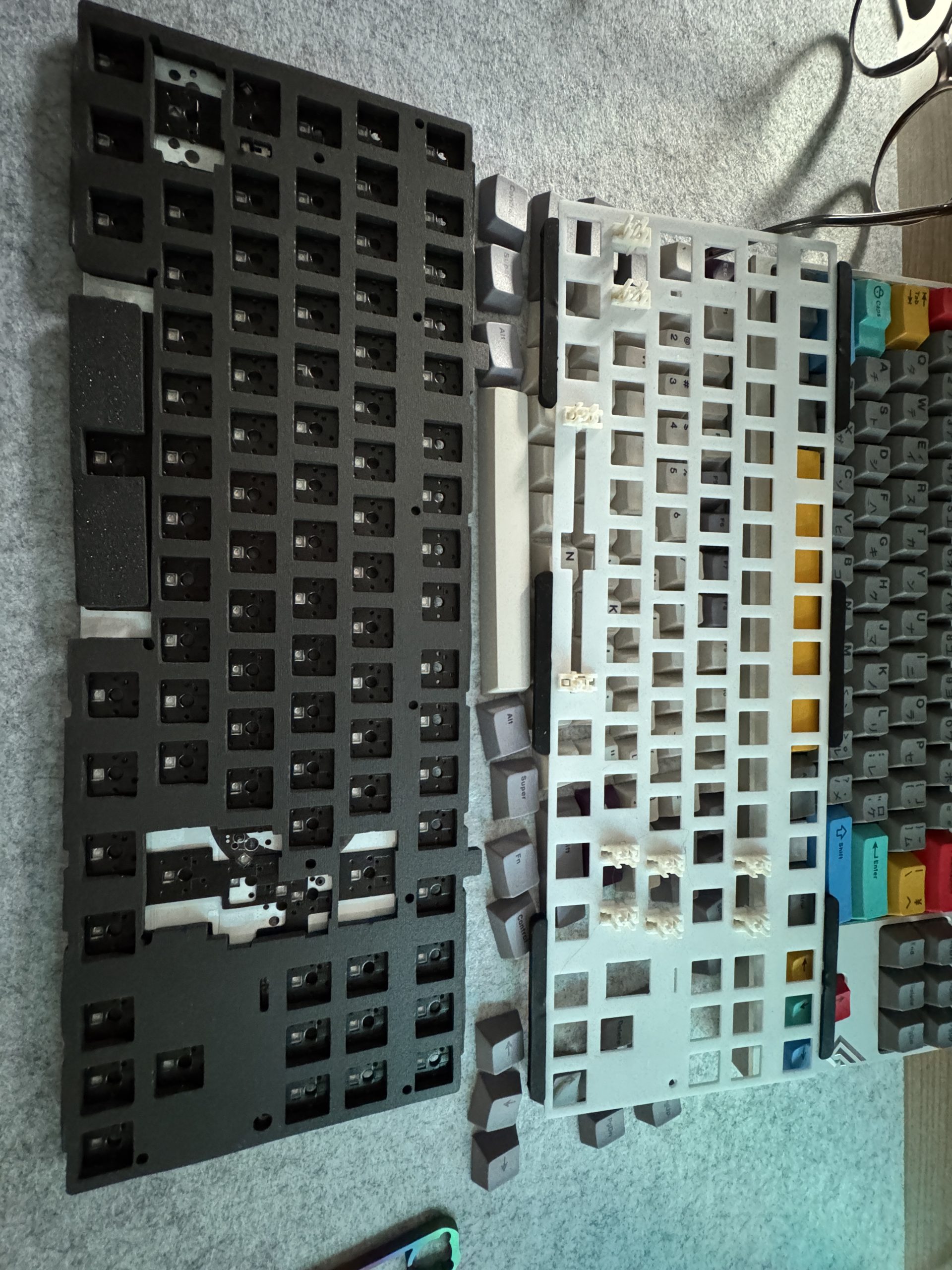
The plate is also very soft and flexible. Nevertheless, this is a stable material made of polypropylene. This is a thermoplastic material that is characterized by high toughness and elasticity. This material is used in keyboard construction because it is much softer than aluminum, brass or FR4. This results in a much softer, springy typing feel. The sound is generally deeper, more muted and less metallic than with hard plates. So it is suitable for the chosen sound profile. Nevertheless, the board is also available with a Fr4 plate.
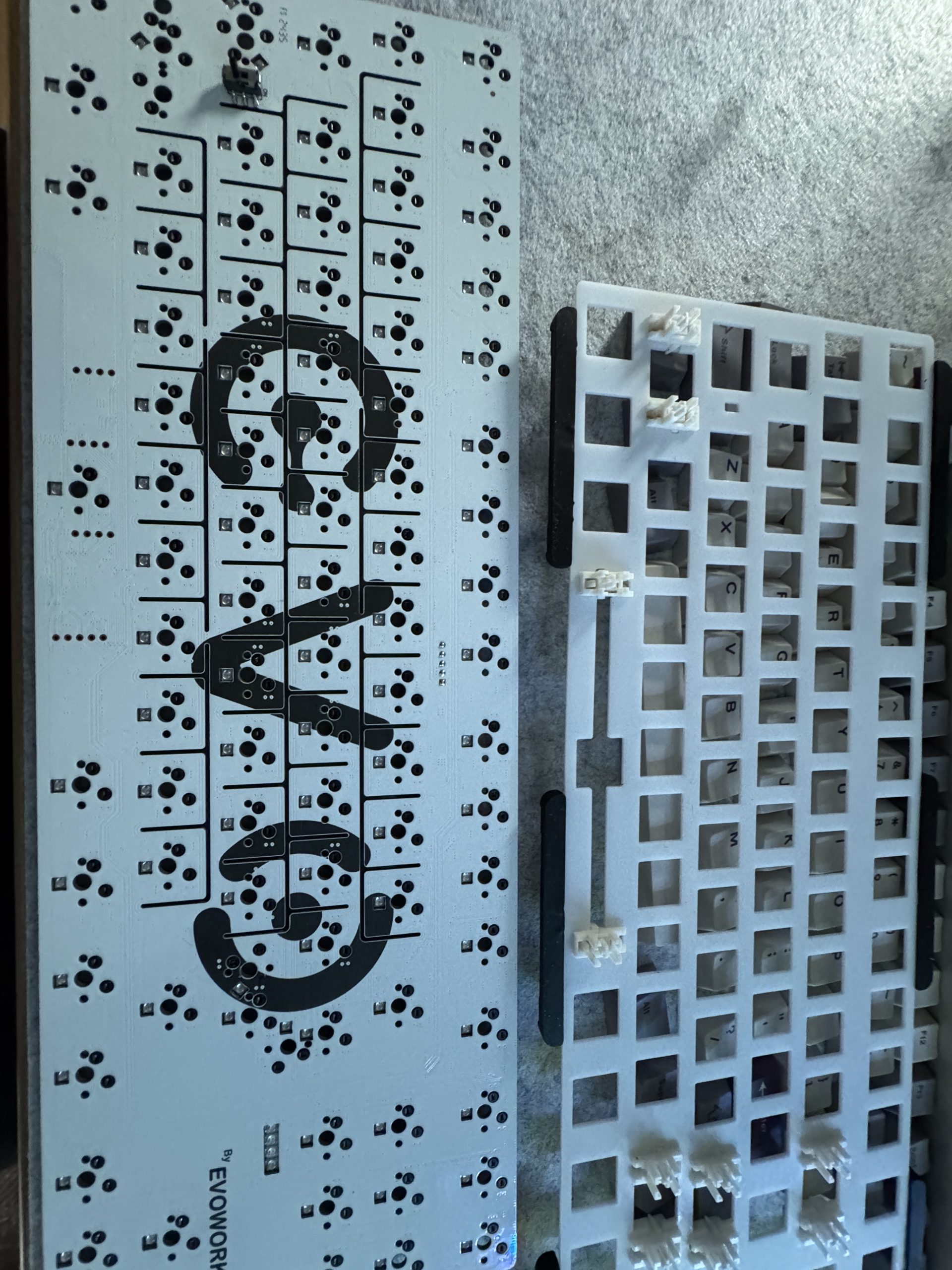
This is how the Flex-Cut PCB presents itself. It is immediately apparent that there are no cut-outs for conventional stabilizers, which means that only plate-mount variants can be used. This is a deliberate design decision that sets the board apart from other approaches. Personally, I would also have liked the option of using normal PCB-mount stabilizers. A variant in 1.6 mm without flex cuts would also have been interesting for me. In practice, however, this is not a disadvantage, but merely a point where I could have imagined an alternative implementation. On the left under the caps button, you can also see the small switch for the wireless function.





11 Antworten
Kommentar
Lade neue Kommentare
Urgestein
1
Moderator
Mitglied
Moderator
Mitglied
Moderator
Mitglied
Moderator
Mitglied
Moderator
Alle Kommentare lesen unter igor´sLAB Community →