















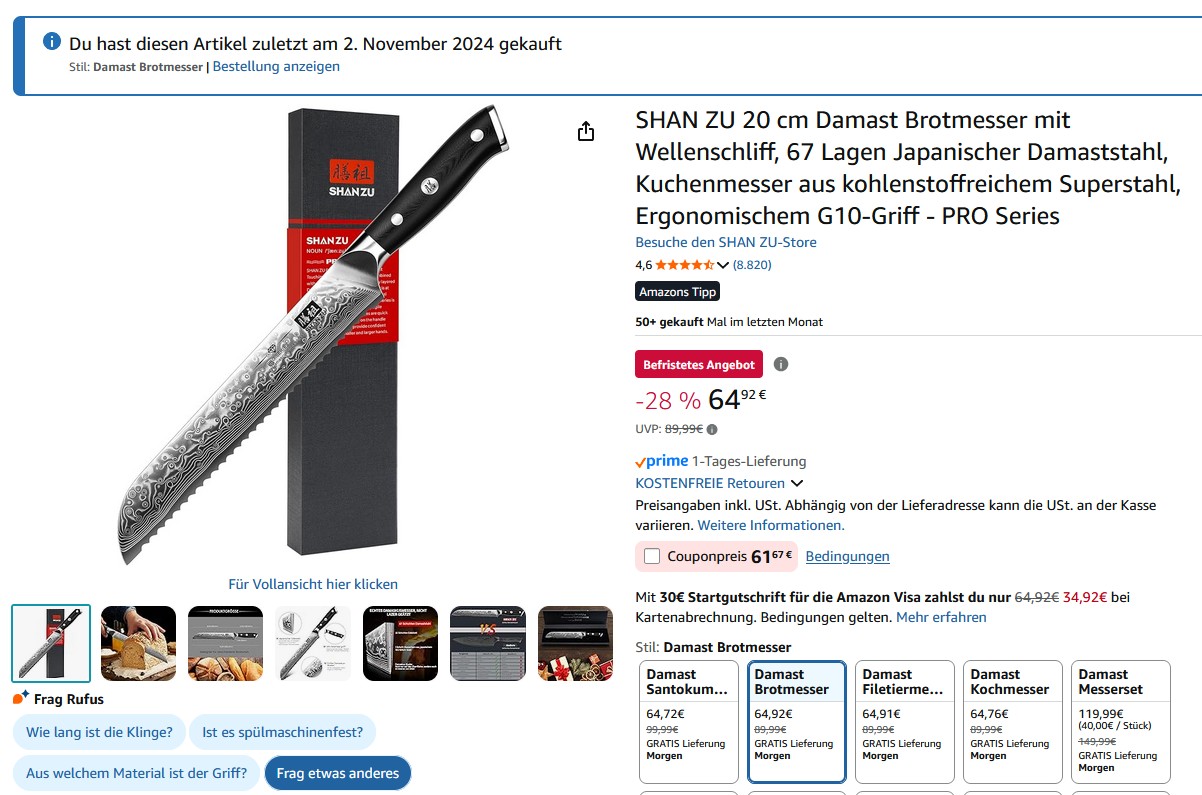
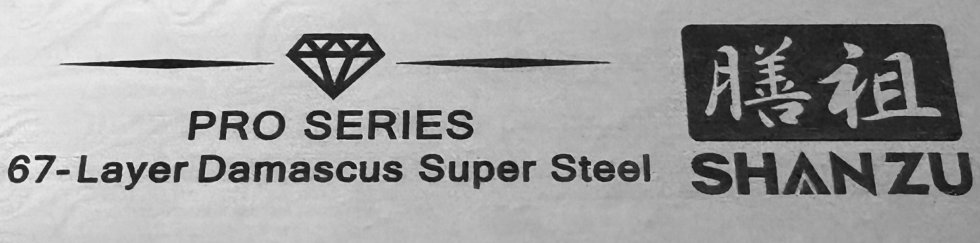
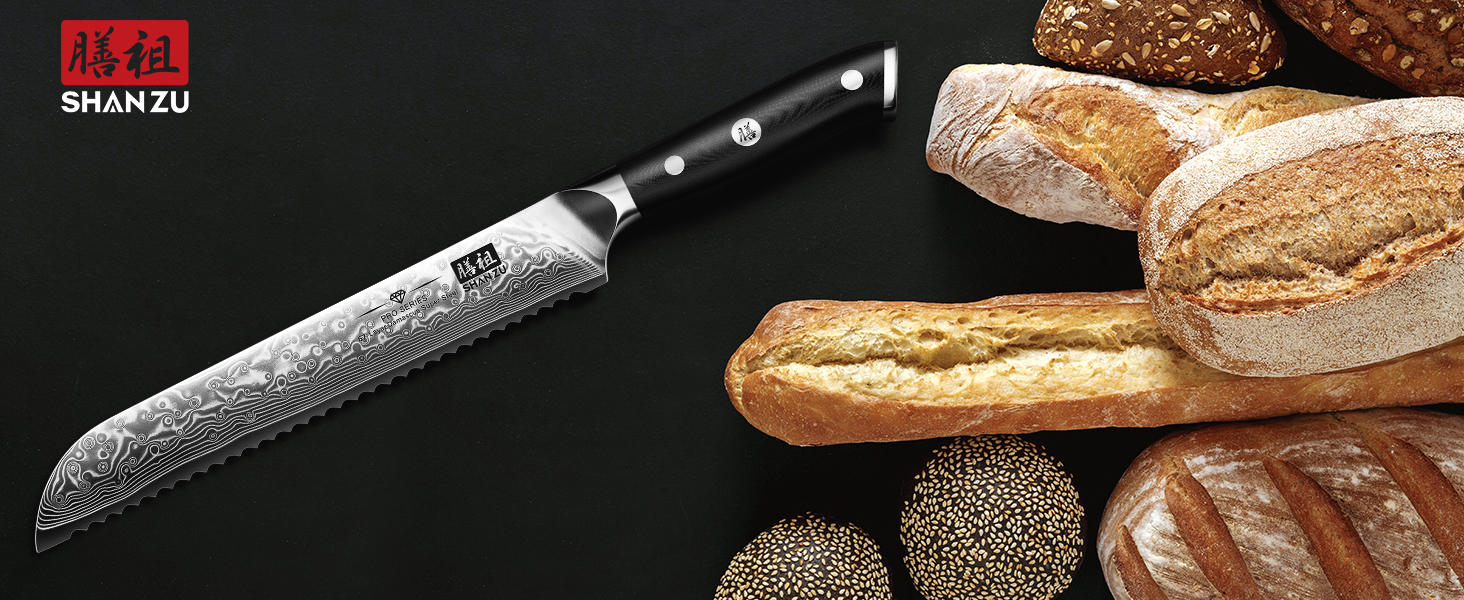
I bought this SHAN ZU bread knife exactly a year ago, before that a Santoku knife from the same series and also without any intention of testing it, but simply because I needed a proper bread knife and the Santoku knife performed quite well. The price of around 65 euros seemed too good to be true for a “67-layer, hand-forged Damascus knife” with Japanese 10Cr15MoV core steel, but what if it cuts properly? The workmanship initially made a clean impression, the blade was well sharpened ex works, and even after a year of occasional use, the edge is still sharp enough to slice a crusty baguette cleanly. So there was nothing to complain about in terms of hardness, sharpness and suitability for everyday use. So far, so good…
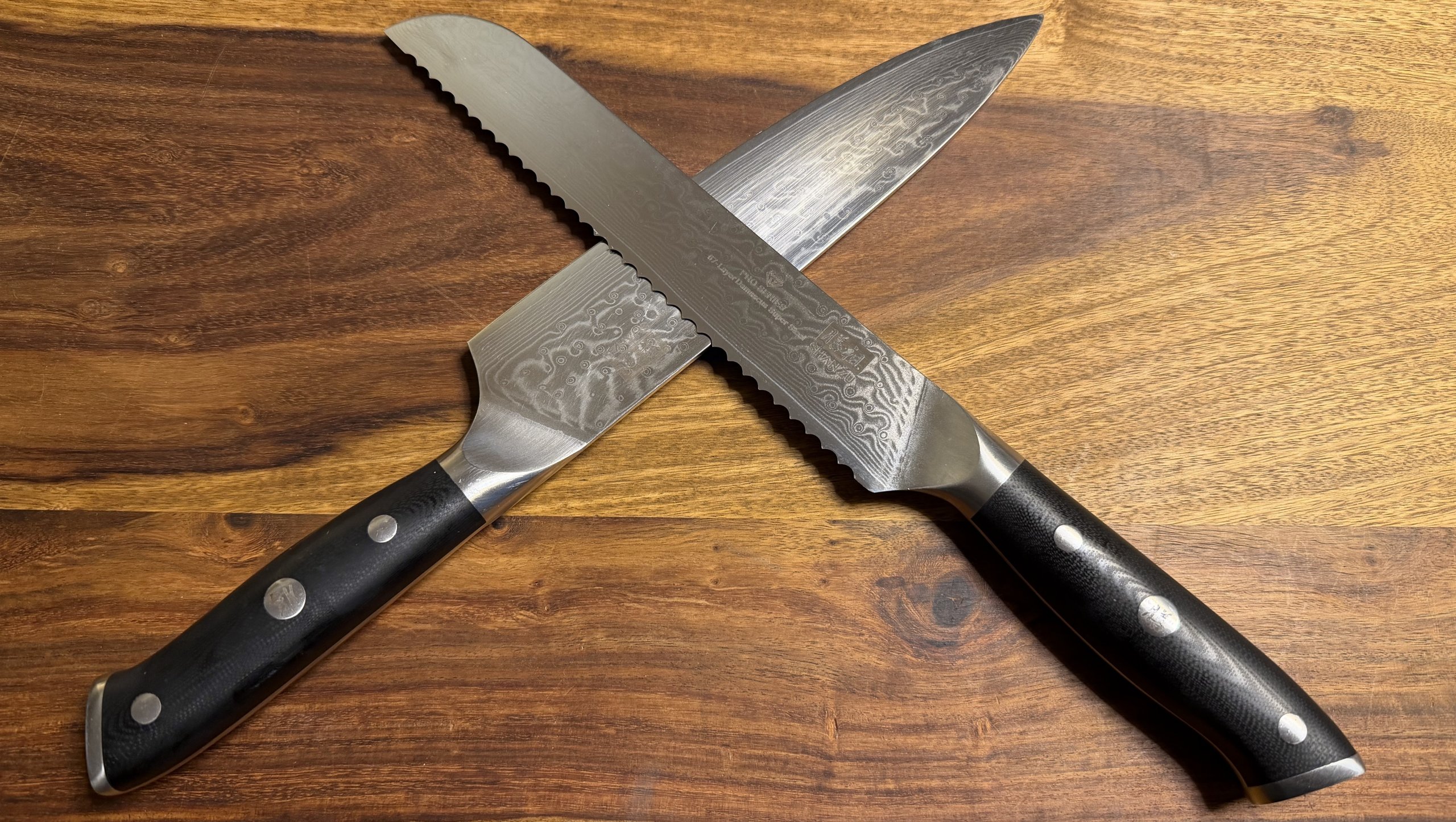
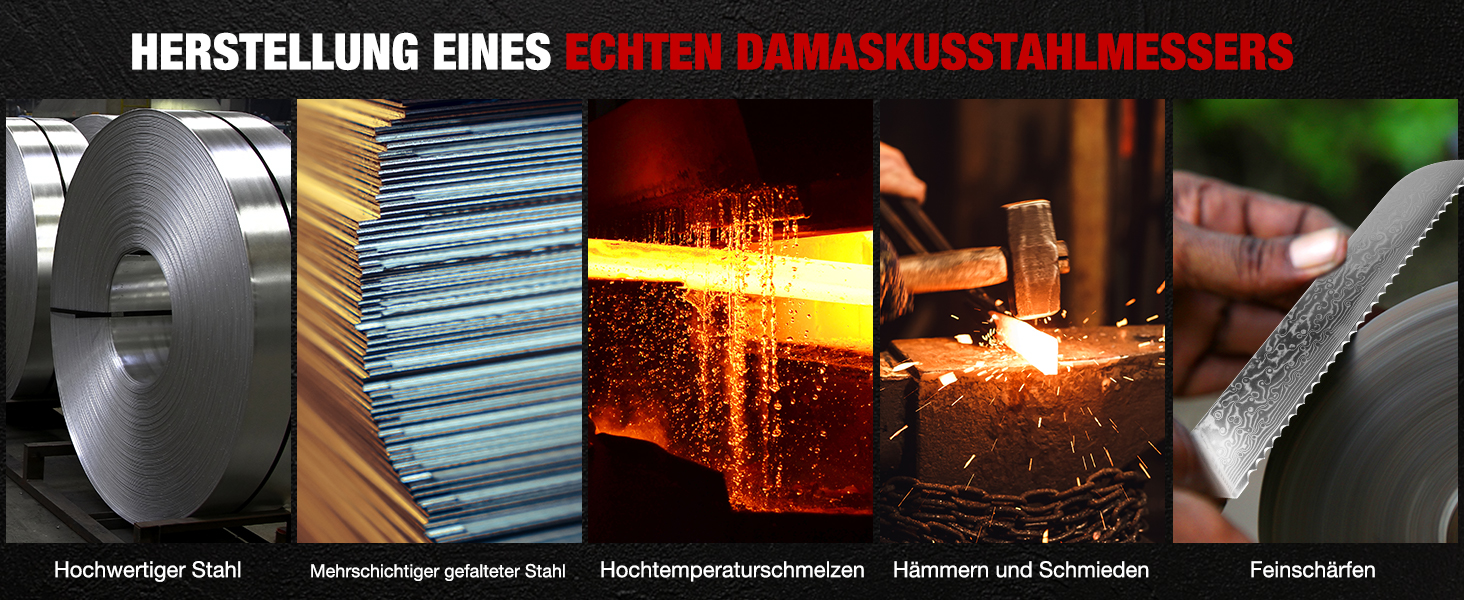
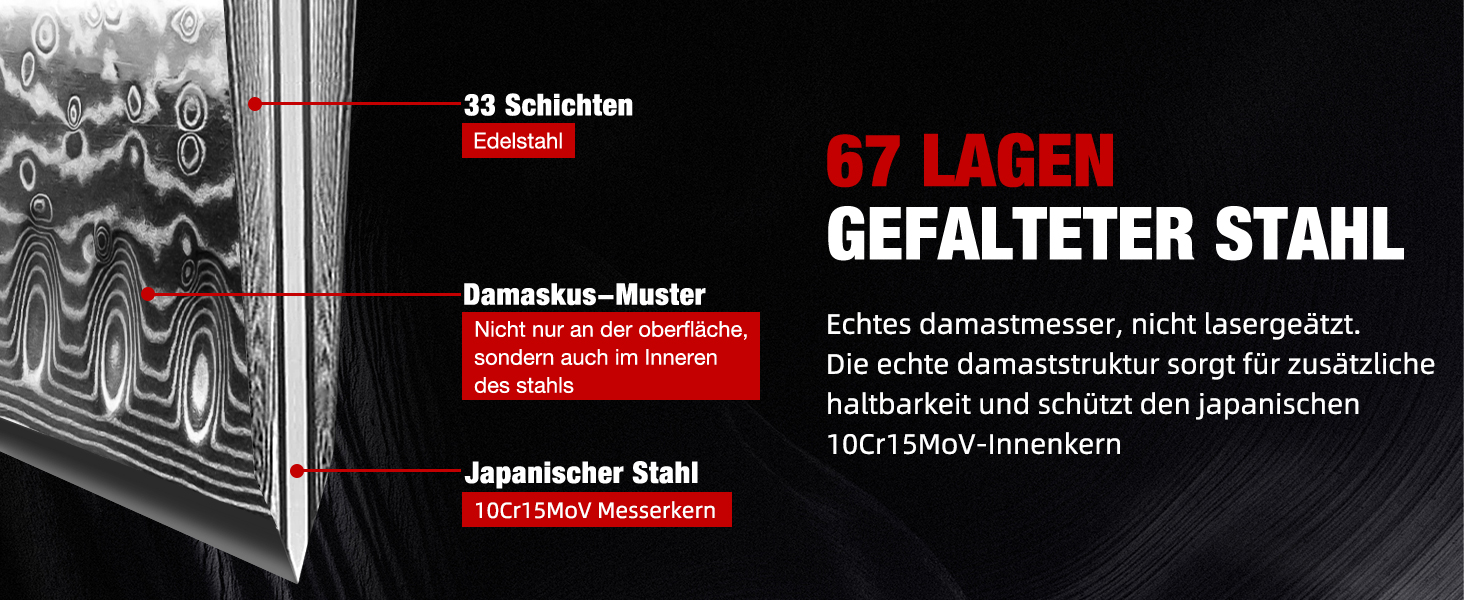
Only the part about the “real damascus” gave me pause right from the start. Even the advertising texts on Amazon seemed too full-bodied: “Forged with 67 layers”, “not laser-etched”, “genuine damask structure through multiple folding and forging”. In addition, photos showing exactly the classic pattern that is more familiar from Japanese one-off products in the price range above 300 euros. And this is where the doubts begin: how can a knife that is supposedly produced using an elaborate multi-layer forging technique be sold at the price of an inexpensive series blade when the material alone for a genuine damascus set costs several times as much?
Today, one year later, the microscopy and material analyses carried out here and now provide a clear answer. Under the microscope, there is no trace of 67 layers. No weld seams, no diffusion zones, no differences in microstructure that would indicate changing types of steel. Instead, there is a completely homogeneous metal structure with a uniform alloy distribution, a clear characteristic of monolithic steel. The advertiser’s advertising on Amazon is actually unbeatable in terms of its audacity and misleading nature:
The subsequent LIBS analysis confirms this: around 80 percent iron, just under 15 percent chromium, plus molybdenum and vanadium in the usual range of a Chinese 10Cr15MoV steel. The Japanese origin claimed in the advertising can be ruled out. There is also no evidence of multi-layer composite steels or hot-dip welding.
The decorative wave pattern on the blade is actually only superficial, presumably laser-etched or chemically applied, but more on that in a moment. The manufacturer explicitly claims the opposite, but the material examination proves the opposite just as clearly. This means that the widely advertised “genuine Damascus blade” is nothing more than a decent bread knife with a pretty appearance, made from a common, good but not exceptional Chinese knife steel. Today’s test will show which of the promises in the Amazon ad hold true and which turn out to be a simple advertising lie. Because even if the knife cuts as it should, one question remains unanswered: How much “Damascus” can you actually expect for 65 euros? Between you and me: none at all…
What’s the point of this test?
So why a knife test on an IT website? Quite simply: this is also technology in the broader sense, just not in the form of circuit boards, voltage converters or silicon structures, but in steel, alloys and production technology. The path to knowledge remains the same: systematically testing, measuring, documenting and getting to the bottom of things when marketing promises sound too good to be true. This is exactly what happened here. Today I am offering a little lesson in how clever counterfeiters deceive the eyes of gullible customers. What’s more, Christmas is just around the corner and many readers may be wondering what to give a tech-savvy person who already has everything. A “genuine Japanese Damascus knife” is an obvious gift idea, at least according to the advertising. It is therefore all the more important to take a sober look at what is really behind such statements.
And finally, there is the very human motivation: these knives are not bad at all. On the contrary, they have performed amazingly well for over a year and are significantly better in practice than the previous household knives from WMF or Zwilling, which were at a similar price level. Sharpness, service life and ergonomics are perfectly fine. If it weren’t for the insistent, objectively false claim of “genuine Damascus steel”, I would almost have recommended them.
But this is exactly where the problem lies. When a product devalues its own qualities through clumsy exaggeration, you are left with a bland aftertaste. Do you still have to reward something like this? Everyone can answer this question for themselves. I’ll just leave it open for now. But I will now show where and how the provider lied. Please turn the page once!











153 Antworten
Kommentar
Lade neue Kommentare
Urgestein
Urgestein
Veteran
Urgestein
Veteran
Veteran
1
Veteran
Mitglied
Veteran
Veteran
Urgestein
Urgestein
Urgestein
Urgestein
Veteran
Urgestein
Veteran
Veteran
Alle Kommentare lesen unter igor´sLAB Community →