















With the GeForce RTX 5080 Expert, MSI is specifically targeting users in the upper mid-range to high-end range who value a powerful GPU but deliberately avoid playful design elements such as RGB lighting. Instead, a functional, elegant metal chassis with clear lines and a discreetly industrial look dominates. MSI thus appeals primarily to users who prefer a high-quality, unobtrusive appearance and at the same time do not want to compromise on performance. In terms of price, the RTX 5080 Expert is positioned between the simpler Vanguard series and the more elaborately designed Suprim series. It therefore forms a balanced middle position in the MSI portfolio and offers an alternative for all those looking for technical excellence without visual showmanship.
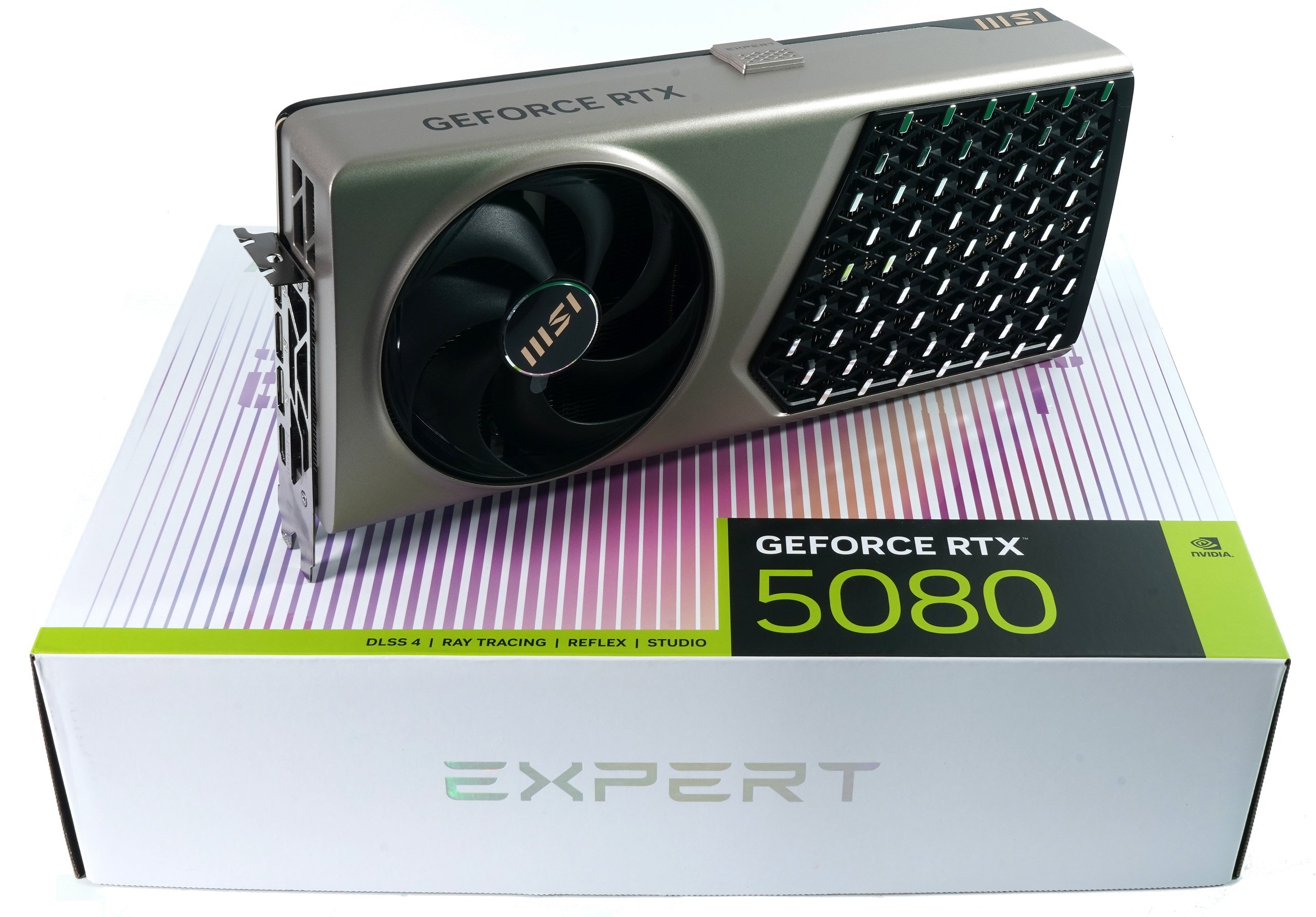
The MSI RTX 5080 EXPERT 16GB
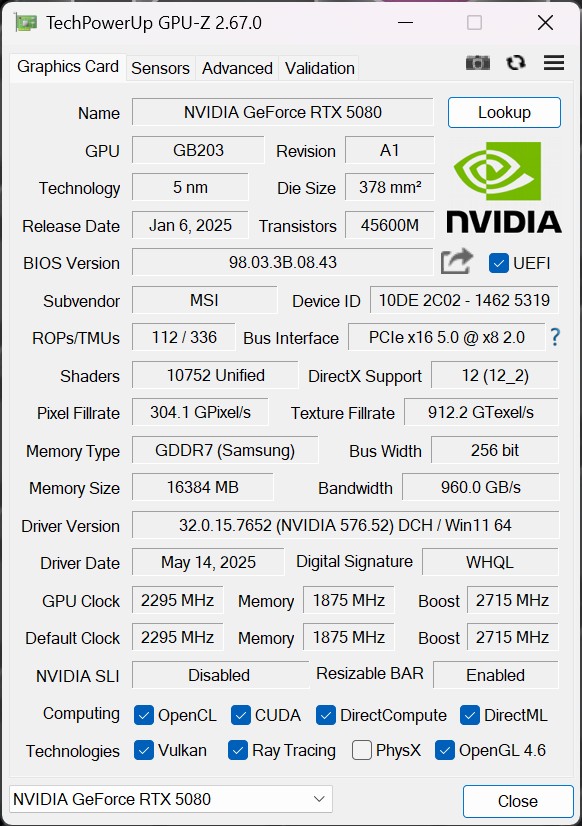
Let’s now turn to the details of this card after its introduction. The card is based on the new Blackwell architecture, the GB203-400-A1 graphics processor is manufactured in a 4 nm production technology and comprises 45.6 billion transistors on a chip area of 378 mm². With 10,752 CUDA cores, a base clock of 2.30 GHz and a boost clock of 2.745 GHz, i.e. 15 MHz more than the RTX 5080 VANGUARD, the card offers high computing power for current applications. It is equipped with 16 GB GDDR7 memory, which operates at 30 Gbps and achieves a memory bandwidth of 960 GB/s via a 256-bit interface. It has 84 fourth-generation ray tracing cores and 336 fifth-generation tensor cores, which significantly improve performance in the area of AI-supported calculations and real-time ray tracing. The L2 cache has been increased to 64 MB to minimize data transfer bottlenecks.
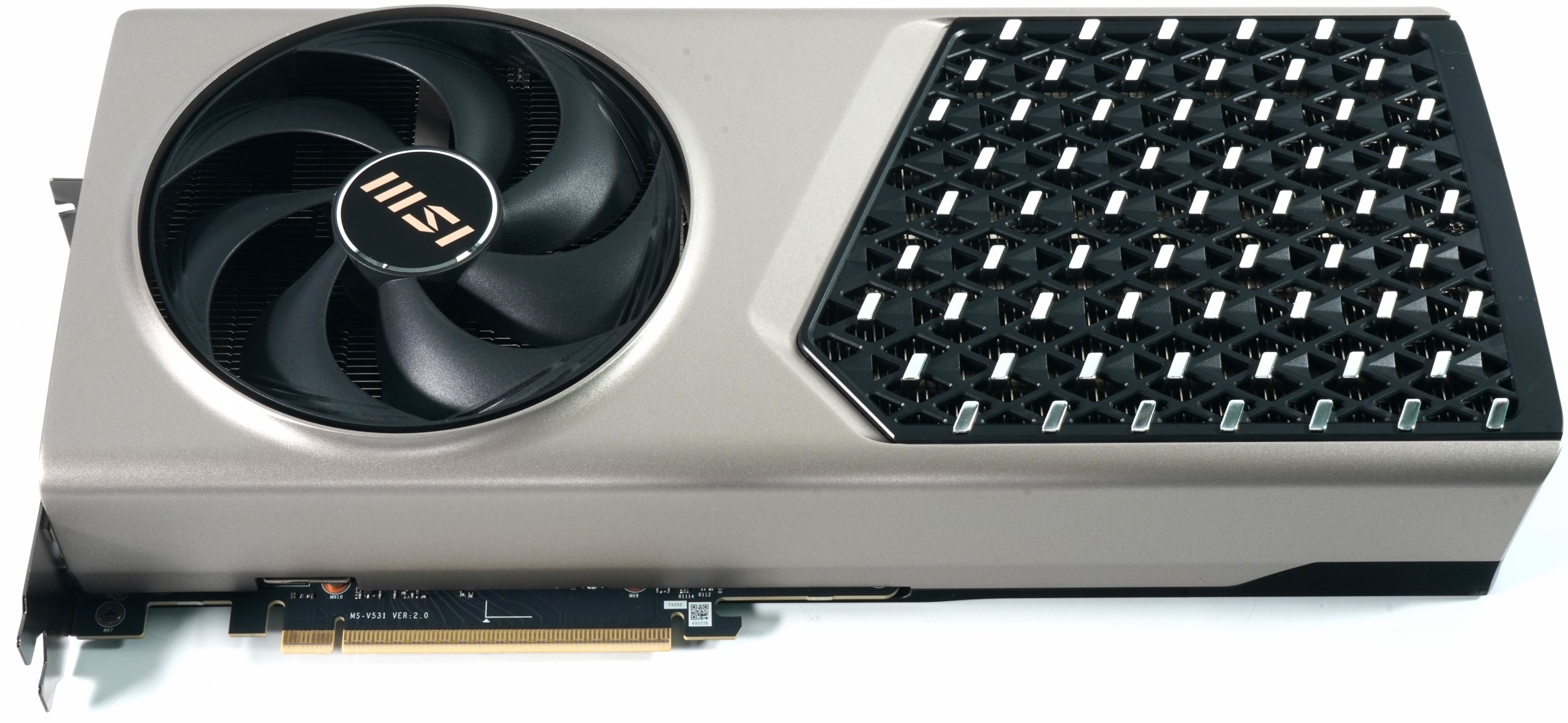
The card measures 32 centimetres in length and 5.2 centimetres in depth, with the backplate adding another 6 millimetres. The height from the lower edge of the slot bracket to the upper edge is a good 14 centimeters. Despite these dimensions, the design is neither bulky nor overloaded, but follows a clear objective: maximum cooling performance in an unobtrusive but high-quality chassis. The chosen combination of materials and the deliberate omission of superfluous design elements make the RTX 5080 Expert a card that is clearly positioned both visually and technically.
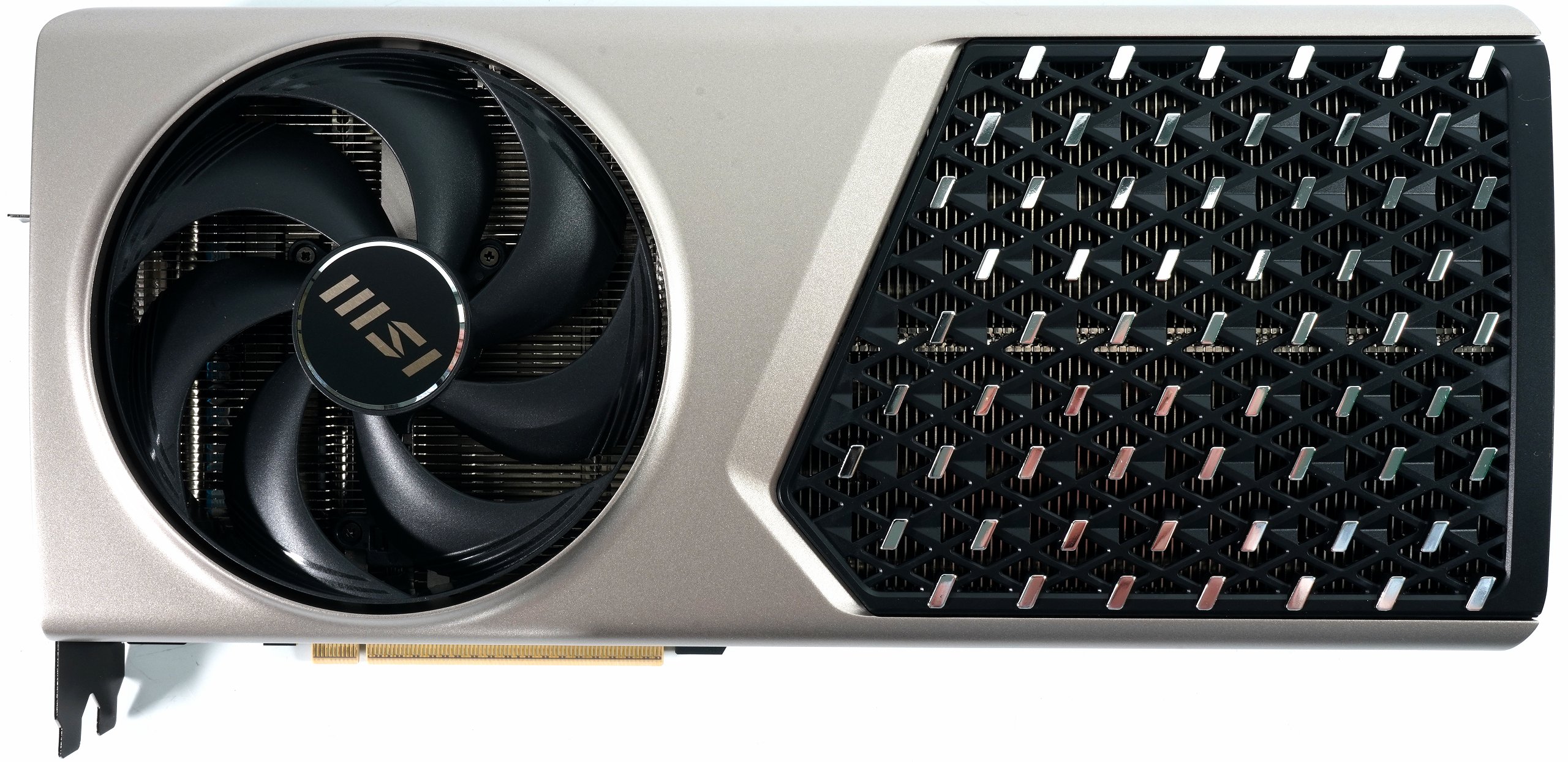
The front of the RTX 5080 Expert is dominated by an asymmetrically divided radiator cover. On the left is a large axial fan with a rotor blade diameter of 11.5 centimetres, which is housed in an opening with a free cross-section of around 12 centimetres. This generates a high static pressure, which is particularly beneficial with a dense blade structure. To the right of this is a structured, grid-like outlet zone with embedded metal applications in a diamond shape. This segment is not only used for ventilation, but also blends harmoniously into the overall geometric design. The slightly shimmering metallic surface has a high-quality appearance and remains pleasantly unobtrusive. RGB is not used here, which further enhances the clear design language.
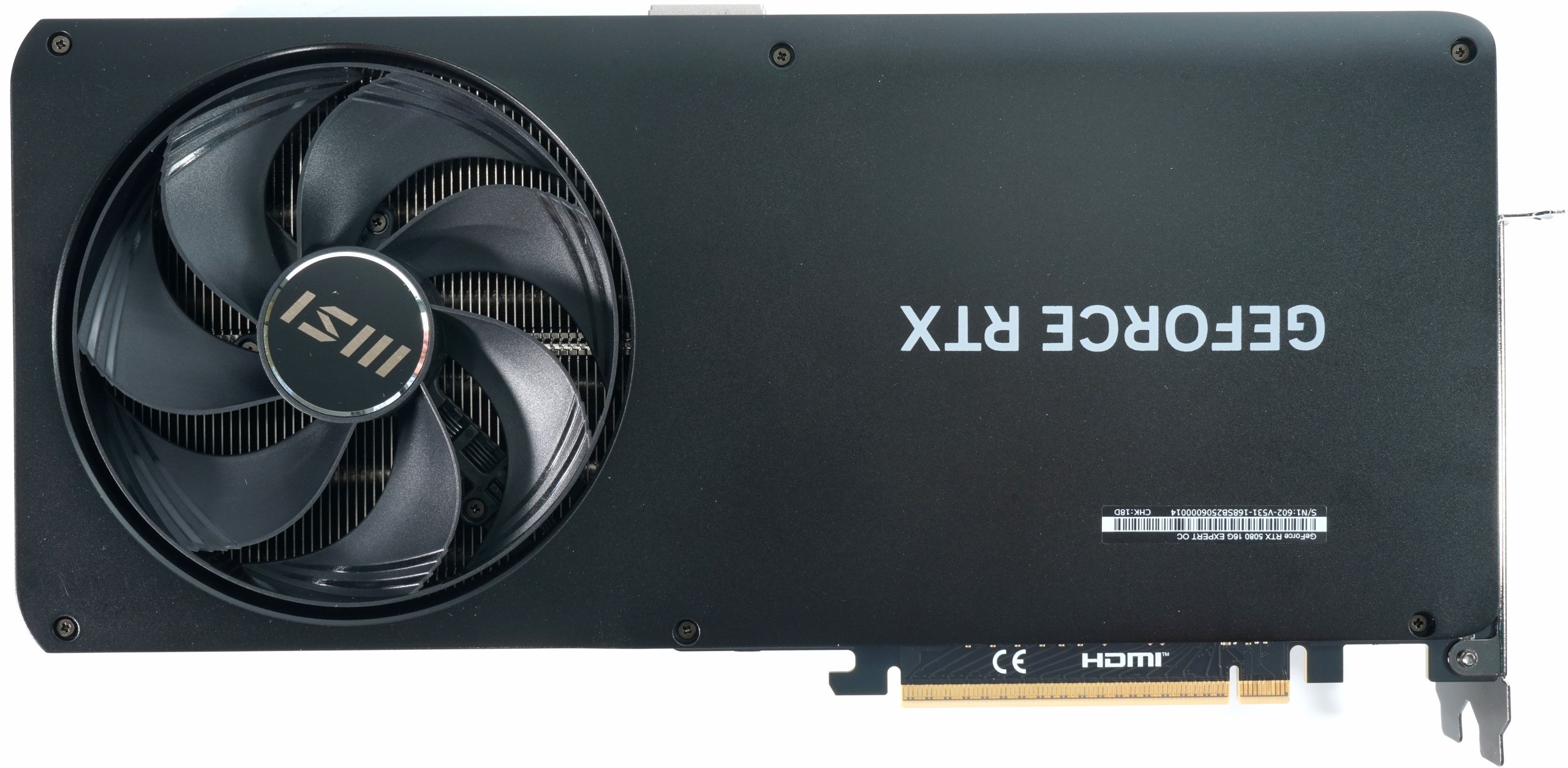
The rear of the card continues the minimalist concept. Instead of a classic backplate with large branding, there is a closed metal surface with discreetly printed GeForce RTX lettering. Here, too, the card remains restrained in its color scheme. The recessed rear fan is an inverse fan, i.e. it rotates in the opposite direction to the front, which enables targeted optimization of the airflow within the heat sink. The choice of material here also remains with the aluminum-silicon alloy, which leaves a robust, almost industrial impression thanks to its fine-grained structure.
The one-piece, seamless cladding catches the eye on the top, which is interrupted by an embedded “EXPERT” logo. This sits on a small cover plate that can be removed to reveal the new 12V 2×6 connection underneath. The integration of this detail is mechanically clean, without any annoying gaps or wobbly elements. The area around the fan dome is also seamlessly integrated into the housing, giving the card a very compact and closed appearance. Despite the 32 centimeter length, the design appears well thought out instead of bloated.
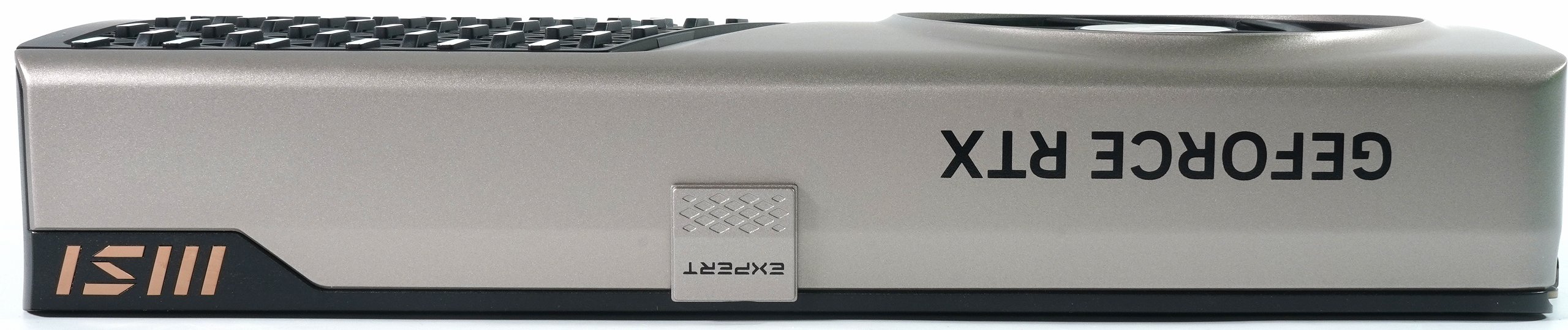
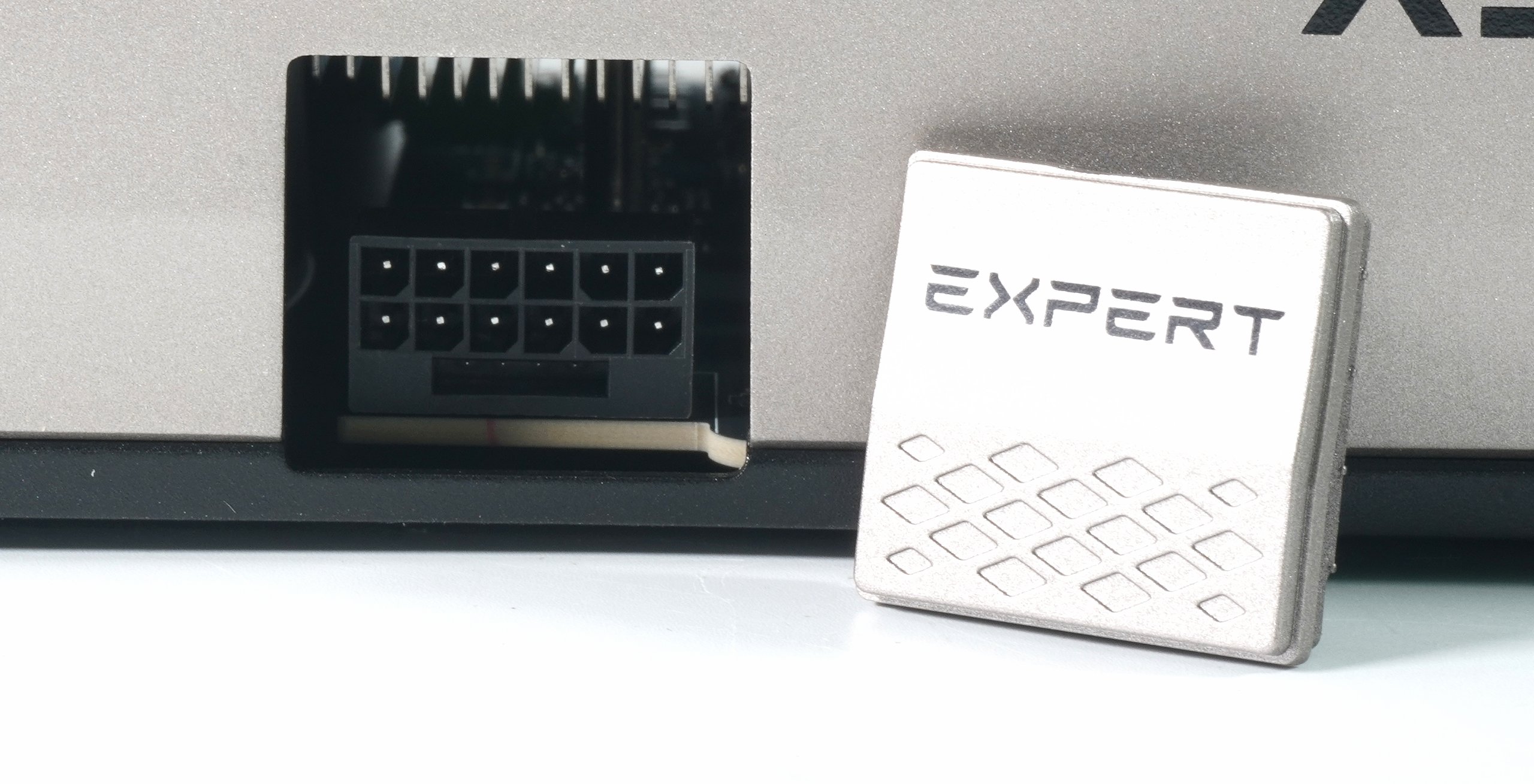
The connection area for the power supply is slightly recessed behind a cut-out in the housing. The magnetic cover plate with the “EXPERT” logo completely conceals the connection, but can be removed without tools. Here too, the design remains uniform and technically sober.
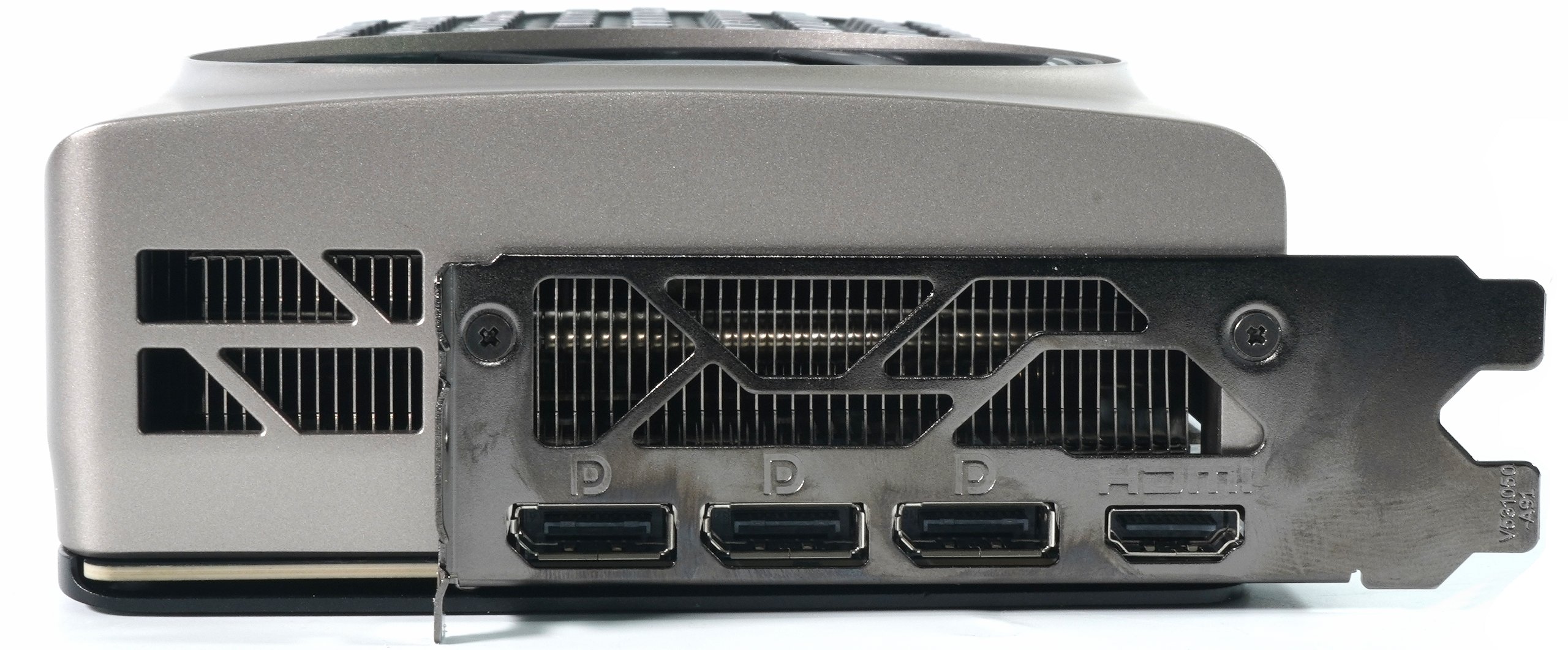
 A look at the connection panel reveals the precise design of the air outlets. The trapezoidal openings do not follow a classic honeycomb structure, but are individually adapted to relieve the back pressure zone behind the slatted block as efficiently as possible. The three DisplayPort outputs and the HDMI port are embedded in a precisely milled slot panel. There are no lighting or decorative accents here either, just clear functionality. Specifically, the graphics card has three DisplayPort 2.1b connections and one HDMI 2.1b connection. This configuration enables the simultaneous operation of up to four displays. The DisplayPort 2.1b connections support resolutions of up to 8K at 165 Hz or 4K at 480 Hz, while the HDMI 2.1b connection enables resolutions of up to 8K at 60 Hz or 4K at 120 Hz. These versatile connection options ensure a flexible and powerful connection to different display setups.
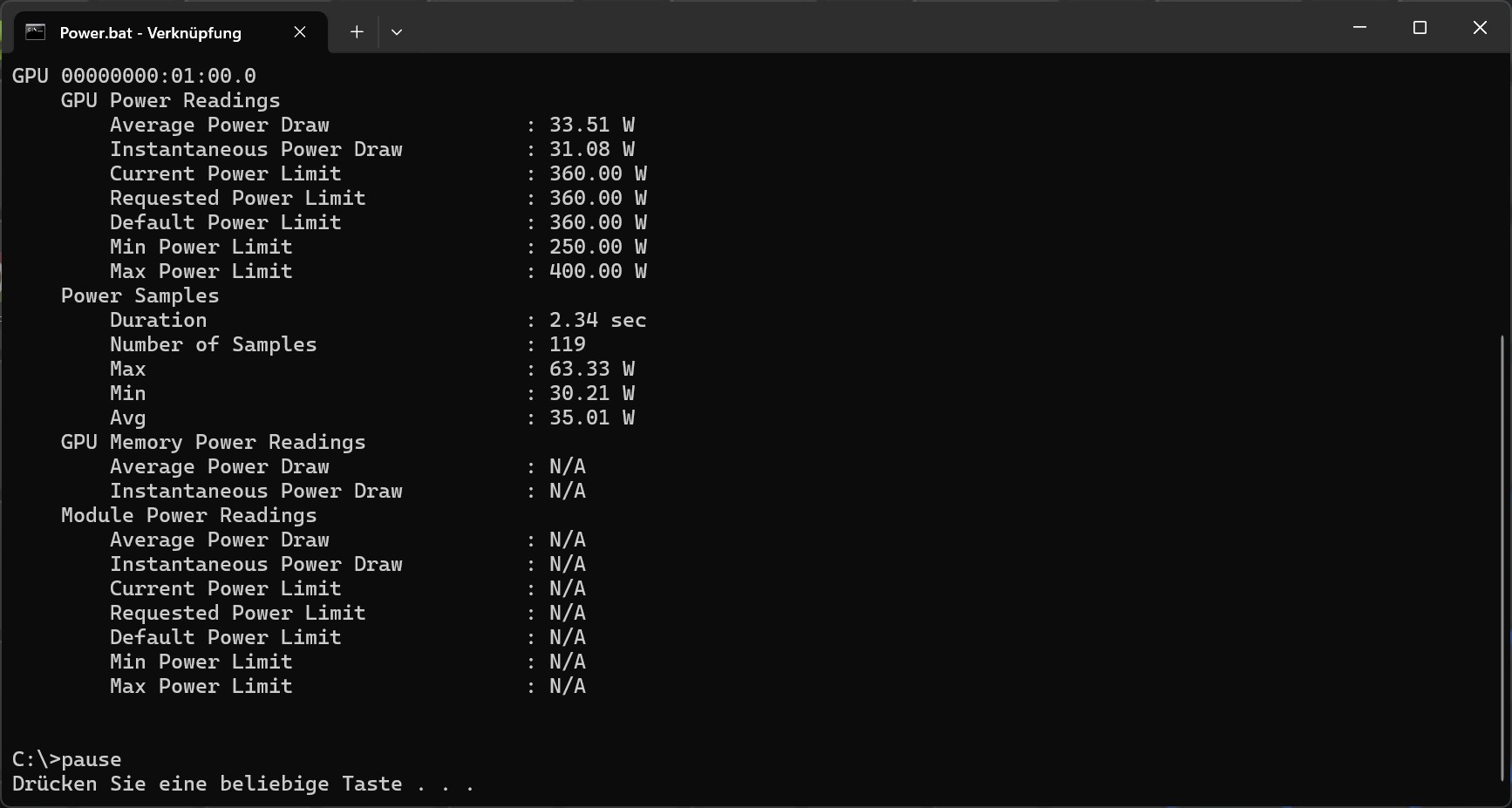
Unfortunately, you have to overclock and increase the power limit yourself if you think you need to. After all, the card even offers 400 watts instead of the 390 watts of the Founders Edition and you can also experiment with the current MSI Afterburner. However, the endeavor is somewhat superfluous, because at least my card already manages the 2.9 GHz mark even without an energetic boost. Not much more than 3.1 GHz is possible anyway and it usually only gets louder and warmer.
The technical details and production of the MSI RTX 5080 EXPERT focus on high computing power, efficient cooling and a stable design. The rest corresponds to the launch article and the test of the RTX 5080 VANGUARD SOC and SUPRIM SOC, so I’ll save the redundancy now.

- 1 - Introduction, overview and technical data
- 2 - Test system and equipment
- 3 - Teardown: PCB and cooler
- 4 - Material analysis and TIM
- 5 - Gaming performance
- 6 - Power consumption, transients and PSU recommendation
- 7 - Temperatures, clock rate and thermal imaging
- 8 - Fan curves and noise with audio sample
- 9 - Summary and conclusion













99 Antworten
Kommentar
Lade neue Kommentare
Veteran
Moderator
Veteran
Urgestein
1
Urgestein
1
Urgestein
Mitglied
Veteran
1
Urgestein
Mitglied
Urgestein
Mitglied
Veteran
1
Urgestein
Urgestein
Alle Kommentare lesen unter igor´sLAB Community →