















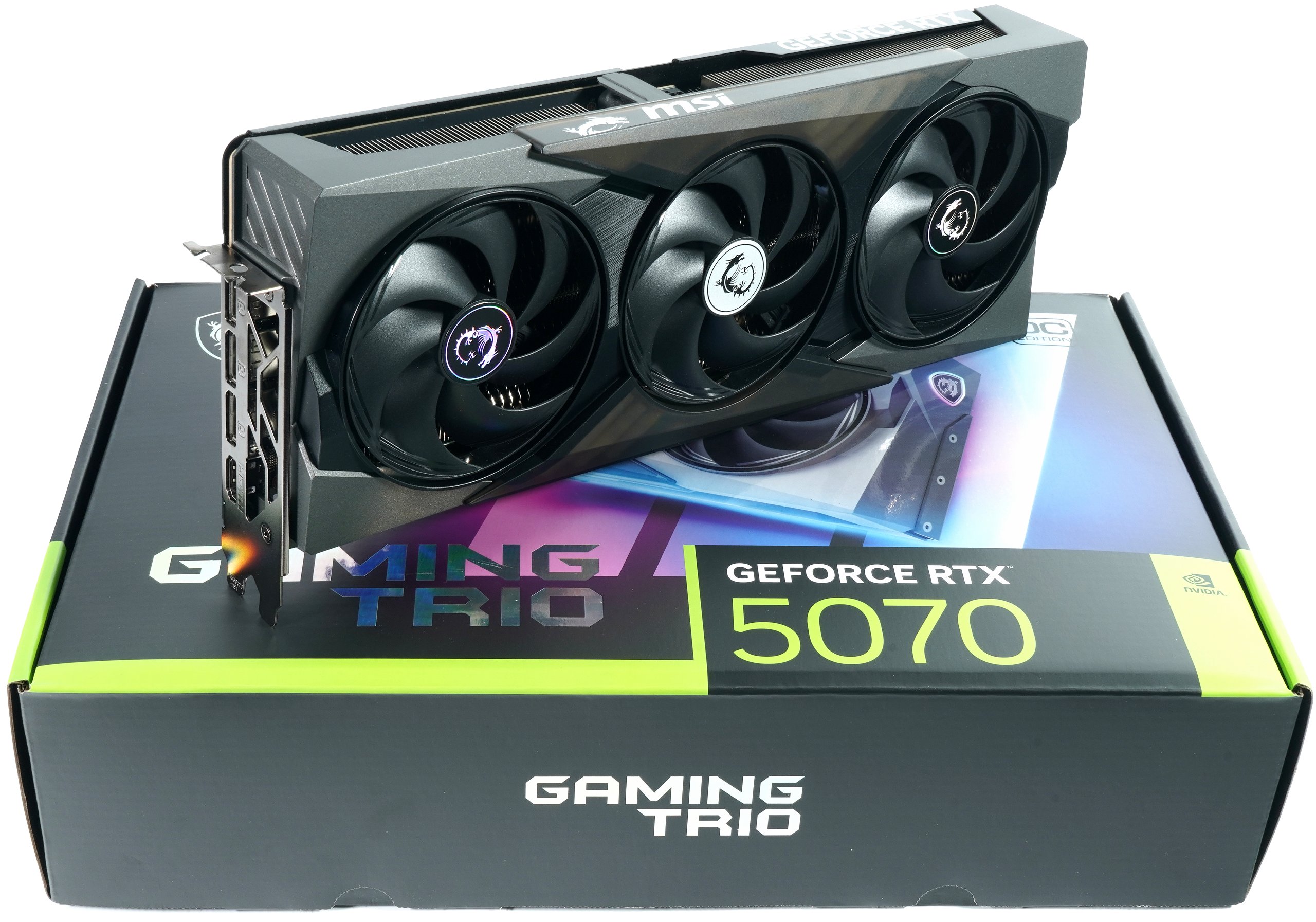
Today’s review of the MSI RTX 5070 Gaming Trio also provides an opportunity for a detailed look at the current market conditions and the specific features of this graphics card. Currently, street prices for the MSI GeForce RTX 5070 Gaming Trio in Germany are around €729, although the import tariffs recently introduced by the US government under President Donald Trump could further affect the prices of electronic goods, including graphics cards.
It is true that we in Germany are not formally directly affected by the newly introduced US tariffs on imports from China, as these initially only regulate trade between the United States and China. Nevertheless, it does not seem unlikely that the economic consequences of these measures could also have an impact on European markets. Many manufacturers of graphics cards, including Nvidia and its board partners such as MSI, operate globally. The additional costs resulting from the US tariffs, for example through more expensive production, relocation of supply chains or additional logistics costs, could lead to companies trying not to limit these burdens exclusively to the US market.
Instead, it is quite plausible that prices will be adjusted globally – i.e. also in regions that are not directly affected by the customs regulations. This is because the pricing policy of these companies is not based solely on regional production costs, but on business calculations that are intended to secure profit margins across all markets. Against this backdrop, a moderate but widespread price increase would be conceivable – which could create additional pressure, especially in the already price-sensitive segment of mid-range graphics cards such as the RTX 5070.
Another point of discussion is the configuration of the Nvidia GeForce RTX 5070 with 12 GB GDDR7 memory. In view of the increasing demands of modern games and applications, the question arises as to whether this memory capacity is sufficient for future titles. Quite a few users and colleagues, like me, express concerns that 12 GB of VRAM may not be future-proof, especially for high-resolution 4K gaming. From this perspective, the RTX 5070 raises questions about its price-performance ratio, the potential impact of international trade conflicts on its pricing and the appropriateness of its memory expansion. But today is specifically about the Gaming Trio, so I will focus on the technical implementation.
Important preliminary remarks and a paradigm shift
The continuous increase in raster performance has been the key driver for advances in graphics hardware for decades. Modern architectural improvements, higher memory bandwidths and more efficient manufacturing processes made it possible to steadily increase the performance of GPUs. However, this path now seems to have reached its physical and economic limits, at least that’s the impression I got with the GeForce RTX 5070. The main reason for this is that the scaling of the computing units can no longer be continued on the same scale as in the past.
The sudden increase in performance by simply adding more shader units or by increasing the clock frequency is becoming increasingly inefficient. NVIDIA and other manufacturers are therefore increasingly focusing on alternative technologies, in particular artificial intelligence. Features such as DLSS (Deep Learning Super Sampling) or AI-supported image and physics calculations are intended to increase the perceived performance without having to significantly increase the raw performance of the GPU. The GeForce RTX 5070 mainly benefits from such new AI functions, but whether this strategy will be enough to convince the market remains to be seen. Ultimately, this development reflects a paradigm shift: pure hardware performance enhancement is increasingly being replaced by algorithmic optimization. The next few years will show whether this approach is sufficient to meet the high expectations placed on new GPU generations. AMD now takes a similar view, just as a reminder. And now back to the card.

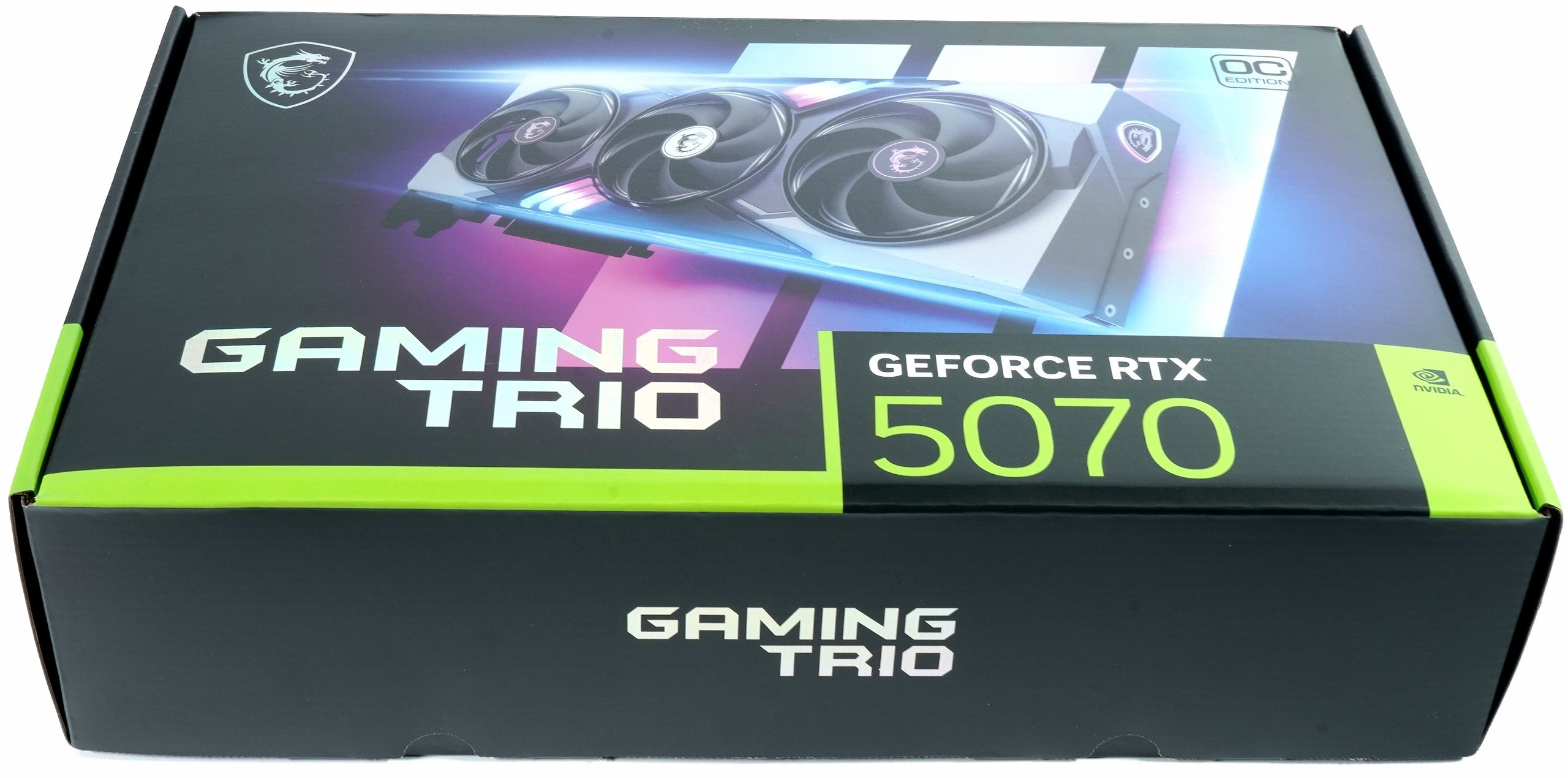
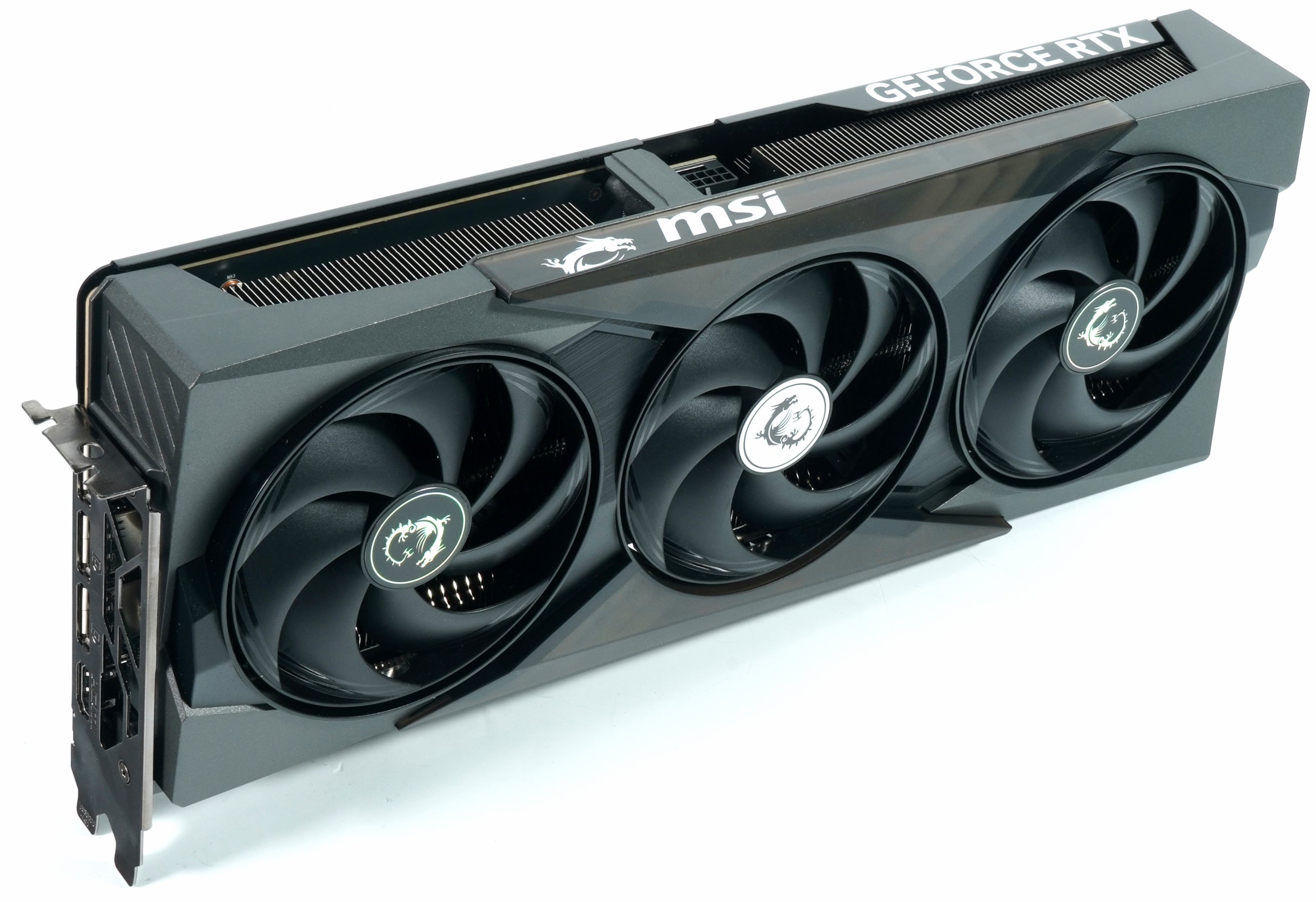
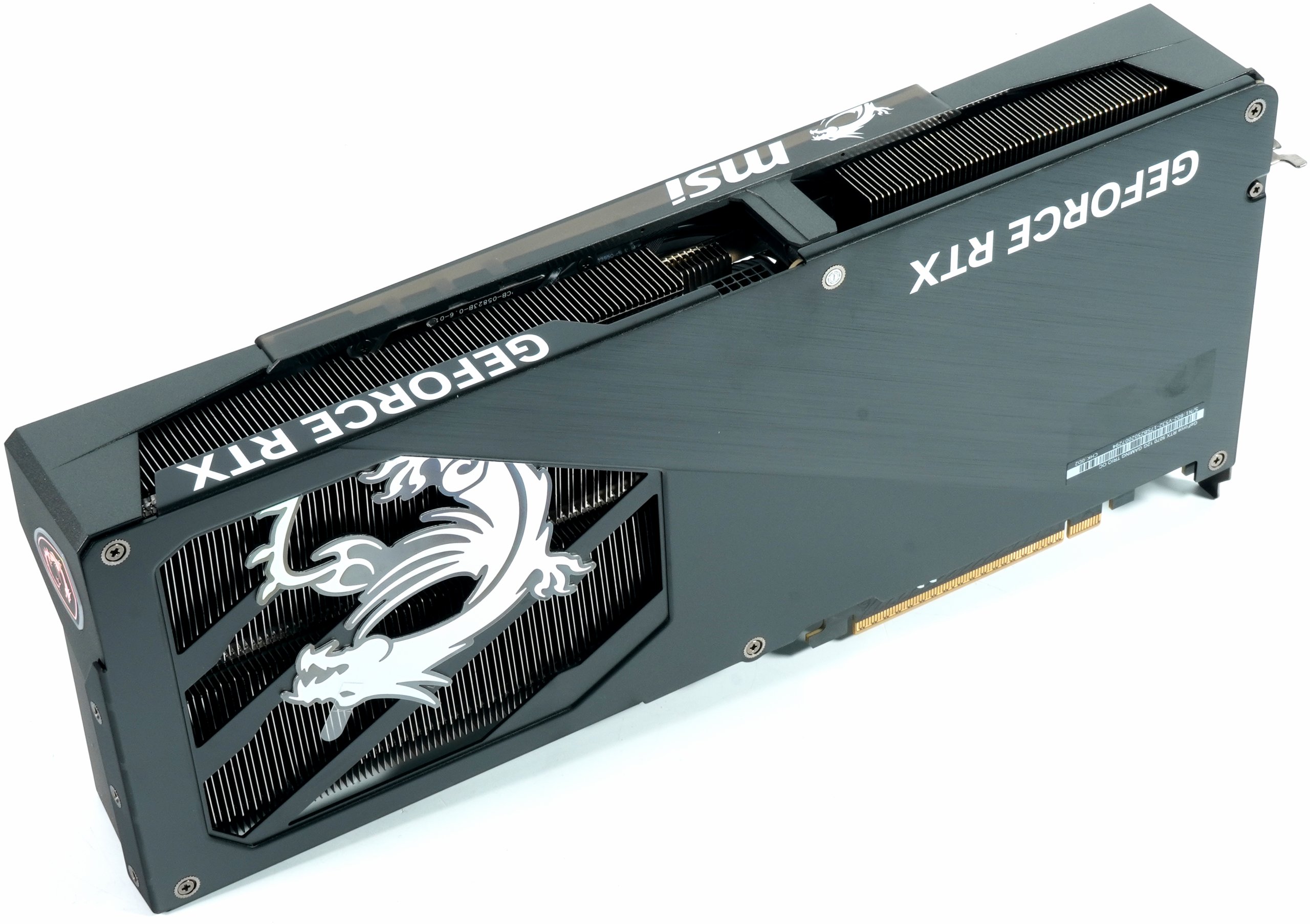
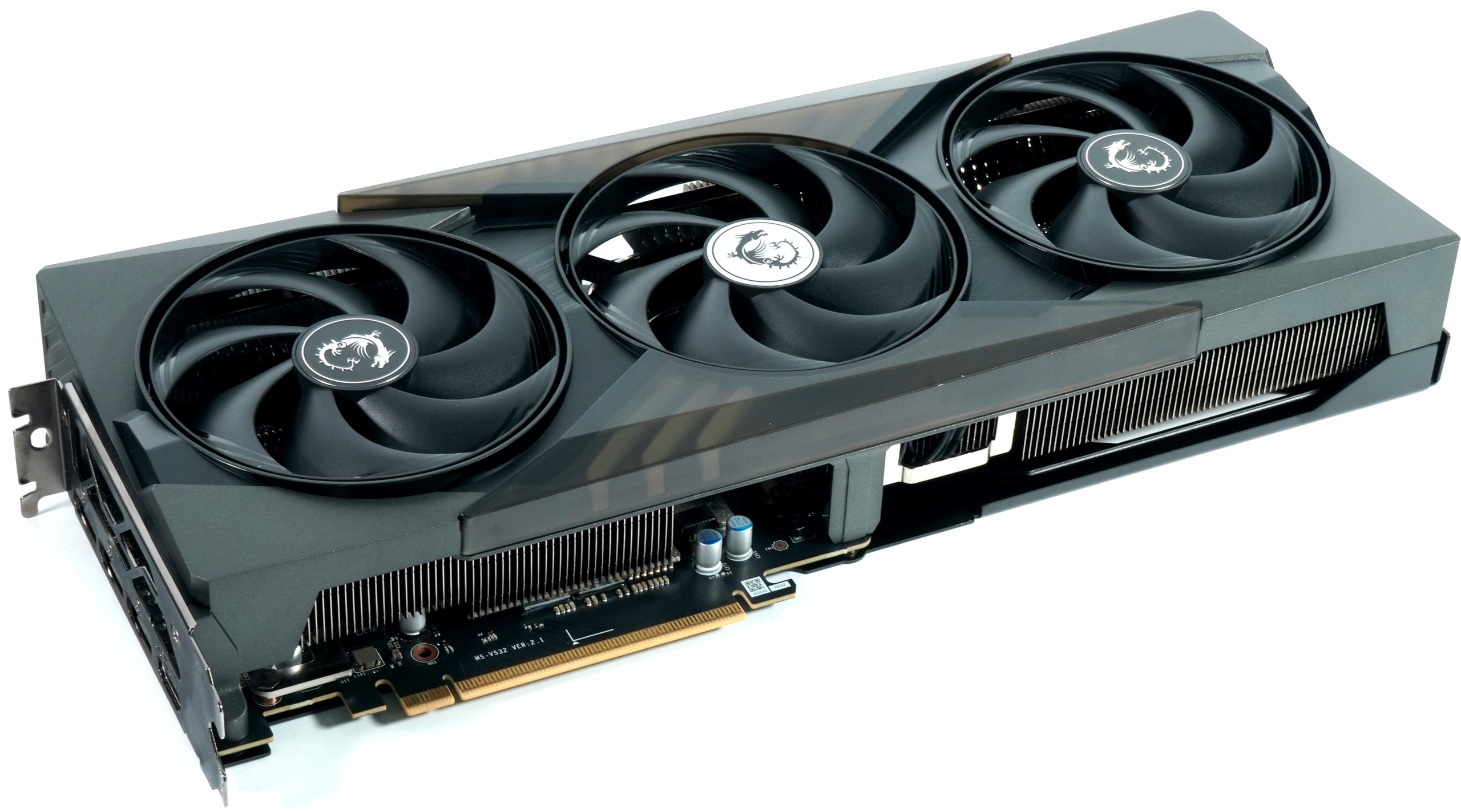
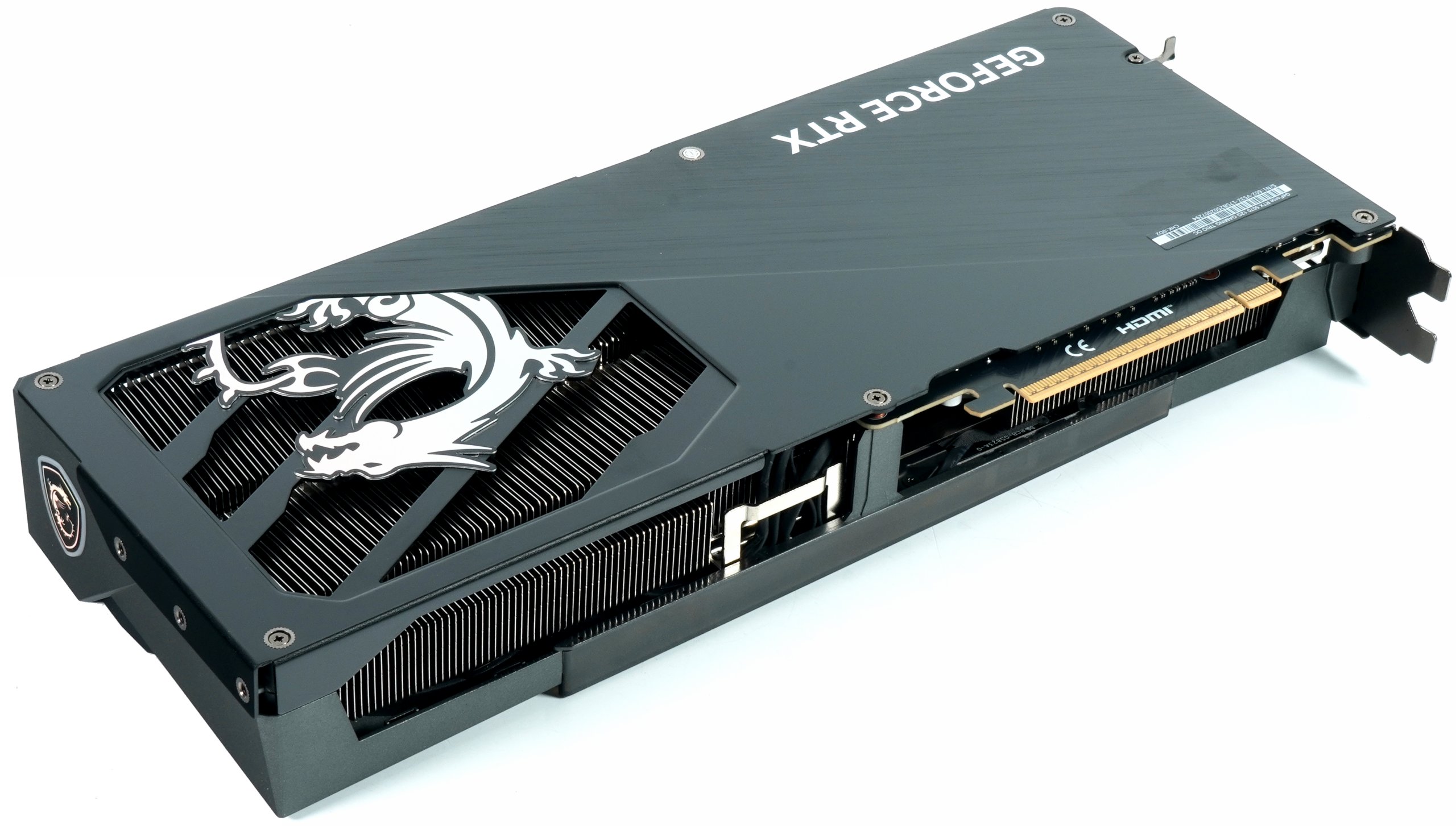
The MSI GeForce RTX 5070 Gaming Trio
The MSI GeForce RTX 5070 Gaming Trio is based on the GB205 graphics processor from Nvidia, which is manufactured in a 5-nanometer process by TSMC. This chip integrates around 31.1 billion transistors on an area of 263 mm². The GPU provides 6,144 CUDA cores, which are organized in 48 streaming multiprocessors. In addition, 48 third-generation RT cores and 192 fourth-generation tensor cores are included, which predestines the card for demanding ray tracing and AI-supported calculations such as DLSS.
The graphics chip operates with a base clock of 2,325 MHz and reaches up to 2,512 MHz in the boost stage. MSI also specifies a boost clock of 2,610 MHz for the overclocked version of the Gaming Trio OC, although this is heavily dependent on the respective load and cooling. The GDDR7 memory of the RTX 5070 has a capacity of 12 GB and is connected via a 192-bit interface. The effective memory clock frequency is 28 Gbps, which results in a memory bandwidth of 672 GB/s. Despite the faster GDDR7, the memory connection is therefore at the level of older cards with a wider interface and GDDR6X memory, which can be seen as critical, especially with regard to memory-intensive applications.

I already mentioned that NVIDIA has focused less on a drastic increase in raster performance with the RTX 5070, but instead has created a more efficient GPU through architectural improvements, larger cache structures and optimized AI functions. This is also reflected in the support of DLSS 4, which, in combination with the improved Tensor cores, should enable even more realistic rendering. The Blackwell architecture thus brings significant advances in the way rendering and image enhancement are linked, even if the pure raw performance in classic raster graphics applications does not go beyond what was already possible with the previous generation.
The total power consumption of the card is specified at 250 watts, whereby the power target can be increased to a maximum limit of 280 watts with the appropriate software. MSI relies on a single 16-pin connector (12V2X6) for the power supply, which suggests an adequate power supply via a modern ATX 3.0 power supply unit. If you use an older power supply, you will have to use at least a 2-way adapter, which is included in the delivery.
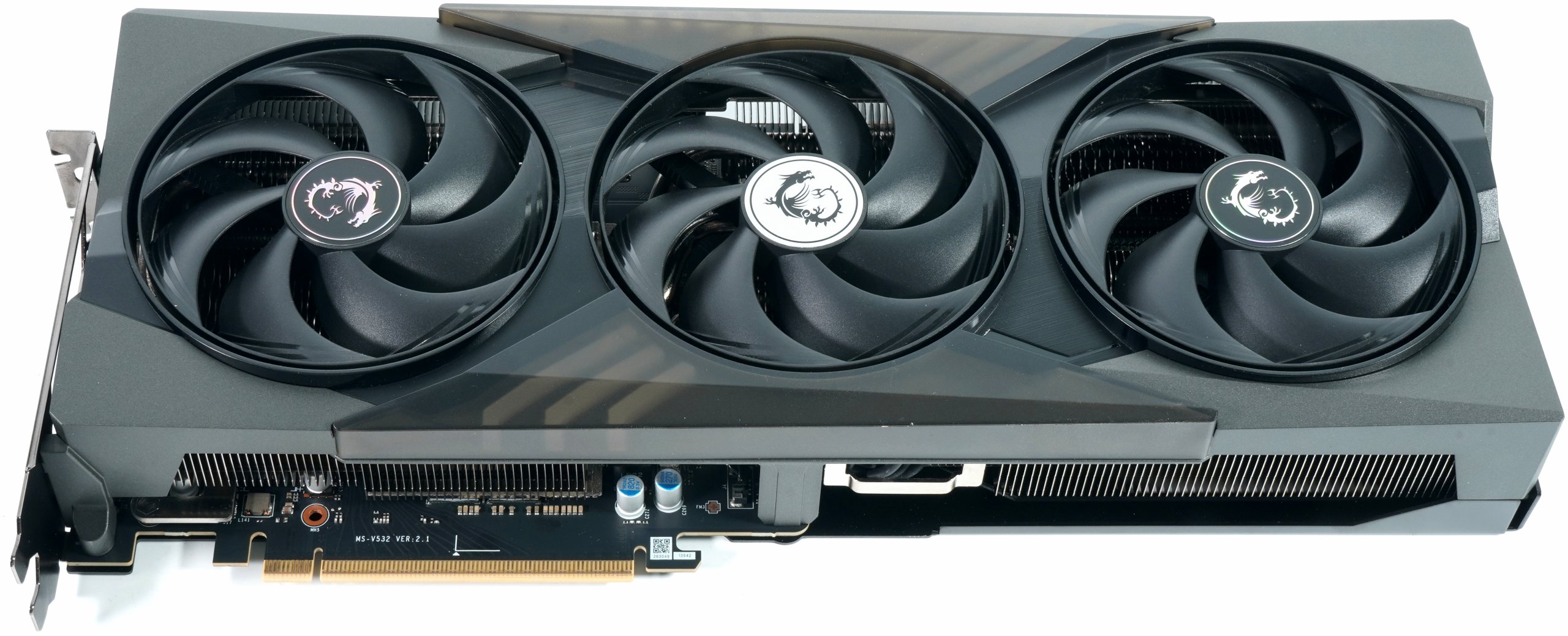
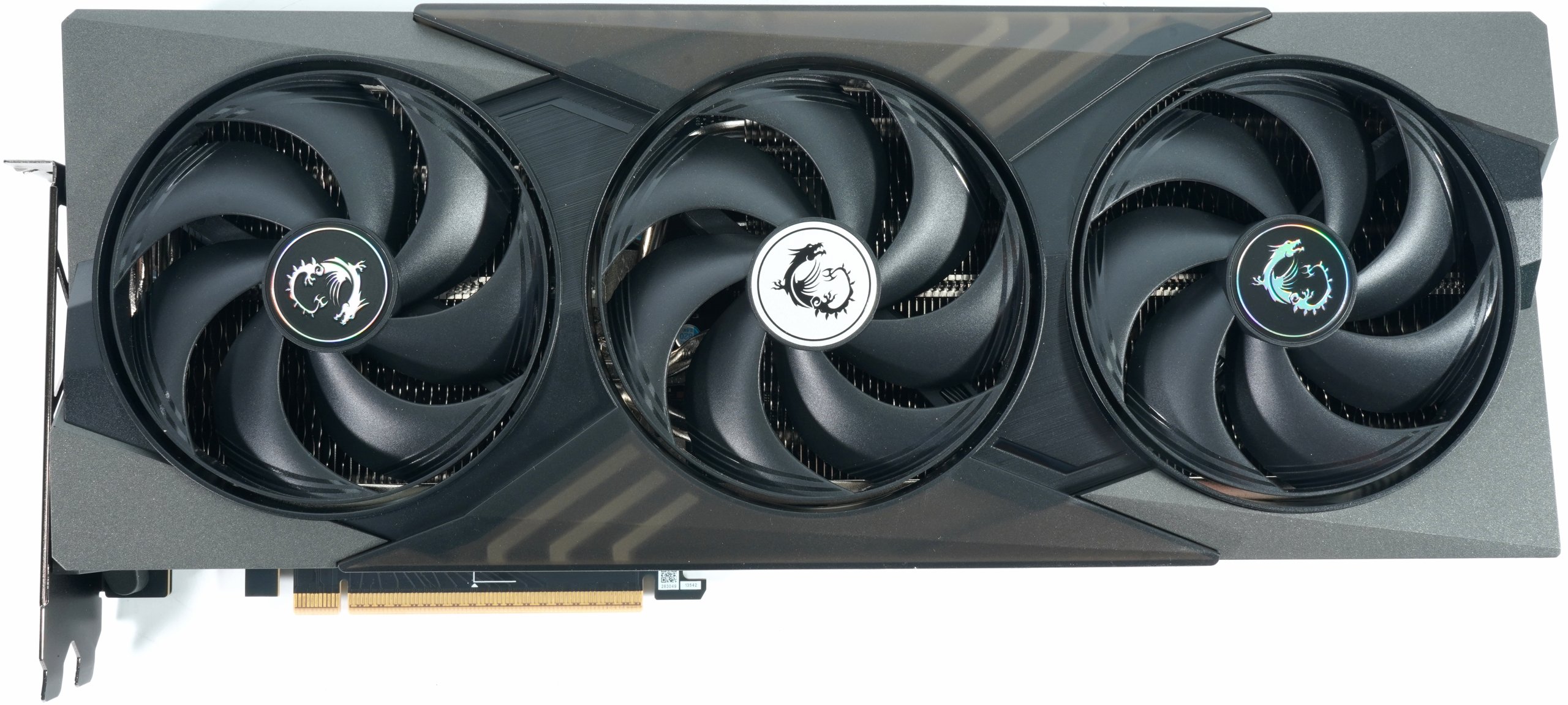
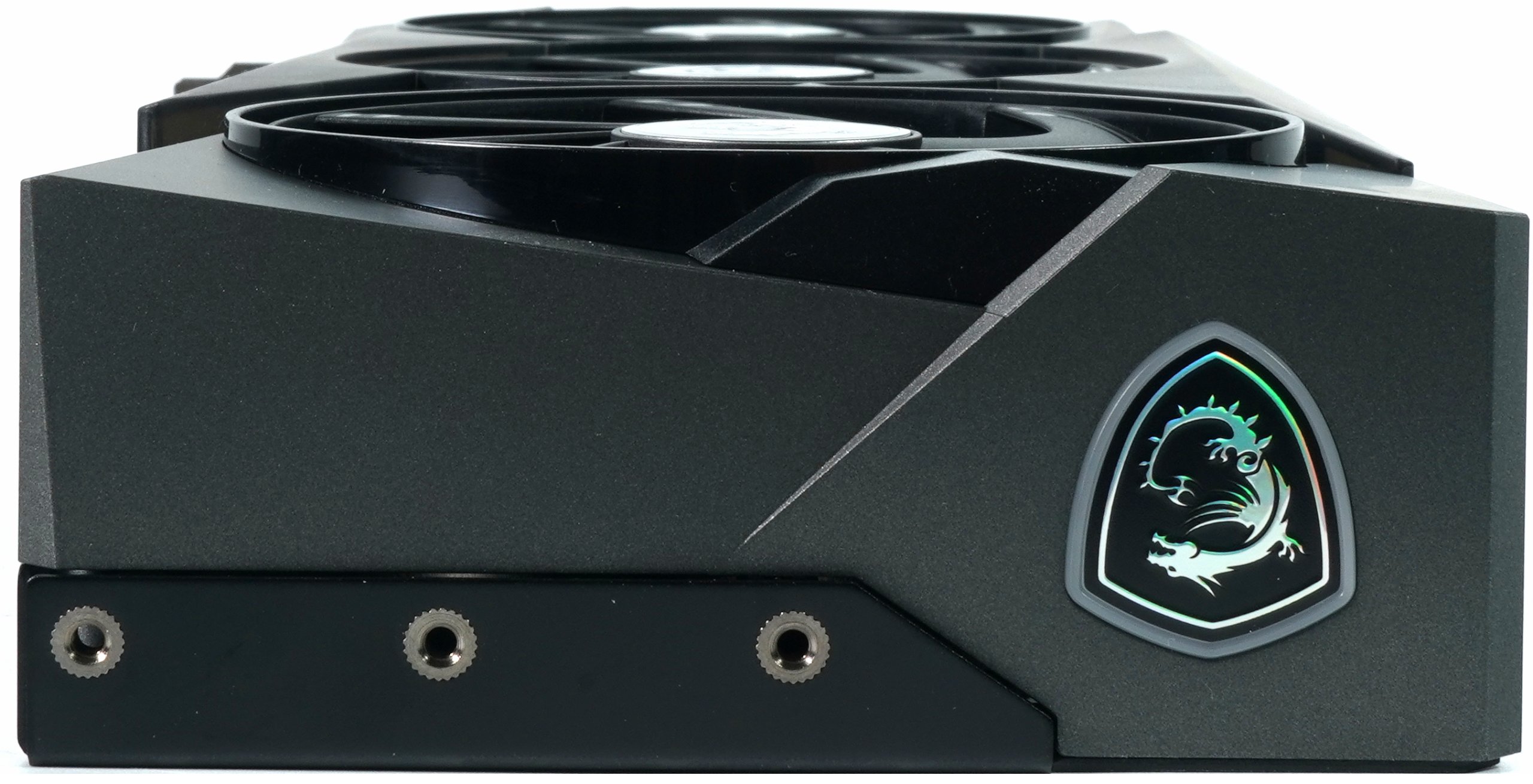
MSI’s own Tri-Frozr 4 system takes care of cooling, consisting of three axial Torx 5.0 fans, an elaborately structured fin structure and massive heat pipes with direct contact to the GPU. The cooling system is designed for quiet yet powerful heat dissipation. The aluminium backplate is not only used for stabilization, but also actively supports cooling through heat dissipation.
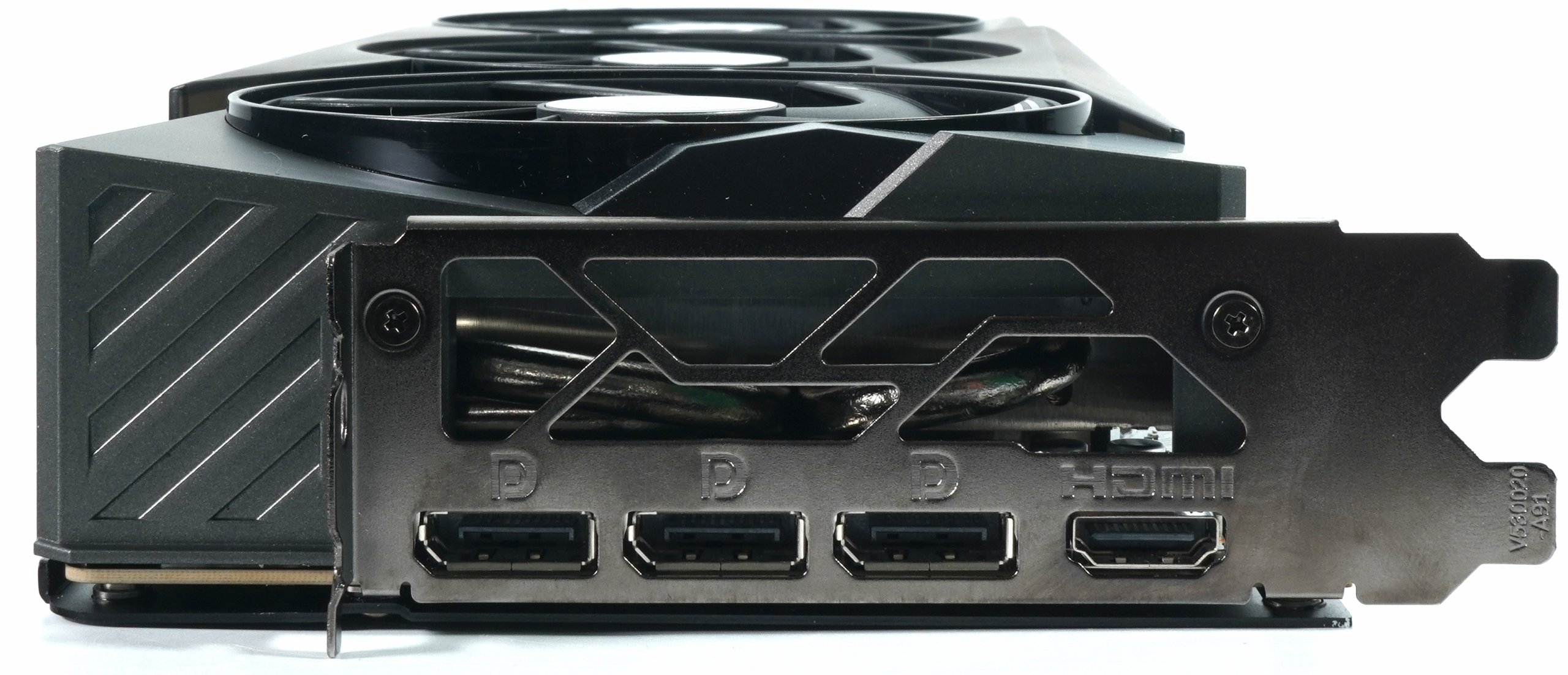
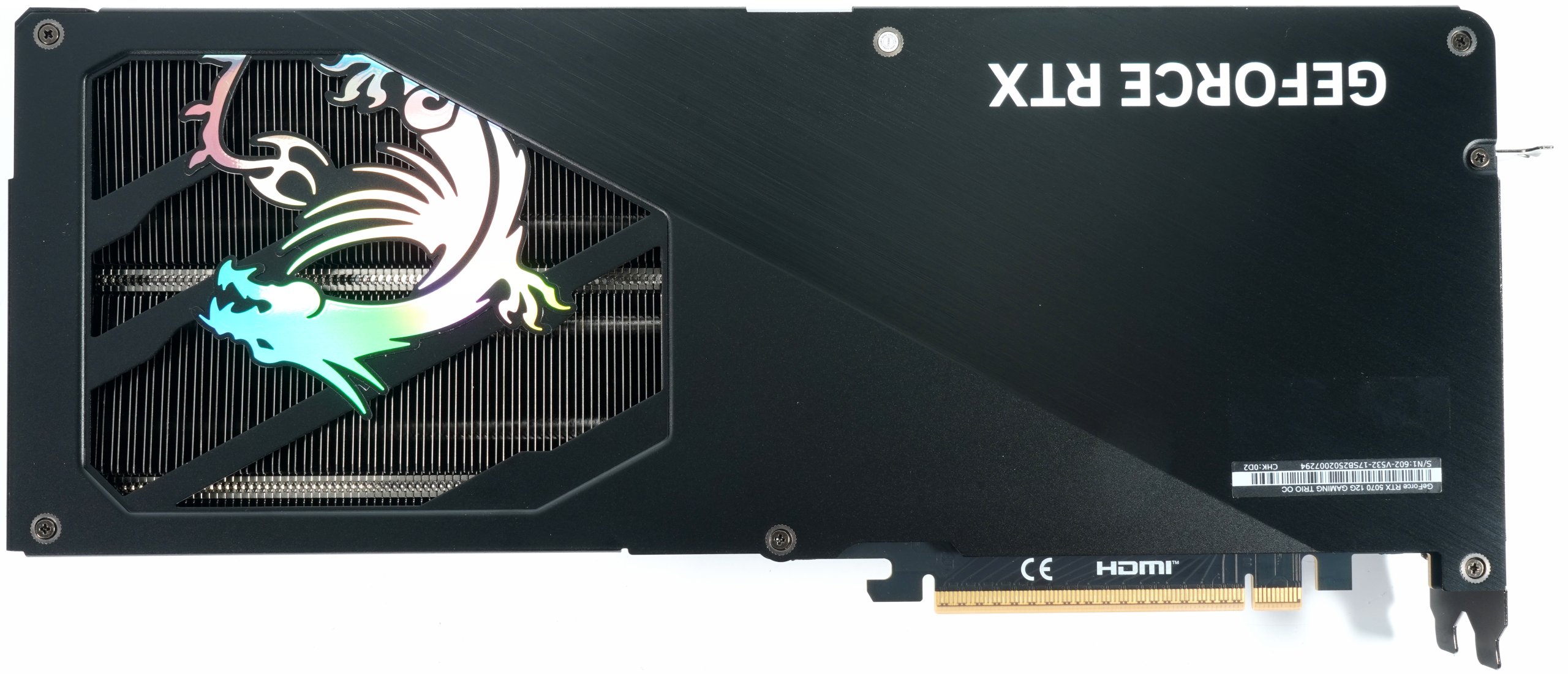 The dimensions of the card are 338 mm in length, 140 mm in width and 67 mm in height. This means that it effectively occupies three slots and requires a sufficiently large housing. One HDMI 2.1b and three DisplayPort 2.1 outputs are available on the connection side. The card is compatible with PCI Express 5.0 x16, even if the effective performance difference to PCIe 4.0 remains marginal in practice.
Unlike some models from previous generations, MSI has dispensed with a dual BIOS for the RTX 5070 Gaming Trio. Users must therefore rely on the factory-defined fan curves and voltage profiles or make fine adjustments using software such as the MSI Center. This is a limitation for enthusiasts who like to intervene manually or switch between quiet and performance-oriented profiles. With its features, the card is therefore aimed more at ambitious gamers who want to play in WQHD or, to a limited extent, in UHD, as well as content creators who rely on CUDA or Tensor acceleration. The technical basis is solid, although the limited memory capacity of 12 GB could be a potential bottleneck in the medium term. The GPU-Z screen shows the remaining key data of the card tested today:
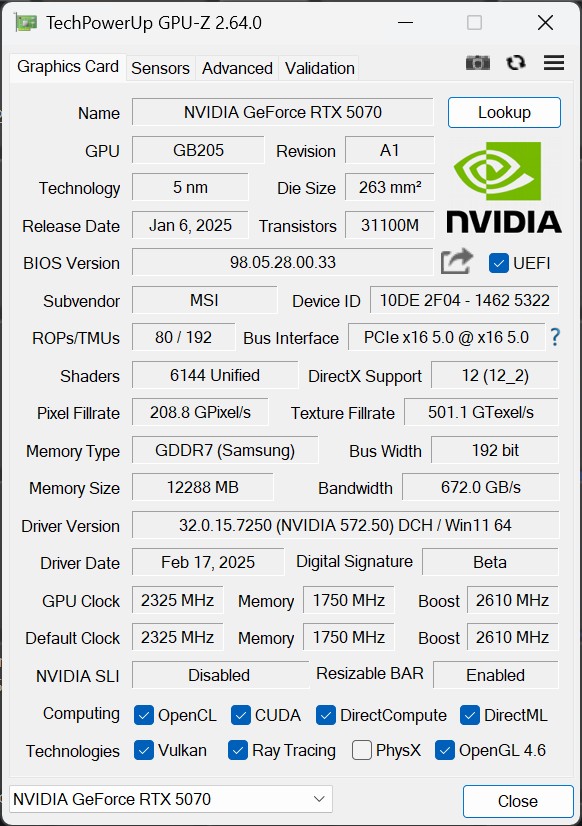
I’ll save myself any further architectural descriptions at this point and refer you to my very detailed launch article on the GeForce RTX 5070 and my assessment of raster performance and necessary paradigm shifts in graphics card development:
MSI GeForce RTX 5070 12G Gaming Trio OC, G5070-12GTC, 12GB GDDR7, HDMI, 3x DP (V532-019R)
| Auf Lager, 1 Werktag | 634,99 €*Stand: 23.12.25 06:42 | |
| lagernd, 24-h Service möglich | 643,99 €*Stand: 23.12.25 05:48 | |
| Onlineshop: lagernd, 24-h Service möglich, Lieferung 2-3 WerktageBerlin, Hannover/Laatzen, München: lagernd (keine Online-Reservierung möglich)Dortmund, Düsseldorf, Hamburg, Stuttgart: nicht lagerndStand: 23.12.25 05:36 | 643,99 €*Stand: 23.12.25 06:36 |

- 1 - Introduction and unboxing
- 2 - Test system and equipment
- 3 - Teardown: PCB and cooler
- 4 - Material analysis and thermal interface material
- 5 - Gaming performance rasterization
- 6 - Gaming performance Super Sampling, RT & FG
- 7 - Power consumption, transients and PSU recommendation
- 8 - Temperatures, clock rate and thermography
- 9 - Fans speed and noise
- 10 - Summary and conclusion
















22 Antworten
Kommentar
Lade neue Kommentare
Veteran
Moderator
Urgestein
Veteran
Veteran
1
1
1
Urgestein
Veteran
Mitglied
Veteran
1
Urgestein
Veteran
1
Mitglied
Mitglied
Mitglied
Alle Kommentare lesen unter igor´sLAB Community →